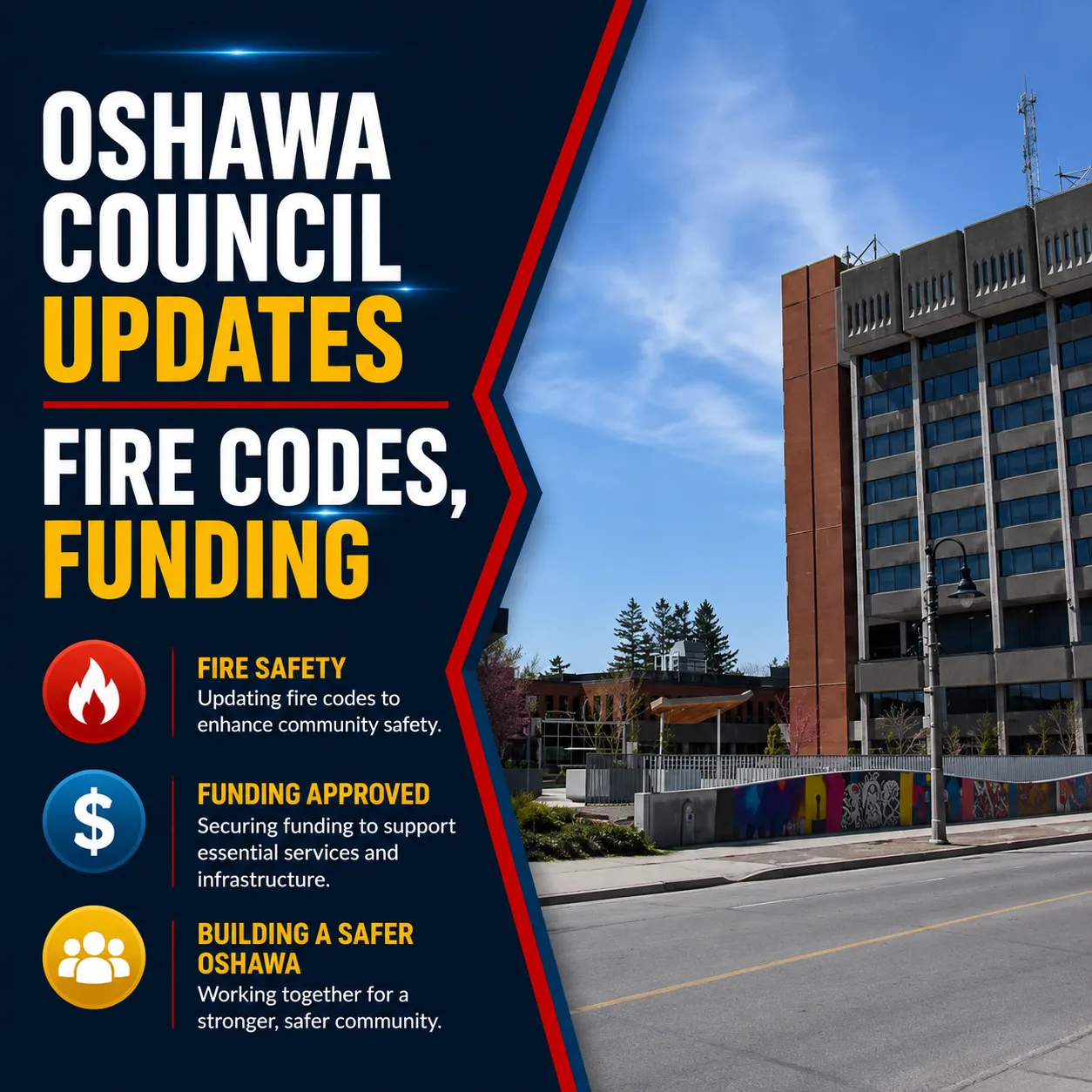
Oshawa City Council convened on May 25 to address several municipal matters ranging from potential changes to fire code enforcement to strategies for securing provincial funding. During the session, council members discussed updates to winter maintenance bylaws and reviewed zoning amendments related to pipeline infrastructure in specific areas of the city. The meeting resulted in several directions to staff regarding future investigations and applications.
One agenda item involved enforcing fire codes within the city. Traditionally, Oshawa has relied on the Provincial Offences Act court processes for enforcement. However, council has directed staff to investigate implementing a monetary penalty system managed at the municipal level. The recommendation suggests this shift would lead to more timely, efficient and effective enforcement. Proponents believe the change would result in improved compliance and procedural fairness, though it remains unclear if the new system would alter the severity of the penalties. This move aligns with a broader trend seen across Ontario, where municipalities are seeking Administrative Monetary Penalties (AMPs) to bypass clogged court schedules and address infractions more swiftly.
To secure provincial financial support, council voted to approve initiatives positioning Oshawa for upcoming funding opportunities. While the province has not released eligibility details or deadlines for housing and sports facilities, staff indicated funding is expected later this year. To ensure readiness, staff will pre-emptively prepare applications. Sports facility funding is specifically intended for renovations to change rooms at Harmon Arena and the redevelopment of Kinsmen Stadium, both key community hubs that have long served local athletes and residents.
Housing funds would not be tied to specific projects at this stage. Councillor Rosemary McConkey expressed concerns regarding staff authority to select projects, suggesting this limited the voice of council. Mayor Dan Carter refuted this, stating the goal was to anticipate a short turnaround time for applications. He clarified that council would retain the ultimate authority to decide which locations are suggested for funding. This proactive approach aims to ensure Oshawa does not miss out on critical infrastructure dollars due to administrative delays.
Council also updated the city’s winter maintenance bylaw to increase responsibilities for property owners. The updated bylaw mandates property owners to continue completely removing snow and ice from sidewalks and the plow line after an initial clearance. This change moves away from previous standards where applying salt or sand might have been considered sufficient. The amendment aims to ensure safer public thoroughfares by requiring more thorough maintenance from residents, thereby reducing slip-and-fall risks and ensuring accessibility for pedestrians during the winter months.
Following a delegation from a land use planner on May 4, the city instructed staff to review an element of its official plan concerning zoning in the Brownfields Renaissance, Harbour Road, and Wentworth Street West areas. The proposed amendment would disallow construction on private property within seven metres of TransCanada natural gas pipelines. Land use planner Michael Fry noted that incorporating such provisions would effectively grant TransCanada land use control over private lands where no legal right currently exists. This review is crucial as it balances industrial safety regulations with property owners’ rights to develop their land.
Council voted to return the proposed amendment to staff for further review. This decision ensures that the implications of pipeline proximity on private property rights are fully examined before any changes to the official plan are adopted. Staff will now analyze the potential legal and developmental impacts before returning with a refined recommendation.