







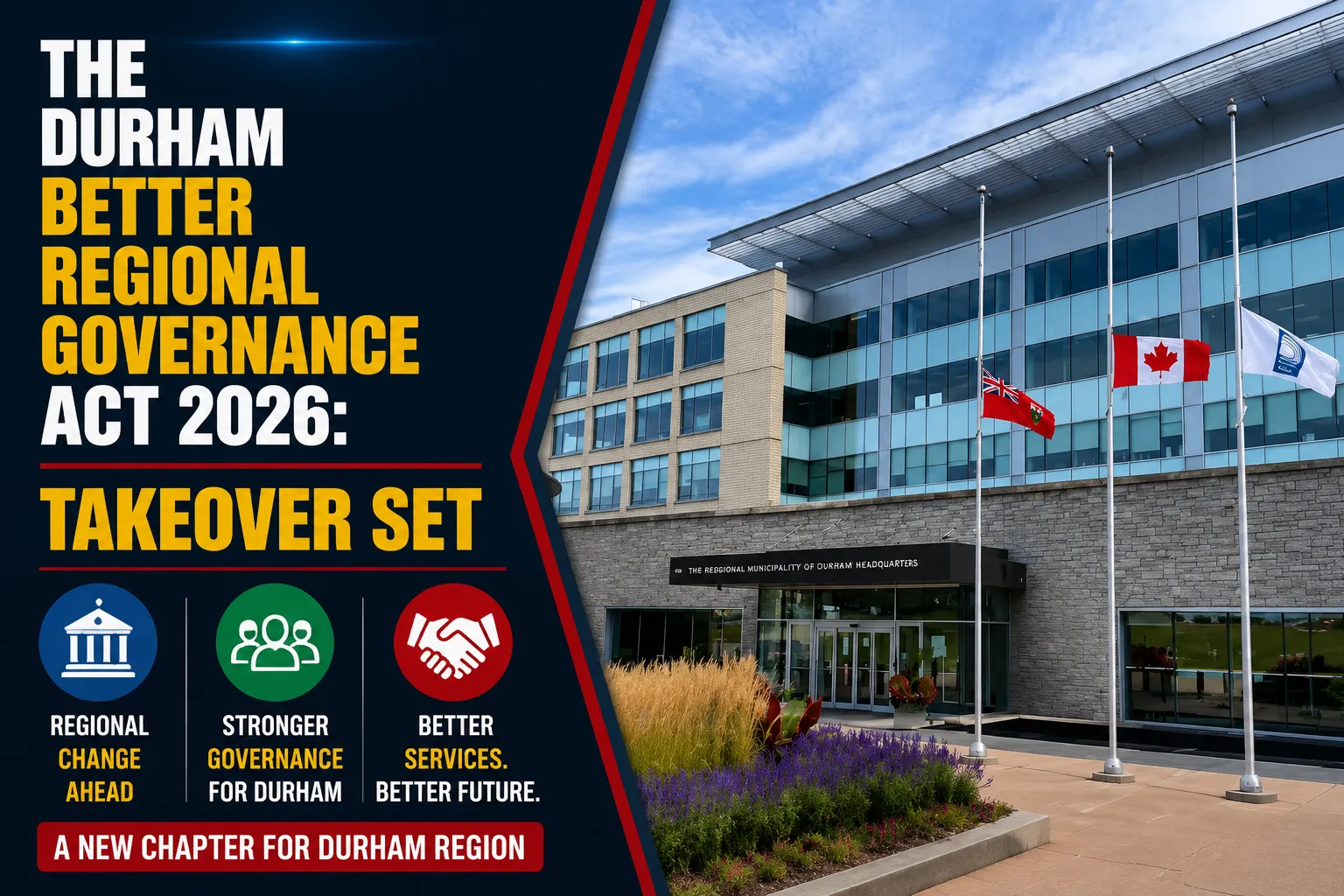
Durham Regional Council has formally initiated an unprecedented dismantling of its internal democratic infrastructure following an aggressive legislative mandate issued by the provincial government. Under the operational filings tracking The Durham Better Regional Governance Act 2026, lawmakers voted during their Wednesday, May 27, 2026 session to immediately repeal long-standing electoral bylaws. The sweeping local policy revisions are being executed to clear a path for the arrival of an un-elected Regional Chair and Chief Executive Officer who will answer directly to the Ontario Premier rather than local voters.
The local structural shakeup has triggered intense debate inside regional headquarters, shifting the balance of municipal power from local representatives over to a centralized, provincially appointed executive officer.


The Elimination of Democratic Audits
The immediate operational modifications stem directly from the passage of Bill 100, legally designated as the Better Regional Governance Act, which officially received Royal Assent on May 7, 2026. The overriding provincial legislation completely abolishes democratic elections for the Office of the Regional Chair across specified upper-tier municipalities. Because the public ballot box has been entirely stripped from the process, regional staff verified that the municipality no longer maintains a legal requirement for its autonomous Municipal Elections Compliance Audit Committee (CAC).


In a direct procedural rollback, council carried a resolution to permanently strike down the CAC terms of reference, which lawmakers had originally approved on February 25. The regional clerk has been directed to issue formal notices to all participating lower-tier municipal bodies—including local election clerks across Oshawa, Whitby, and Pickering—advising them that the joint regional audit system has been dismantled.
Concentration of Strong Powers and Meeting Control
Beyond changing how the office is filled, Bill 100 reshapes the day-to-day governance of the Durham Region by extending sweeping “strong-mayor” powers to the upcoming provincial appointee. Under the new guidelines, the incoming chair possesses the unilateral authority to completely bypass traditional democratic votes to set up, dissolve, or restructure the standing committees of regional council.
Historically, assignments to these powerful committees were democratically negotiated and finalized by sitting councillors during their first organizational meeting. Because the provincially appointed chair can completely upend the committee structure upon arrival, staff reports warned of unprecedented gridlock heading into the late-autumn political transition.
To mitigate this operational gridlock, regional council approved a secondary resolution granting the regional clerk emergency authority to independently dictate the entire legislative agenda for the high-profile inaugural council meeting scheduled for November 25, 2026. This preemptive move strips sitting regional councillors of their traditional ability to shape the opening priorities of the 2026-2030 political term, concentrating administrative control within the civil service until the Premier’s hand-picked executive formally takes office. Opponents warn that the sweeping powers granted under The Durham Better Regional Governance Act 2026 will permanently minimize the political leverage of local mayors and ward councillors during upcoming infrastructure and regional budget debates.