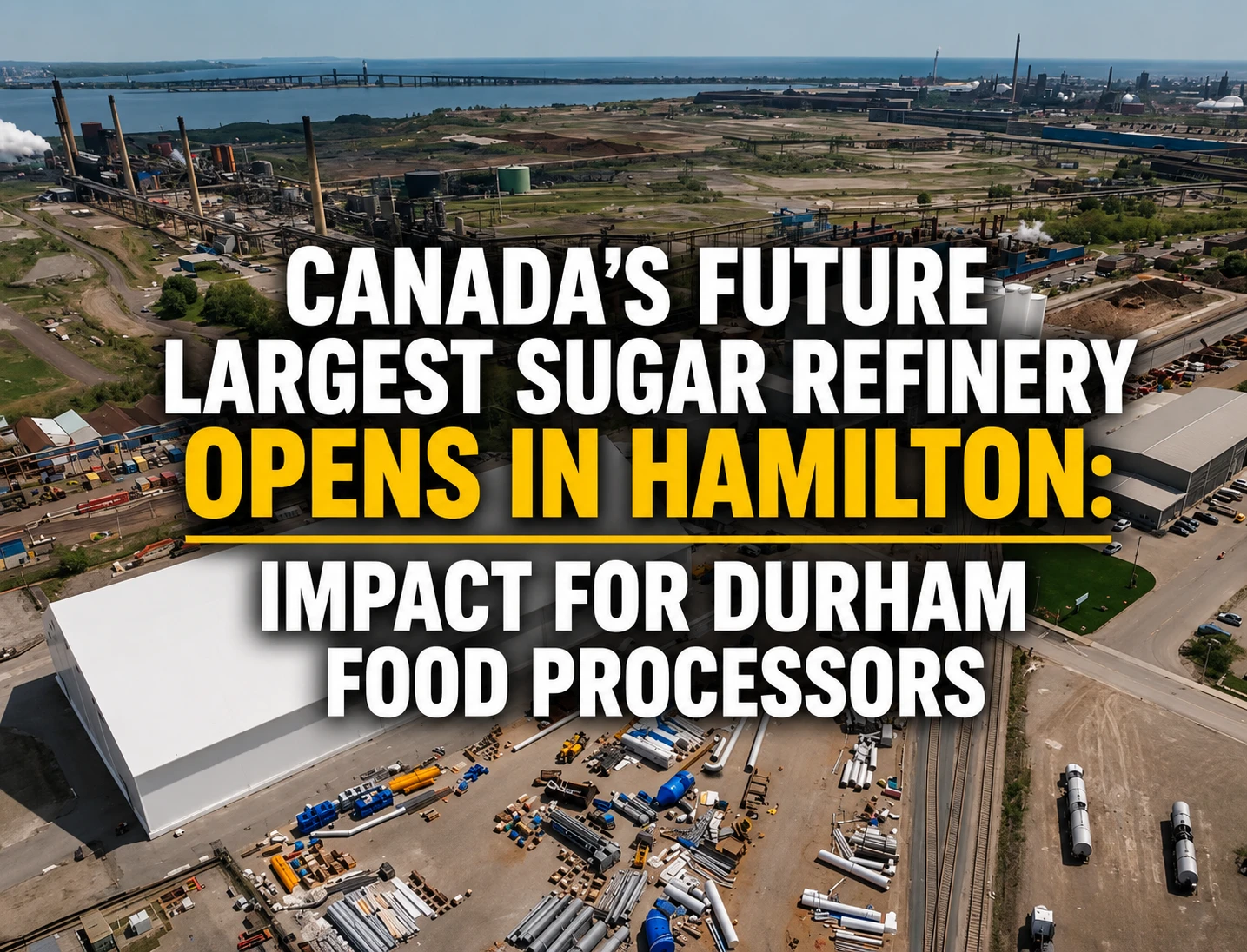
A massive $135 million investment in Canada’s food security reached a milestone this week with the official opening of the Sucro Can Refinery 2026 at the Port of Hamilton. Poised to become the largest sugar refinery in the country, the facility at Pier 15 is designed to stabilize the agri-food supply chain across the Great Lakes. For food and beverage manufacturers in Oshawa and the Durham Region, this opening marks a critical shift in supply chain reliability, providing a local alternative to international imports.
Scale and Capacity Projections
The Sucro Can Refinery 2026 is a long-term play for industrial dominance in the refining sector:


-
Annual Capacity: The facility is engineered to scale up to a refining capacity of one million metric tonnes per year.


-
Shipping Volume: In its first full year of operations (2026), the refinery expects to receive 10 vessels of raw sugar, increasing to 14 vessels by 2027.
-
Employment: Currently employing 65 skilled workers, the workforce is expected to grow significantly as liquid and dry refined sugar processing systems reach full capacity.
Multimodal Logistics and Regional Advantage
The refinery’s location was strategically chosen to serve North America’s largest food manufacturing clusters, including those in the Durham Region:
-
Geographic Reach: The facility sits within a one-day drive of 142 million consumers.
-
Transportation Links: Direct access to marine, rail, and highway networks allows for efficient distribution of bulk industrial sugar formats to customers in Ontario, Quebec, and the U.S. Midwest.
-
Supply Chain Confidence: HOPA Ports CEO Ian Hamilton noted that the refinery acts as a “catalyst” for other food-processing companies to make new investments, knowing a dependable domestic sugar source is now online.
Why it Matters for Durham Region
While the physical plant is in Hamilton, the Sucro Can Refinery 2026 directly addresses the needs of Durham’s growing food processing hub:
-
Economic Security: With 85% of sugar sold in Canada utilized by food manufacturers, the Durham-based clusters in Whitby and Oshawa gain “greater certainty, choice, and confidence” in their raw material procurement.
-
Cost Stabilization: The proximity of the refinery reduces long-haul logistics costs for regional manufacturers who previously relied on more distant refining centers.
-
Multimodal Synergy: The project highlights the success of public-private partnerships in trade-enabling infrastructure, a model currently being discussed by the Greater Oshawa Chamber of Commerce for future port expansions in Durham.
The completion of this refinery, which began construction two years ago, provides a leading Canadian-based supply alternative at a time when global sugar demand continues to rise, ensuring that Ontario’s food manufacturers remain competitive on a global scale.