








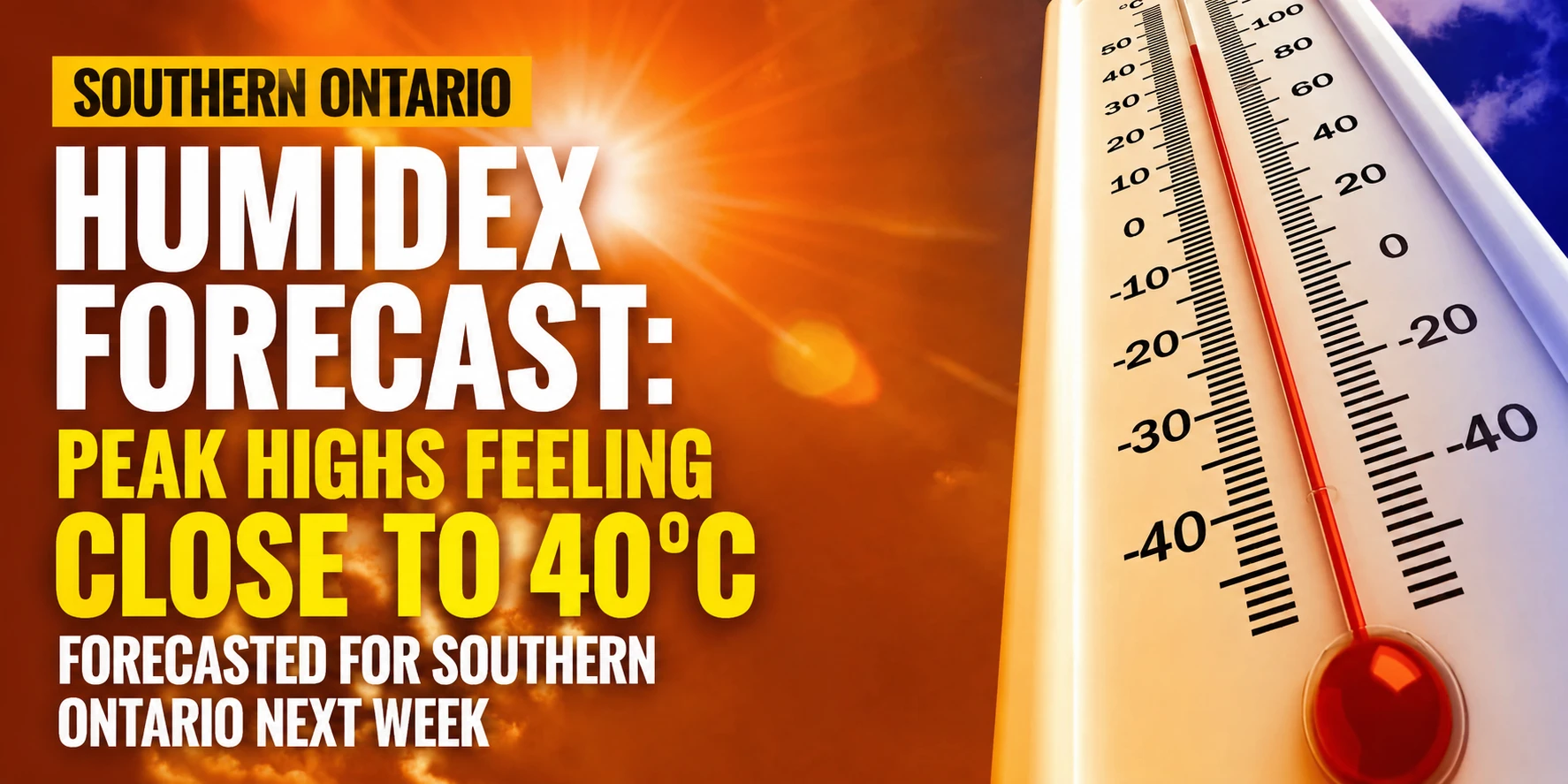
The regional climate grids and municipal public health networks across the Greater Toronto Area are preparing for an intense blast of mid-summer weather. Tracked under provincial meteorology portfolios on Thursday, June 25, 2026, forecasters finalized the specialized atmospheric tracking logs for the southern Ontario humidex forecast. According to the latest extended multi-model computer projections released by The Weather Network, a massive, moisture-laden ridge of high pressure traveling upward from the Gulf of Mexico is on track to stall directly over the Great Lakes basin next week, triggering the most prolonged stretch of extreme heat and sticky humidity seen so far this season.
The arriving weather system will push daytime humidex readings—the index that measures how hot it actually feels by combining air temperature and relative humidity—to near-record maximum thresholds, well above normal seasonal baselines.


The Staggered Heat Wave Timeline and Thermal Projections
The incoming air mass is expected to build gradually over the weekend, locking into a heavy, stagnant pattern by Monday morning before peaking later in the week.


-
The Early-Week Setup: On Monday, conditions will start with clear skies in the morning before afternoon cloud cover rolls in. The mercury will hit a baseline high of 27°C, but high humidity will make it feel like 31°C. By Tuesday, temperatures will climb higher, pushing humidex levels to a muggy 35°C.
-
The Mid-Week Humidex Peak: Wednesday marks the arrival of the core tropical air mass. While the static thermometer will read a warm 28°C, the high moisture content in the air will drive the apparent feeling up to 38°C. The morning will see a mix of sun and cloud, giving way to a 40 percent chance of convective pop-up afternoon showers.
-
The Late-Week Maximums: Thursday is projected to be the most intense day of the heat event. Heavy humidity combined with an actual temperature of 30°C will push humidex levels to a blistering 39°C across Mississauga and the broader GTHA. This intense heat will be accompanied by a risk of scattered thunderstorms throughout the day before conditions slightly ease on Friday to a sticky 37°C feel.
Analyzing July Seasonal Normals vs. Upcoming 2026 Heat Wave Targets
The upcoming heat wave represents a significant jump above standard historical averages, with overnight lows offering very little cooling relief.
| Scheduled Calendar Forecast Day | Projected Baseline Air Temperature | Anticipated Peak Humidex Value | Anticipated Convective Storm Probability |
| Monday Operational Launch | 27°C Midday High | 31°C Apparent Feel | Low — Less than 10% Chance |
| Tuesday Core Transition | 28°C Midday High | 35°C Apparent Feel | Moderate — 20% Localized Risk |
| Wednesday Core Peak | 28°C Midday High | 38°C Apparent Feel | Elevated — 40% Afternoon Showers |
| Thursday Extreme Node | 30°C Midday High | 39°C Apparent Feel | High — Scattered Storm Tracks |
| Friday Stabilizing Node | 29°C Midday High | 37°C Apparent Feel | Unsettled — Residual Showers |
Historical climate metrics show that standard seasonal daytime highs for this stretch of summer typically hover between a comfortable 17°C and 27°C. Public health officials across Durham Region warn that when humidex values push past the 35°C mark, the human body struggles to cool itself down naturally through sweating, which significantly increases the risk of heat-related illnesses like heat exhaustion or heat stroke.
During extended heat events, residents are strongly advised to drink plenty of water before feeling thirsty, scale back intense outdoor activities, check in on elderly neighbors who live alone, and ensure pets are never left inside parked vehicles for any amount of time.
Durham Region families, outdoor workers, and community emergency management teams looking to download real-time ultraviolet index alerts, monitor local smog and air quality advisories, or find open air-conditioned community cooling centers can check the active weather network portal online at theweathernetwork.com.