








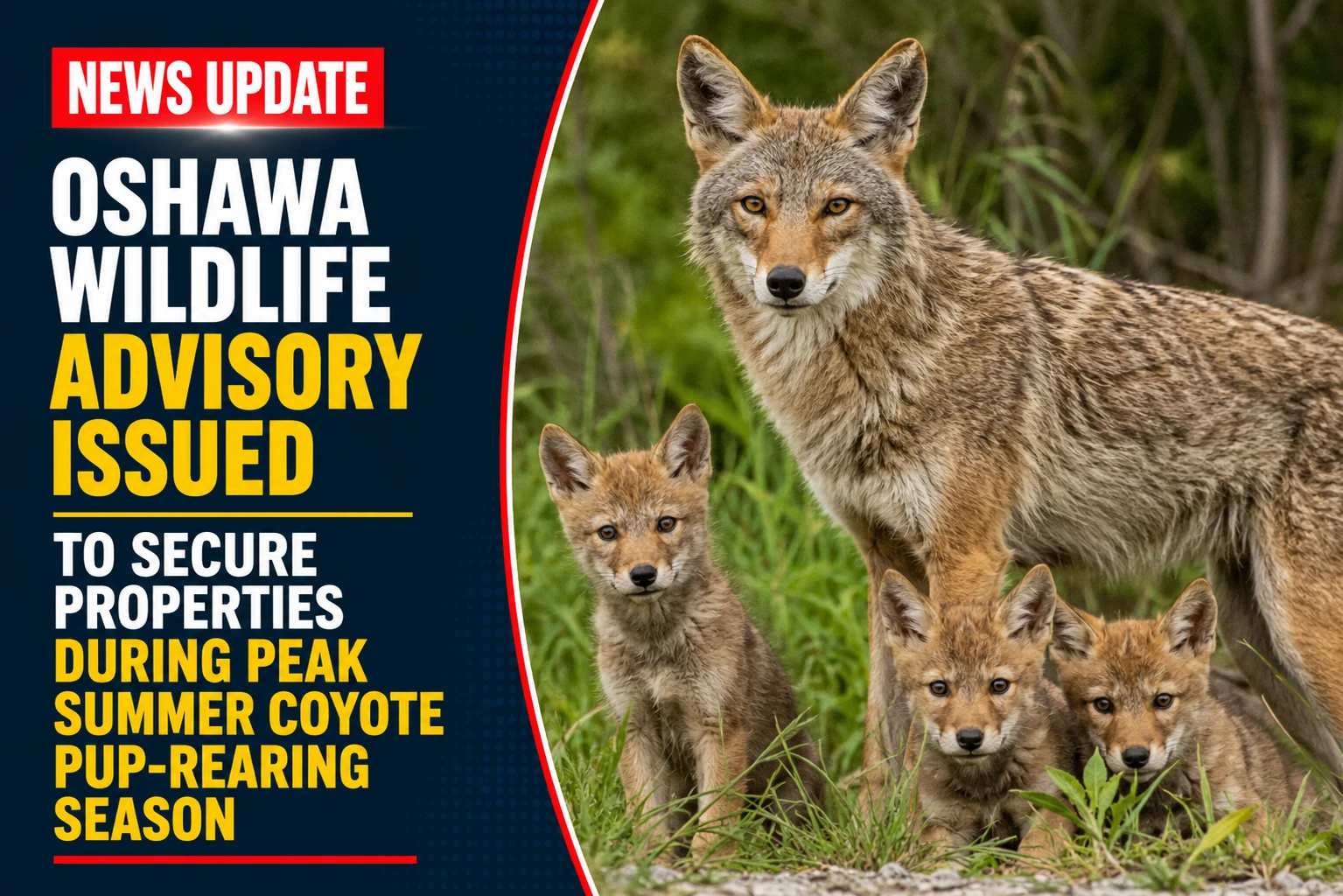
The municipal animal services divisions and urban environmental management branches within the City of Oshawa have deployed localized compliance guidelines to manage urban wildlife interactions. Tracked under municipal safety portfolios on Thursday, June 25, 2026, administrators from the City of Oshawa finalized the public awareness bulletin Seasonal reminders: coyotes during pup-rearing season. Timed alongside a noted regional increase in active urban canine movements, the directive details protective household guidelines meant to help residents safeguard residential perimeters, protect domestic pets, and eliminate accidental feeding attractants that can draw adult coyotes into urban neighborhoods.
The seasonal alert coordinates directly with the city’s established wildlife response strategy, shifting the responsibility onto homeowners to prevent coyotes from establishing active dens on private properties.


The Pup-Rearing Phase and Den Escalation Guardrails
During the mid-summer months, urban coyotes experience heightened nutritional demands and defensive drives as they raise their young, making them significantly more visible across local trails and residential neighborhoods.


-
The Den Detection Protocol: If an active coyote den is suspected on or immediately adjacent to a property, residents are ordered to completely avoid the immediate area, shorten dog lines to a rigid maximum length of 6 feet, and immediately flag the coordinates to municipal enforcement teams.
-
Property Infrastructure Hardening: Property owners are urged to inspect and reinforce residential perimeters. This includes sealing open gaps beneath backyard decks, porches, storage sheds, and foundation footings where nursing coyotes might seek shelter to conceal their pups.
-
The Elimination of Attractants: The city emphasizes that structural wildlife proofing requires the absolute removal of accessible food sources. Homeowners must tightly secure exterior garbage totes, move domestic pet dishes indoors, clean fallen fruit from backyard orchards, and rake up spilled seed beneath backyard bird feeders.
Analyzing the Oshawa Urban Canid Encounter and Response Matrix
The parks and animal services departments utilize crowdsourced community sighting data to map hot spots, deploy neighborhood signage, and adjust public asset maintenance schedules.
| Encounter Scenario Vector | Mandated Physical Posture | Immediate Tactical Field Action | Core Municipal Reporting Node |
| Suspected Backyard Den | Maintain distance / Exit perimeter | Shorten dog leash line to $\le$ 6 feet | Service Oshawa Communications |
| Sudden Trail Encounter | Stand still / Do not run or turn back | Pick up small children and pets instantly | Service Oshawa Communications |
| Persistent Close Approach | Make body big / Wave arms overhead | Shout loudly and use assertive verbal cues | Service Oshawa Communications |
| Immediate Public Safety Threat | Retreat slowly / Face the animal | Deploy emergency personal defense | 9-1-1 Emergency Communications |
Municipal park staff use community sighting data to track areas where urban coyotes are frequently seen. When multiple sightings cluster around a specific location, the city can step in to cut back naturalized tall grass in neighborhood parks or install temporary warning signs to let trail users know animals are nearby.
To help families learn to live safely alongside urban wildlife, the city is offering a free educational e-learning course titled Coyotes in the Urban Landscape, designed in partnership with the national wildlife organization Coyote Watch Canada.
Oshawa homeowners, trail walkers, and local neighborhood groups looking to report a wildlife sighting, log a suspected den location, or review local response maps can contact municipal staff at 905-436-3311, email service@oshawa.ca, or submit data through the tracking portal online at service.oshawa.ca.