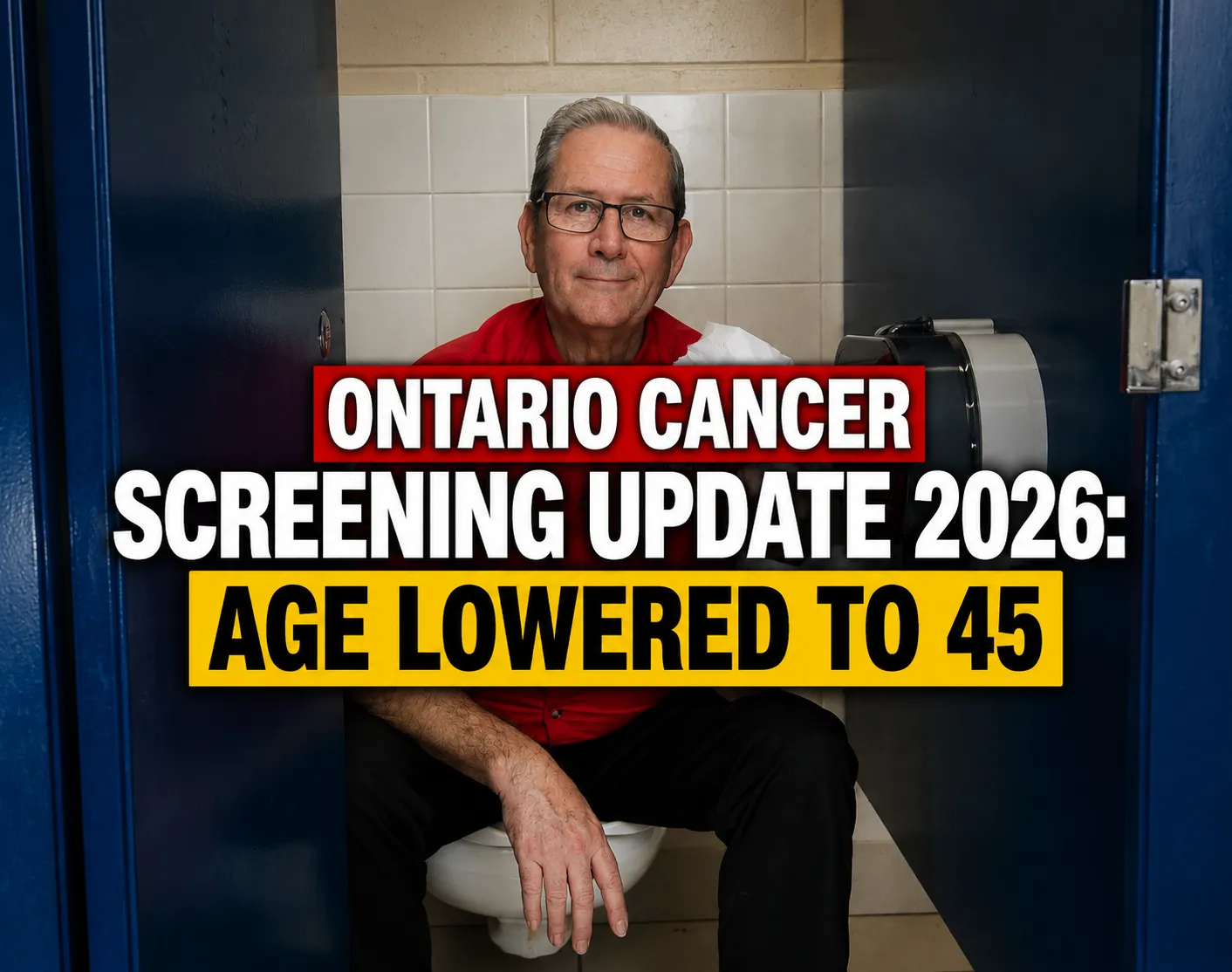
In a move that healthcare experts say will save countless lives across the Durham Region, the provincial government has officially announced the Ontario Cancer Screening Update 2026. Starting July 1, the recommended age for publicly funded colorectal cancer screening will drop from 50 to 45 for at-risk individuals. This policy shift, delivered through the ColonCancerCheck program, aims to combat a worrying rise in colorectal cancer diagnoses among younger adults and ensures that residents from Pickering to Brock have earlier access to life-saving diagnostic tools.
The Ontario Cancer Screening Update 2026 is part of a broader provincial strategy to modernize cancer care and prioritize early detection. According to Ontario Health, when colorectal cancer is caught in its earliest stages, nine out of ten people can be successfully cured. By lowering the eligibility age, the province is responding to data showing that Canadians born after 1980 are over twice as likely to be diagnosed with the disease before age 50 compared to previous generations. This change follows similar proactive steps taken recently, such as allowing women aged 40–49 to self-refer for breast cancer screenings.


For patients in Durham, the Ontario Cancer Screening Update 2026 provides two primary methods of testing. The most common is the Fecal Immunochemical Test (FIT), a simple home-based kit that is mailed to a lab for analysis. For those at higher risk, a colonoscopy may be recommended at one of Lakeridge Health’s regional hospitals. Early screening not only identifies cancer but can also detect polyps—small growths that could eventually turn into cancer—allowing for their removal before they become life-threatening.


The urgency behind the Ontario Cancer Screening Update 2026 has been amplified by the recent deaths of high-profile figures like Canadian actress Catherine O’Hara and American actor James Van Der Beek, both of whom battled the disease. Advocacy groups such as Colorectal Cancer Canada have long argued that the “old person’s disease” stigma must be dismantled. Early detection often leads to less invasive treatments, which not only improves the patient’s quality of life but also reduces the long-term financial strain on the regional healthcare system.
Equity in access is another key component of the Ontario Cancer Screening Update 2026. The province is specifically working to improve screening rates in First Nations communities, where healthcare disparities often lead to later-stage diagnoses. By offering FIT kits directly at nursing stations and community health centers, the government aims to bypass logistics issues and ensure that all eligible individuals—regardless of their location in Durham or beyond—have the same opportunity for early intervention.
As the July 1 implementation date approaches, Durham residents aged 45 and older are encouraged to speak with their family physicians or visit a local walk-in clinic to discuss their screening options. With the Ontario Cancer Screening Update 2026, the goal is clear: to turn a preventable disease into a rare one through proactive, accessible, and early medical oversight. For more information on how to access a FIT kit, residents can visit the Cancer Care Ontario website or consult with their local healthcare practitioner.