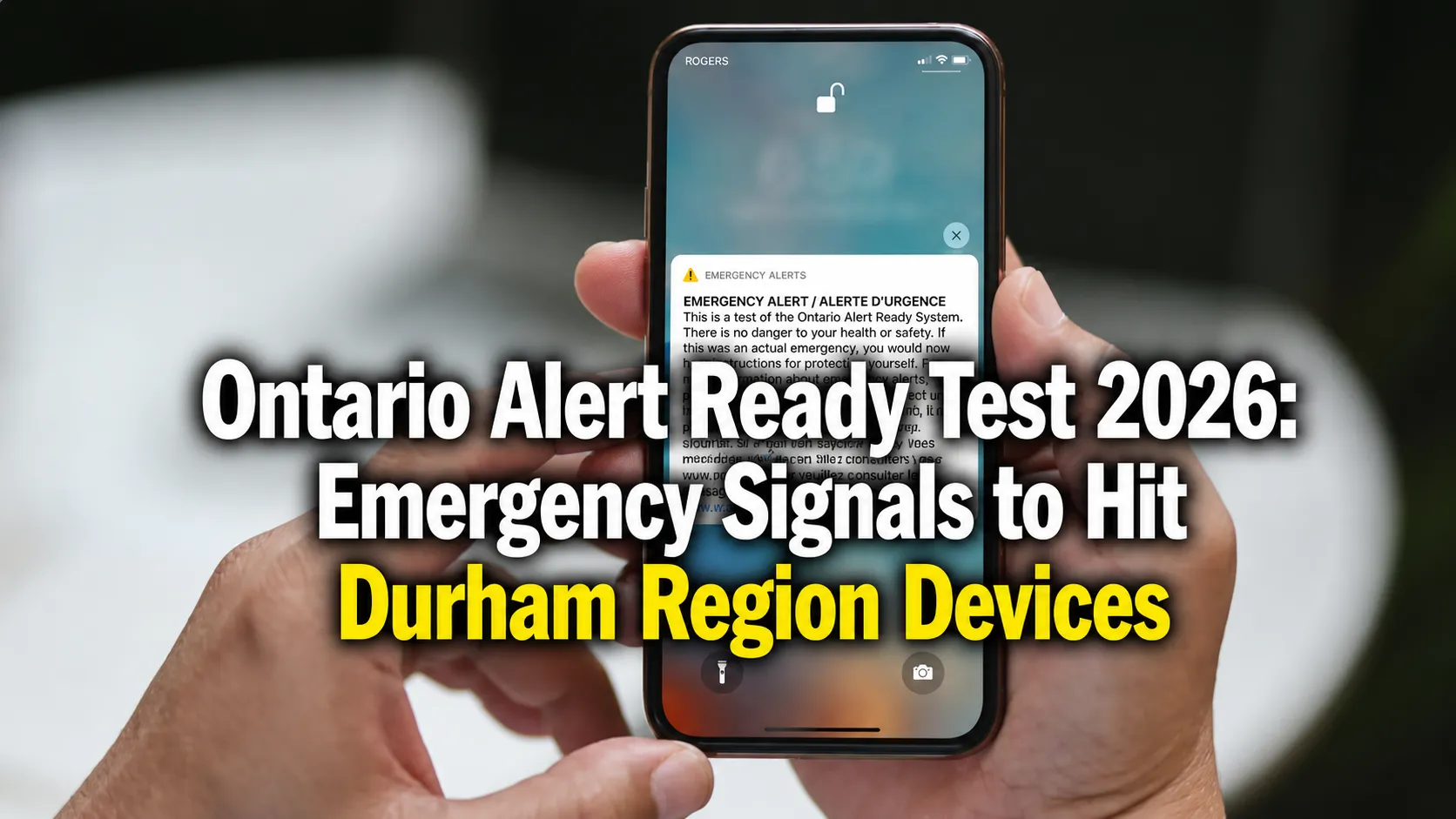
Residents across Durham Region and the province of Ontario are being advised to prepare for a scheduled disruption this week as the national emergency notification system undergoes its semi-annual maintenance check. The Ontario Alert Ready Test 2026 is officially set to take place on Wednesday afternoon, sending a high-decibel signal to millions of wireless devices, televisions, and radio stations. This coordinated effort is designed to ensure that the infrastructure responsible for public safety is fully operational and capable of reaching citizens during life-threatening situations.
The Ontario Alert Ready Test 2026 will occur at exactly 12:55 p.m. local time. During this minute, compatible mobile devices connected to an LTE or 5G network will broadcast the distinctive “Canadian Alert Attention Signal.” This tone, accompanied by a vibrating pulse and a text-based message, will simulate the exact conditions of a real-life emergency. Municipal officials in Oshawa, Whitby, and Pickering are joining provincial authorities in reminding the public that this is a controlled simulation and requires no action from the recipient.


A critical reminder from Durham Regional Police and emergency services accompanies the Ontario Alert Ready Test 2026: do not call 911 upon receiving the alert. In previous years, emergency dispatchers have faced a surge of non-emergency calls from residents questioning the noise or reporting the test. Authorities emphasize that 911 lines must remain clear for actual life-and-death situations, as inappropriate calls can lead to dangerous delays for those in genuine need. Under current regulations, Canadians cannot opt out of these alerts, as the system is categorized as a mandatory public safety requirement.


The Alert Ready system is a multifaceted tool used to warn the public about a wide array of hazards. These include natural disasters like tornadoes, flash flooding, and forest fires, as well as human-caused emergencies such as nuclear incidents or AMBER alerts for missing children. Regular trials like the Ontario Alert Ready Test 2026 allow federal and provincial emergency management officials to identify potential “dead zones” in cell tower coverage or software compatibility issues. This data is vital for first responders who rely on the system’s ability to provide geographical targeting during localized crises.
While the majority of residents will receive the signal simultaneously, some may not see the alert due to specific device settings, outdated software, or poor connection in more rural parts of Clarington or Uxbridge. Testing the system in a non-emergency state allows technicians to adjust these parameters before a true disaster strikes. The Ontario Alert Ready Test 2026 represents a partnership between government agencies and wireless service providers to uphold a resilient safety net for all Ontarians.
As the 12:55 p.m. window approaches this Wednesday, residents are encouraged to inform elderly family members or those who may be startled by the sudden loud tone. Understanding that the Ontario Alert Ready Test 2026 is a routine part of provincial safety protocol can help reduce anxiety and ensure the continued success of Canada’s National Public Alerting System.