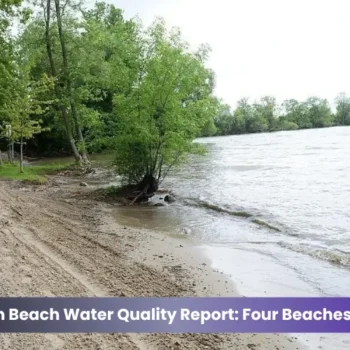
The latest Durham beach water quality report lists four public beaches as unsafe for swimming in Brock, Clarington and Oshawa as of 4 p.m. on July 23, 2026.
Residents and visitors are advised to stay out of the water at Beaverton North Beach, Beaverton South Beach, Bowmanville West Beach and Lakeview East Beach.
The remaining 11 beaches included in the regional report tested safe for swimming.
Durham Beach Water Quality Report Lists Four Unsafe Beaches
The following beaches were listed as unsafe:
Brock
- Beaverton North Beach — Wellington Street and Victoria Street
- Beaverton South Beach — Simcoe Street and Harbour Park Crescent
Clarington
- Bowmanville West Beach — West Beach Road and Cove Road
Oshawa
- Lakeview East Beach — Simcoe Street South and Lakeview Park Avenue
Warning signs may be posted at beaches where water samples exceed provincial recreational water-quality guidelines.
Eleven Beaches Tested Safe
The July 23 results listed the following beaches as safe for swimming:
Ajax
- Paradise Beach — Lakeview Boulevard and Paradise Lane
Brock
- Thorah Centennial Park Beach — Shoreline Road and Thorah Concession Road 9
Clarington
- Bowmanville East Beach — Port Darlington Road and East Beach Road
- Newcastle Central Beach — Mill Street South and Boulton Street
Oshawa
- Lakeview West Beach — Kluane Avenue and Lakeview Park Avenue
Pickering
- Frenchman’s Bay East Beach — Wharf Street and Liverpool Road
- Frenchman’s Bay West Beach — West Shore Boulevard and Beachpoint Promenade
Scugog
- Kinsmen Beach — Water Street and Mary Street
- Rowan Beach — Rowan Avenue in Caesarea
Whitby
- Iroquois Beach — Gordon Street and Waterfront Trail
- Whitby Beach — South Blair Street and Water Street
Why Beaches Are Marked Unsafe
Durham Region Health Department tests water at 15 public beaches throughout the summer to determine whether bacteria levels meet provincial recreational water standards.
A beach may be posted as unsafe when water samples contain elevated levels of E. coli bacteria.
High bacteria levels can increase the risk of stomach illness and infections affecting the skin, eyes, ears, nose or throat. Young children, older adults and people with weakened immune systems may face greater risks.
Pollution levels can be influenced by heavy rain, stormwater runoff, sewage overflows, wildlife waste, wind and changing water conditions.
Results May Not Reflect Current Conditions
Collecting, transporting and testing water samples can take a day or longer. As a result, posted test results may not always reflect conditions at the beach at the exact time of a visit.
Durham Region advises people to avoid swimming when:
- Heavy rain has occurred during the previous 48 hours
- The water is cloudy or discoloured
- Waves are unusually strong
- Large numbers of birds are present
- Garbage, debris, dead fish or unusual odours are visible
- A warning or water-quality advisory sign is posted
Visitors should also watch for possible blue-green algae. People and pets should remain out of water containing visible foam, scum, mats or paint-like discolouration.
Beach conditions can change quickly. Swimmers should check Durham Region’s current inspection results before entering the water.