The Brooklin Silly Goose Club is giving students at St. John Paul II Catholic School a shared way to practise kindness, include classmates and talk about belonging.
In an October 29 account, the Durham Catholic District School Board described an initiative that began at the start of the school year alongside International Literacy Day. Each student received a backpack keychain welcoming them into the club.
A school-wide message about inclusion
The club asks students to make an effort, help others, learn from mistakes, keep trying and enjoy learning. Including everyone is part of the message rather than a separate activity.
The board connects those ideas to its 2026–2027 spiritual theme, Shining Our Light. Assemblies and classroom conversations have explored empathy, kindness and how students can care for one another.
A read-aloud of Lindsay Marcos’s Silly Goose Goes Back to School also prompted discussion about friendship, confidence and feeling welcome.
Meet Gander
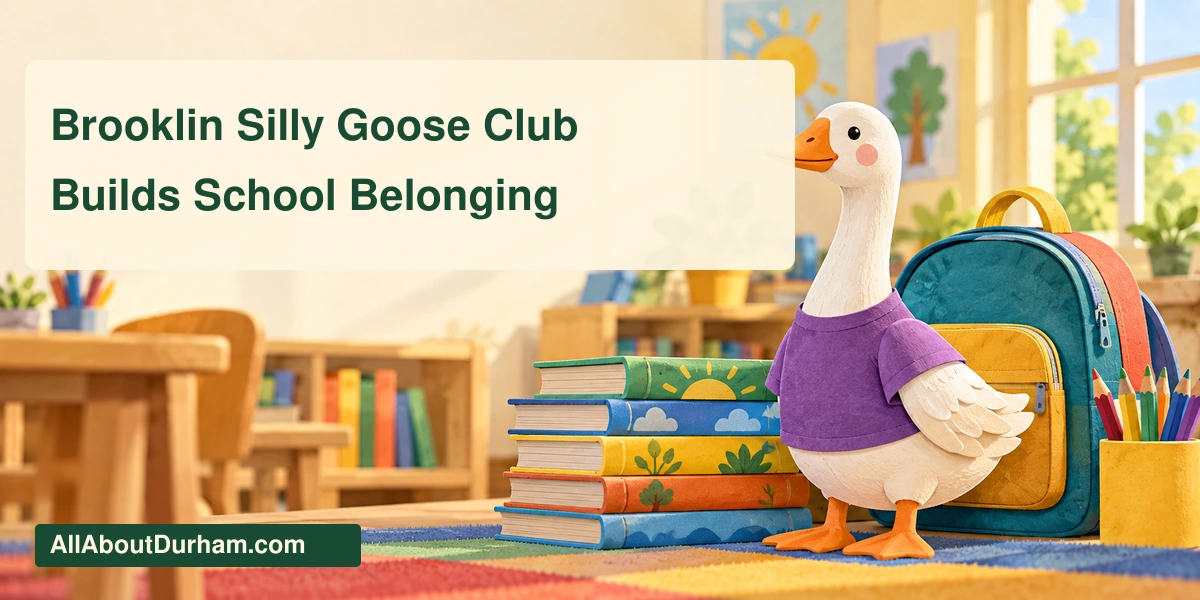
Students helped choose a name for the school’s decorative porch goose. The winning name was Gander.
According to the board, some junior students connected the choice to the Newfoundland community whose residents cared for travellers stranded after the September 11 attacks. Staff welcomed that link to hospitality and service.
Educator Mrs. Caruso assembled outfits for the goose to match school occasions. Gander has appeared in country-themed clothing, rainwear and a purple school-spirit shirt worn on Wednesdays.
The board says students look forward to seeing the changing outfits. Teachers have added goose figures to classrooms and connected the theme with science lessons about how geese travel together.
Learning together in Brooklin
The school has used the flock as a way to discuss cooperation, sharing leadership and looking out for other members of a community. The Brooklin Silly Goose Club brings those discussions into everyday school life through books, assemblies and classroom work.
St. John Paul II Catholic School is at 160 Cachet Boulevard in Brooklin, within Whitby. The board’s report describes the school’s experience with the initiative; it does not present a measured evaluation of student outcomes.