It has been just over a year since The Denise House, a shelter for women and children fleeing intimate partner violence (IPV), opened its new state-of-the-art facility in Oshawa, but the challenges the organization faces are only growing. While the new location, equipped with modern facilities and expanded programming, marks a significant achievement, it is struggling to meet demand as the need for its services continues to climb.
In the past year, the shelter has faced overwhelming demand, with staff members working tirelessly to provide safety and resources to victims of IPV. Despite the improvements in the new building, including increased space, accessible amenities, and the ability to house pets—a crucial element for women fleeing abusive situations—the shelter is always at full capacity.


Julia Fiddes, the executive director of The Denise House, explained that in the past year, the shelter had to turn away around 1,500 women and children who were seeking refuge. The inability to accommodate these individuals highlights the severe housing crisis that women escaping gender-based violence are facing, particularly the lack of affordable housing that can provide these women with the stability they need after leaving the shelter.


Last year, the Region of Durham declared IPV an epidemic, citing a sharp increase in domestic violence incidents across the area. Durham Region accounted for 10% of Ontario’s femicides in 2024, prompting local officials and organizations like The Denise House to raise concerns about the scarcity of resources available to address this growing crisis.
According to Fiddes, the current waiting times for women leaving the shelter are long, with many women “couch surfing” with friends or family or, in the worst cases, returning to their abusers due to the lack of safe and affordable housing options. The shelter was initially able to offer three to six months of housing to women in need, but now the wait has expanded to eight to ten months, with no guarantee that the women will be able to secure safe accommodation at the end of their stay.
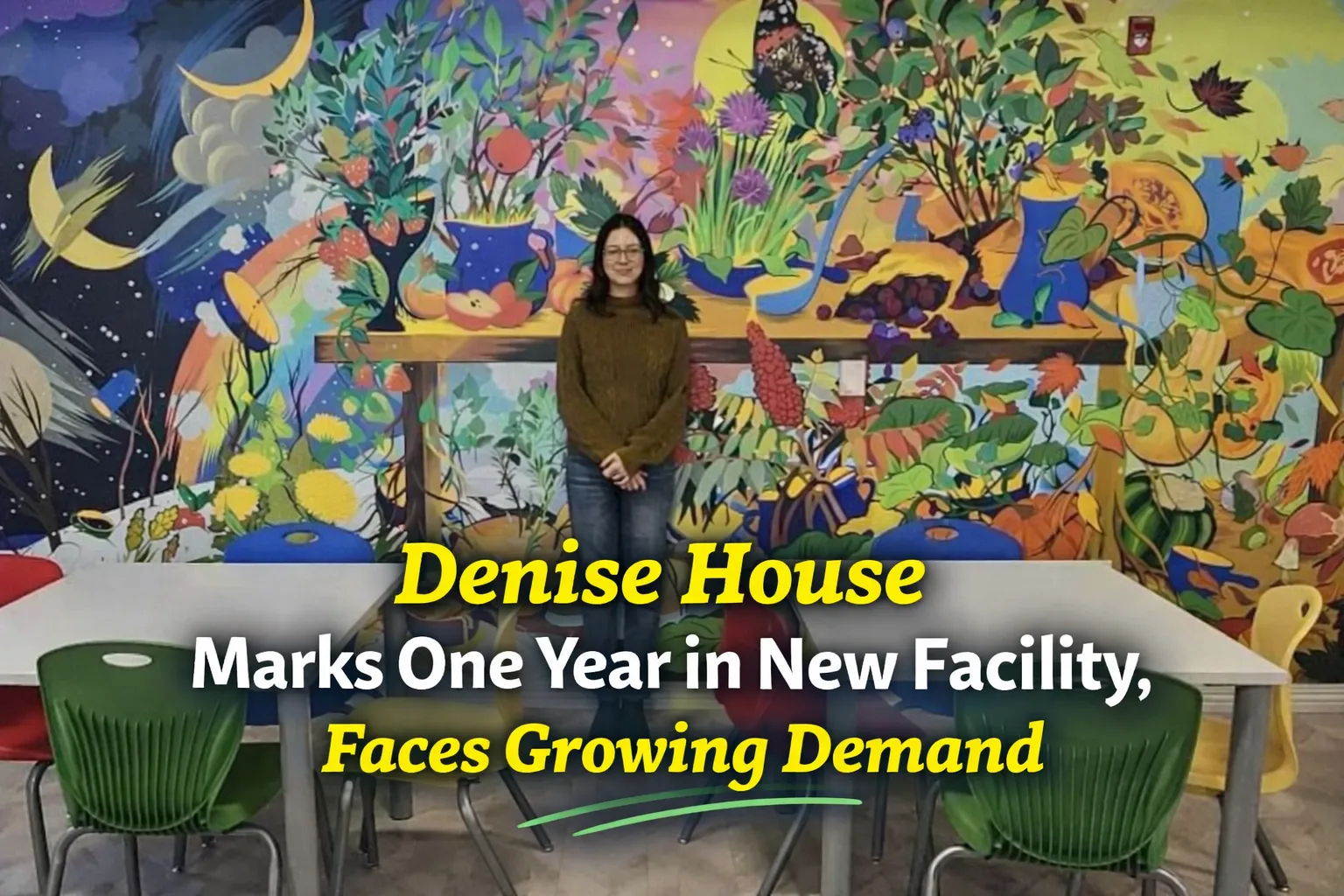
The Denise House‘s recent success includes the unveiling of a vivid mural by local artist Dani Crosby, symbolizing growth and resilience. The mural, located within the shelter, serves as a visual reminder of the transformation that many women experience while staying at The Denise House, overcoming the trauma of domestic violence and starting a new chapter in their lives.
However, Fiddes emphasizes that affordable housing is the key solution to solving the crisis. The shelter can only do so much with the resources it has, and without government support to fund transitional housing, it will continue to struggle with demand that exceeds its capacity.
In a recent report from Women’s Shelters Canada, it was revealed that over half of shelters across Canada are suffering from chronic underfunding. For The Denise House, this means relying on grants and donations to maintain its operations, as they lack sufficient core funding to provide the support necessary to truly address the issue of IPV in the Durham Region.
Despite these challenges, The Denise House remains a beacon of hope for women in Oshawa and beyond, helping countless women to transition from a life of violence to one of freedom and independence. Fiddes remains hopeful that more government support will come in the future, allowing the shelter to expand its transitional housing services and provide long-term solutions to women fleeing intimate partner violence.