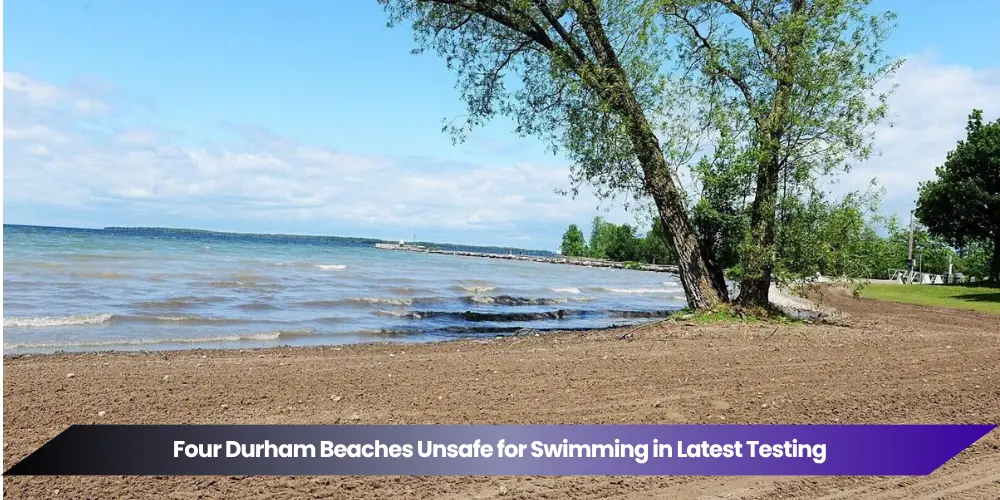
Four Durham beaches are unsafe for swimming following the latest water-quality testing released by the Durham Region Health Department on Friday, July 24, 2026.
The affected locations include two beaches in Brock, one in Clarington and one in Oshawa.
Based on the latest accessible results, residents are advised to avoid swimming at:
- Beaverton Beach North in Brock
- Beaverton Beach South in Brock
- Bowmanville Beach East in Clarington
- Lakeview Beach East in Oshawa
Beach visitors should check the Region of Durham’s Check&Go! portal before entering the water because conditions and posting statuses can change between weekly tests.
Why Durham Beaches Are Unsafe for Swimming
Durham beaches are posted as unsafe when testing finds bacterial levels above Ontario’s recreational water-quality standards or when other conditions create a possible health risk.
Elevated E. coli levels may indicate that the water has been contaminated by human or animal waste. The presence of high bacterial levels can also suggest that other disease-causing organisms may be present.
People exposed to contaminated recreational water may experience diarrhea, vomiting, stomach cramps or infections affecting the skin, eyes, ears, nose and throat.
Young children, older adults, pregnant people and individuals with weakened immune systems may face a higher risk of illness.
Testing Results May Not Reflect Current Conditions
Collecting, transporting and analyzing beach-water samples can take a day or longer. This means the latest test result may not always represent conditions at the exact time someone visits a beach.
Swimming should also be avoided during heavy rain, when the water appears cloudy or rough, when large numbers of birds are present or for approximately 48 hours after a significant storm.
Rain can wash bacteria, animal waste and other pollutants from surrounding land into lakes and beaches.
A beach may also be declared unsafe because of pollution, sewage spills, debris, strong odours, dead fish or potentially toxic blue-green algae.
Check Beach Status Before Visiting
Durham Region monitors public beaches weekly from June until the end of August. Results for all monitored beaches are published through the Check&Go! Durham inspection portal.
Visitors should look for posted warning signs and avoid entering the water when a beach has been identified as unsafe.
The advisory does not necessarily mean the beach itself is closed. Residents may still be able to use surrounding park areas, but swimming and other activities involving contact with the water are not recommended until testing confirms safer conditions.