







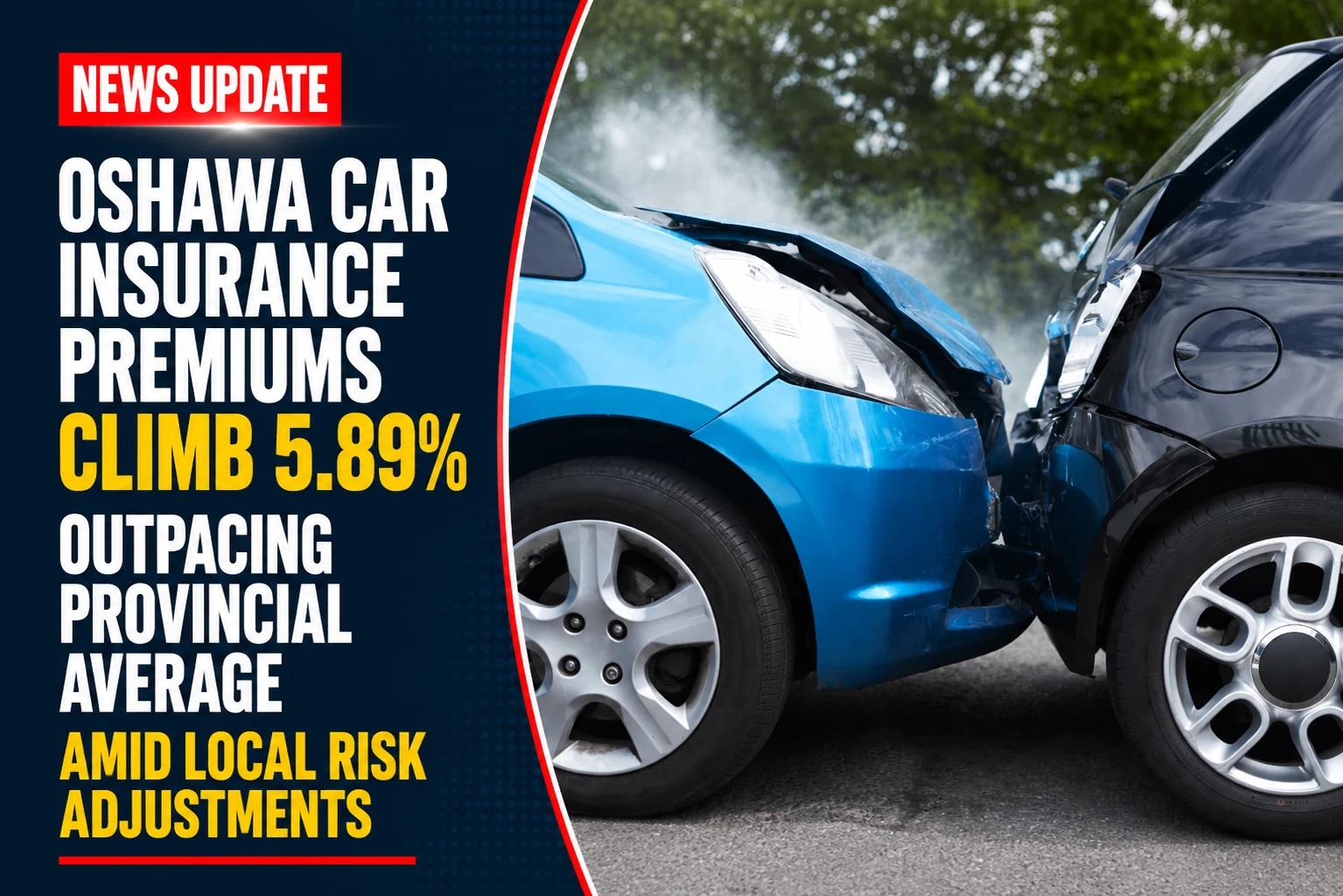
The consumer finance frameworks and vehicular risk portfolios within the Durham Region are facing renewed upward pricing pressures. Tracked under provincial consumer transit registries on Thursday, June 25, 2026, data analysts finalized the regional insurance index for Car insurance rates in Oshawa spike 5.89 per cent year-over-year: report. Released by leading Canadian insurance technology firm MyChoice, the exhaustive data mid-year audit reveals that Oshawa drivers are confronting sharp premium adjustments that outpace Ontario’s broader provincial baseline, driven primarily by localized collision frequencies and persistent suburban risk factors.
The localized premium squeeze highlights a shifting landscape where insurers are increasingly pricing coverage based on specific neighborhood grid experience rather than broad regional templates.

The Premium Dissection and Territorial Risk Allocations
The 2026 insurance market review relies on a vast data pool drawn from thousands of real-time insurance quotes generated between January and June 2026.


-
The Oshawa Cost Metric: The average annual car insurance premium for an Oshawa motorist jumped from $1,998 in 2025 up to $2,116 in 2026. This 5.89 percent annual increase stands substantially higher than the overall Ontario provincial average increase of 4.45 percent.
-
The Neighborhood Risk Hotspot: When broken down by localized postal codes, south and west Oshawa (the L1J postal zone) flagged the highest driving risk profile in the city. Approximately 15.3 percent of drivers originating from this specific grid reported an active collision on their historical record, prompting insurers to adjust base territory rates upward.
-
The Broader GTHA Context: Despite the local climb, Oshawa’s total premium layout remains significantly below traditional high-risk hot zones. Brampton continues to rank as the most expensive city in Ontario with an average premium of $3,471, followed closely by Scarborough at $3,047.
Analyzing the 2026 Ontario Premium Volatility and Affordability Scale
While Oshawa ranks as one of the highest-priced insurance markets within the immediate Durham Region, its overall rate of increase sits as the 12th steepest spike province-wide.
| Surveyed Ontario Municipality | 2026 Average Annual Premium | Year-over-Year Percentage Change | Dominant Localized Rating Driver |
| City of Vaughan | $2,705 Annual Base | 8.86% Premium Surge | Elevated multi-vehicle suburban collisions |
| City of Kingston | $1,738 Annual Base | 8.64% Premium Surge | Heightened localized accident frequencies |
| City of Oshawa | $2,116 Annual Base | 5.89% Premium Surge | L1J postal code collisions & claims volumes |
| Scarborough Grid | $3,047 Annual Base | 5.77% Premium Surge | Persistent auto theft risk profiles |
| Ontario Provincial Average | N/A Consolidated Index | 4.45% Standard Increase | Vehicle repair inflation & fraud overhead |
MyChoice CEO Aren Mirzaian explained that the 2026 insurance market marks a distinct transition where premium growth is spreading across a much broader range of mid-sized municipalities. While a province-wide drop in aggregate auto thefts has provided a welcome stabilizing factor for comprehensive coverage lines, insurers are grappling with a 3.90 percent spike in specialized vehicle repair costs and parts inflation.
Furthermore, local motorists are being reminded of massive upcoming regulatory changes; on July 1, 2026, the Ontario government is introducing sweeping auto insurance reforms, shifting to a modular, à la carte model that leaves standard medical care mandatory while turning several traditional accident benefits into optional add-ons.
Durham Region vehicle owners, commuter advocacy groups, and local policyholders looking to compare multi-provider insurance baselines, review upcoming July 1 statutory benefit selection forms, or check localized postal code risk ratings can explore the comprehensive interactive consumer database online at mychoice.ca.