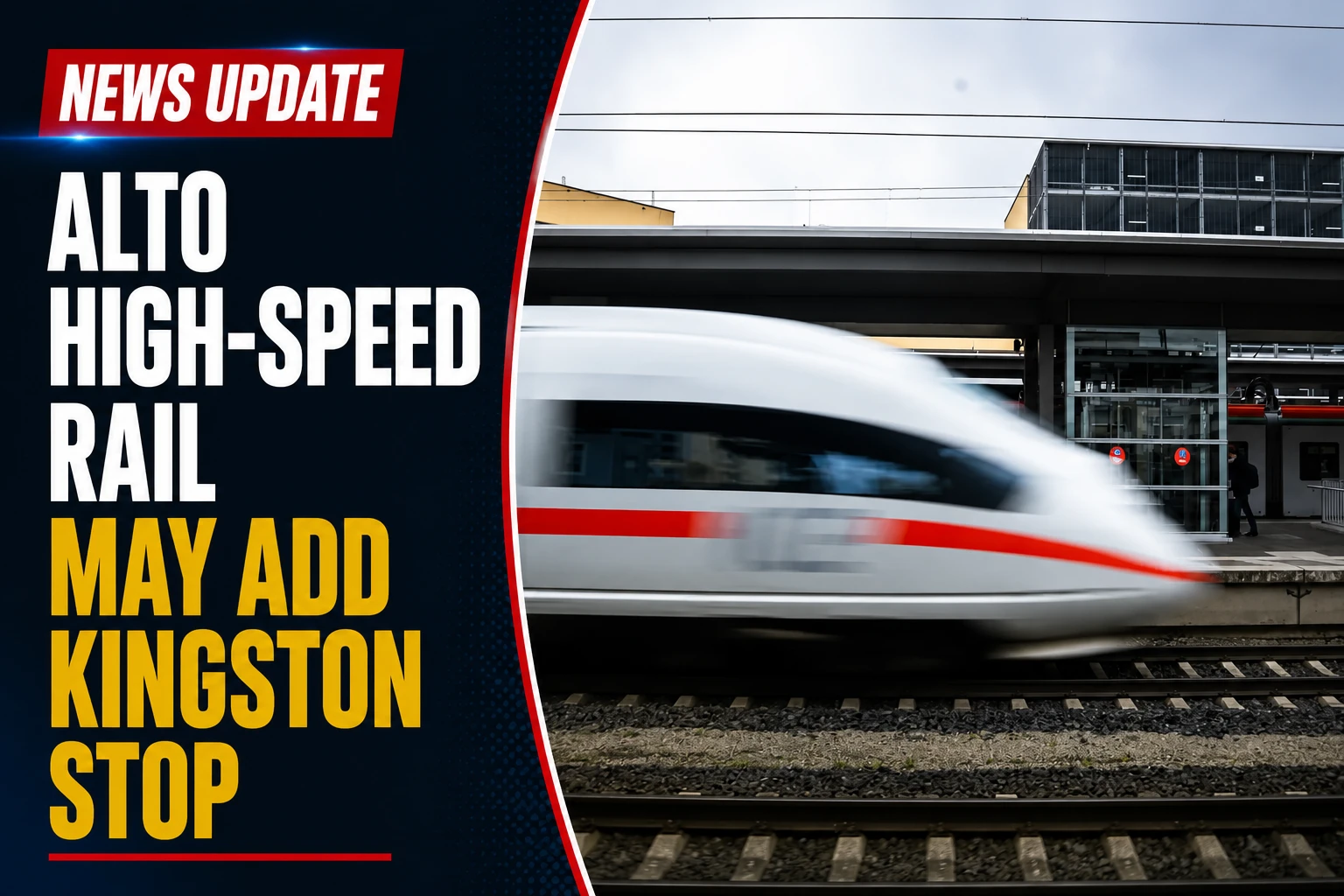
The long-term infrastructure blueprint and regional transit framework linking the Windsor-Quebec City commercial corridor have entered a significant phase of structural modification. Tracked under active federal transportation planning portfolios on Monday, June 22, 2026, Canada’s Minister of Transport, Steven MacKinnon, issued a formal executive directive to the leadership desk of Alto. The high-level command mandates that the federal Crown corporation immediately design and evaluate a dedicated southern routing option capable of integrating a permanent high-speed passenger rail station directly inside the city limits of Kingston, Ontario.
The strategic pivot comes immediately after the public release of the agency’s highly anticipated “What We Heard” stakeholder consultation report, which synthesized a intensive 100-day public feedback loop involving indigenous communities, local municipalities, and agricultural groups across the province.
The massive mega-project, which carrying a projected capital development envelope of $60 billion to $90 billion, aims to build an independent, fully electrified high-speed right-of-way capable of supporting passenger trains travelling at sustained operating velocities up to 300 km/h. Under the initial project configurations managed by Alto since its establishment in 2022, the planned corridor focused heavily on a direct northern line moving straight through Peterborough toward Ottawa before connecting downward into Montreal and Quebec City.
However, the baseline path has triggered heavy blowback from environmental groups, rural property owners, and agricultural federations who warned that the proposed tracks would slice through sensitive ecological preserves and permanently divide crucial family farm assets. By ordering a comprehensive assessment of an alternative southern tracking line, federal planners are attempting to address rural land-use friction while unlocking a critical secondary regional passenger base.
The incorporation of a Kingston hub would profoundly alter the transit dynamics of eastern Ontario, effectively shortening travel times between the lakeside university city and downtown Toronto to a mere 90 minutes. Local municipal leaders and regional economic development councils have aggressively lobbied for the southern adjustments, pointing out that utilizing an alignment closer to the Highway 401 transit footprint represents a much more viable business case.
Furthermore, the revised layout addresses provincial concerns regarding geographic equity. Under the previous blueprint, the multi-billion-dollar line scheduled four distinct station stops within the province of Quebec compared to only three inside Ontario, a configuration that provincial leaders argued failed to properly serve the high-density commuter pools of the Great Lakes basin.
While transport planners pivot to map out the technical feasibility of the newly proposed southern extension, the baseline delivery timelines for the broader trans-provincial network remain fixed. Construction teams are scheduled to break ground on the initial structural leg connecting Ottawa and Montreal by 2029 or 2030, using that eastern segment as an operational baseline before extending the heavy high-speed tracking networks westward into the high-traffic Peterborough and Greater Toronto Area corridors.
Alto technical personnel are slated to begin comprehensive field studies and engineering assessments along the newly designated southern corridors over the coming months, balancing maximum train speed performance against real-world property impacts to establish the final, 60-meter-wide permanent right-of-way.