Jawaid Danish, a resident of Oshawa for more than four decades, has established himself as a celebrated voice within Canada’s Urdu literary diaspora. While the 71-year-old is known locally as a prominent member of the Oshawa Seniors Community Centres (OSCC), his extensive portfolio spans over 20 books, ranging from novels and academic works to children’s stories and plays. Now retired, Danish is dedicating his life to chronicling the nuanced immigrant experience through the lens of his native language, serving as a vital bridge between his heritage and his Canadian home.
Danish’s journey to the Durham Region began in the 1980s following years of international travel. Born in Kolkata, India, he initially spent much of his professional life in the retail and food service industries, running stores in Whitby and Scarborough and operating a restaurant in Pickering alongside his wife, Uzma. Despite the rigorous demands of these business ventures, Danish maintained a deep interest in literature, having studied the subject at university. He began his professional writing career by crafting travelogues for an Indian newspaper, a creative pursuit that eventually evolved into a prolific literary vocation.


His body of work focuses heavily on the narratives of newcomers, exploring both the pains and the pleasures of life in Canada. Although he writes primarily in Urdu, his works have been translated into several global languages and have become the subject of academic studies regarding the Indian and Urdu diaspora. Beyond the page, Danish has translated his storytelling into performance, directing plays at Indian-language theatre festivals and delivering solo monologues in venues across the Toronto area and India.


For many years, Danish struggled to find local outlets to exhibit his theatrical work within the Durham area, often traveling to Toronto to perform. That changed in 2019 when he organized a multilingual theatre festival at the Oshawa Little Theatre through the OSCC. During this event, he recalls a specific interaction where he offered a refund to a group of English-speaking seniors. The group declined, noting that while they could not understand the language, they connected deeply with the emotion and diction of his performance—a validation of the universal power of his storytelling.
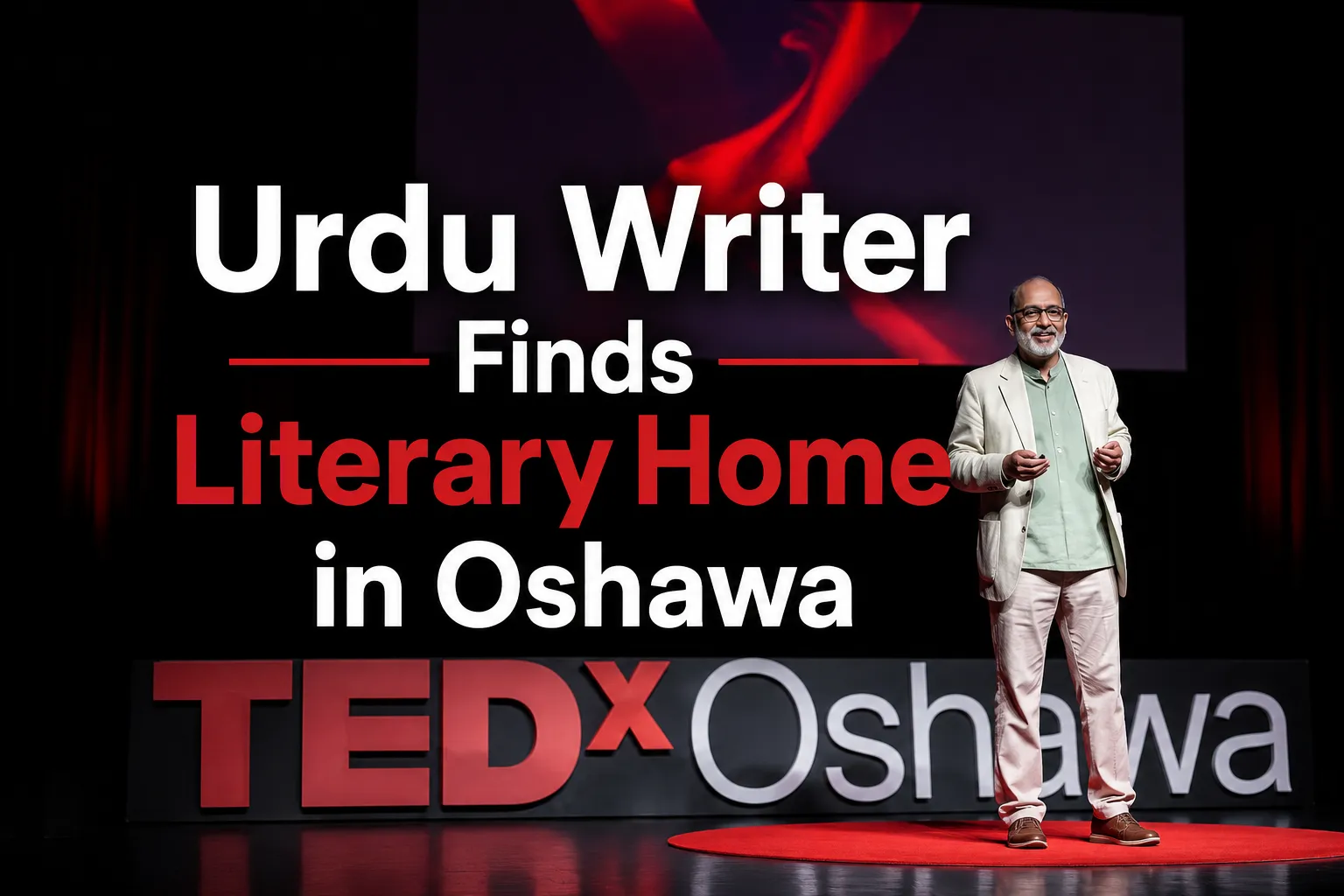
More recently, Danish brought his talents to the local stage with a solo monologue at a TEDx Talk in Oshawa. He performed a reworked version of his play “Yes, My Son Razi is Autistic,” offering a perspective from the viewpoint of a parent of a child with autism. Through his company, RangManch Canada, he continues to organize theatre festivals in Ontario, bridging cultural gaps through performance. He views his writing not merely as art, but as a tool to help newcomers settle and feel at home.
Looking ahead, Danish plans to continue mentoring young writers and expanding the reach of RangManch Canada. He hopes to see more multilingual initiatives supported within Durham Region, believing that art in all its forms is essential for a thriving, inclusive society. His legacy is not just in the books he has written, but in the lives he has touched through his unwavering dedication to storytelling.
Reflecting on his career trajectory, Danish describes himself as a “born storyteller” who was absorbing ideas like a sponge while working various odd jobs and selling leather goods. While his sons jokingly suggest he might have found more financial success writing a single book in English rather than 20 in Urdu, Danish finds greater fulfillment in his cultural contributions. As he continues to travel frequently in his retirement, he remains committed to dedicating his free time to his writing and the community he serves.