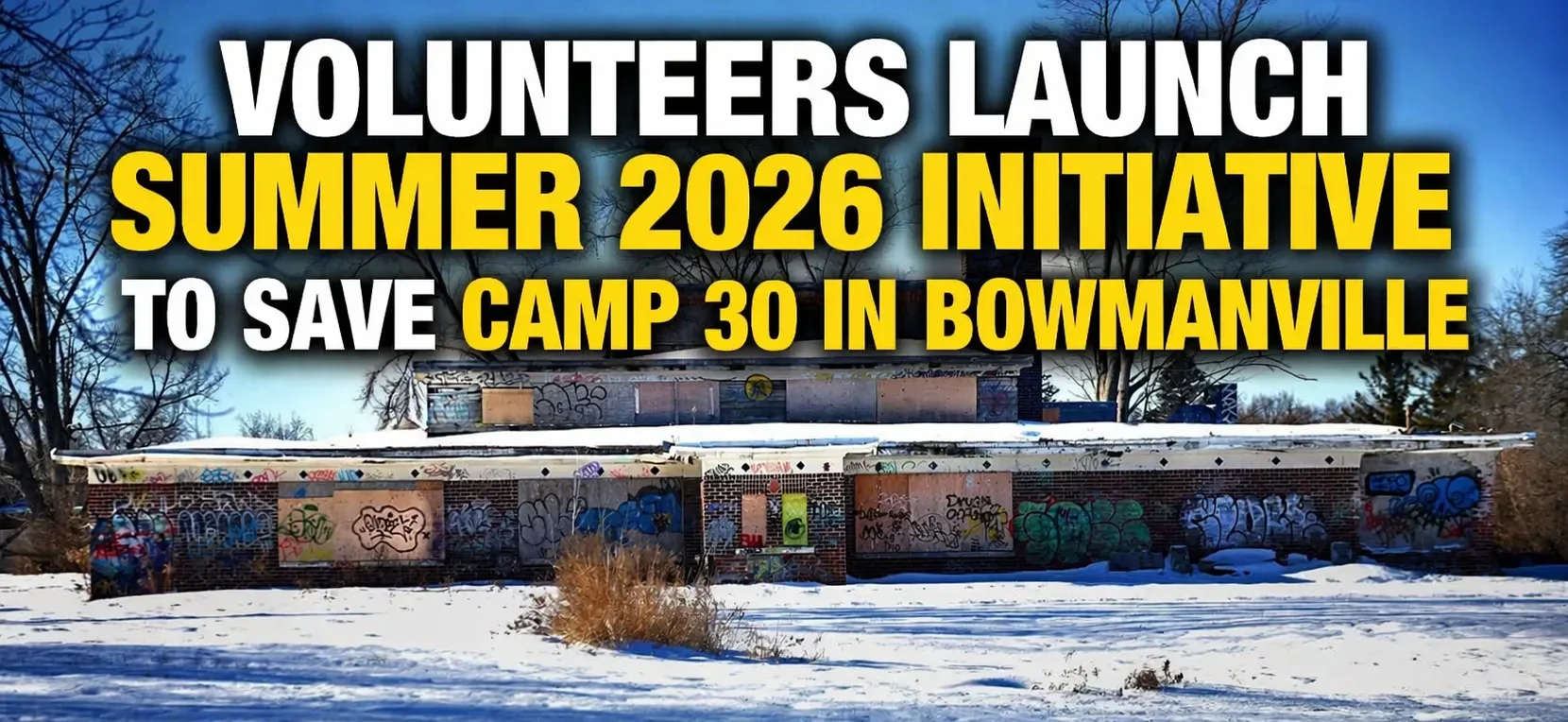
Efforts to preserve Canada’s last intact Second World War prisoner of war camp are moving into a critical new phase this summer. The Jury Lands Foundation (JLF), a volunteer-led organization, has announced that restoration work on the cafeteria building at Camp 30 in Bowmanville will officially begin during the 2026 construction season. This project serves as a “proving ground” for the site’s potential, with the ultimate goal of transforming the historic ruins into a vibrant community hub. Following a ratification vote by Clarington Council, the first phase will focus on hazardous material abatement and structural shoring to stabilize the building for future reuse.
The cafeteria building is a central piece of the Jury Lands, a site designated as a National Historic Site for its role in housing high-ranking German officers during the war. Marilyn Morawetz, chair of the JLF, emphasized that the site represents a rare physical link to Canada’s home-front efforts during WWII. To ensure the restoration meets strict heritage standards, the foundation is collaborating with the Municipality of Clarington and Manorville Homes, a contractor specializing in the rehabilitation of historic structures. This summer’s work is backed by $1 million in secured funding, though the foundation warns that subsequent phases will rely heavily on ongoing community donations.
Beyond the physical construction, the JLF is launching a series of public engagement activities to educate residents on the history of Camp 30 in Bowmanville. A new speaker series, presented in partnership with Clarington Library, Museums and Archives, will debut on May 23 at the Sarah Jane Williams Heritage Centre. The first session will feature historian Sher Leetooze discussing the history of Clarington’s Home Children. Throughout the summer, the foundation will also host monthly guided tours of the Ehrenwort Trail, outdoor movie nights, and a community garden project that previously provided over 300 pounds of produce to local food banks.
The long-term vision for the cafeteria building is to provide a permanent home for local community organizations that currently lack a dedicated physical address. By creating a shared “community hub,” the JLF hopes to foster local connections while preserving the architectural integrity of the prisoner of war camp. Volunteers will be present at the upcoming Maple Fest in Bowmanville to provide updates on the project and collect donations. Morawetz noted that even small contributions are vital, as the total cost of fully restoring the multiple buildings on the site remains a significant financial challenge.
As the construction crews arrive this summer, the work at Camp 30 in Bowmanville marks a turning point for a site that has long faced the threats of vandalism and decay. The foundation believes that by successfully salvaging the cafeteria, they can prove the cultural and economic value of the lands to the wider Durham Region. For those interested in the preservation of Canadian history or seeking to volunteer, the JLF continues to share progress updates and event schedules through their social media platforms and official website, inviting the public to witness the rebirth of this national landmark.