A woman who sped through a red light at over 100 kilometres per hour, killing a red light killing man in a horrific collision, has been sentenced to two years of house arrest instead of prison, prompting outrage from the victim’s best friend who lives in Uxbridge.
Kayla Connelly-Kereliuk, 29, from Newmarket, pleaded guilty to dangerous driving causing death and bodily harm after the June 21, 2024 crash that killed 40-year-old Grant Goodine. The collision occurred at 9:15 a.m. at the intersection of Mulock Drive and Sanford Street when Goodine was driving through a green light on his way to work at the meat department at Nature’s Emporium in Newmarket.


Court documents reveal that Connelly-Kereliuk was driving between 101 and 115 kilometres per hour in a 60 km/h zone when she barrelled through the red light and smashed into Goodine’s car. He died two weeks later from his injuries. Her passenger, David Schronk, suffered a broken ankle and cracked sternum and continues to experience the effects of his injuries.


The reconstruction evidence established sustained acceleration, near full throttle, and the absence of meaningful braking or evasive action by Connelly-Kereliuk prior to impact, court documents state.
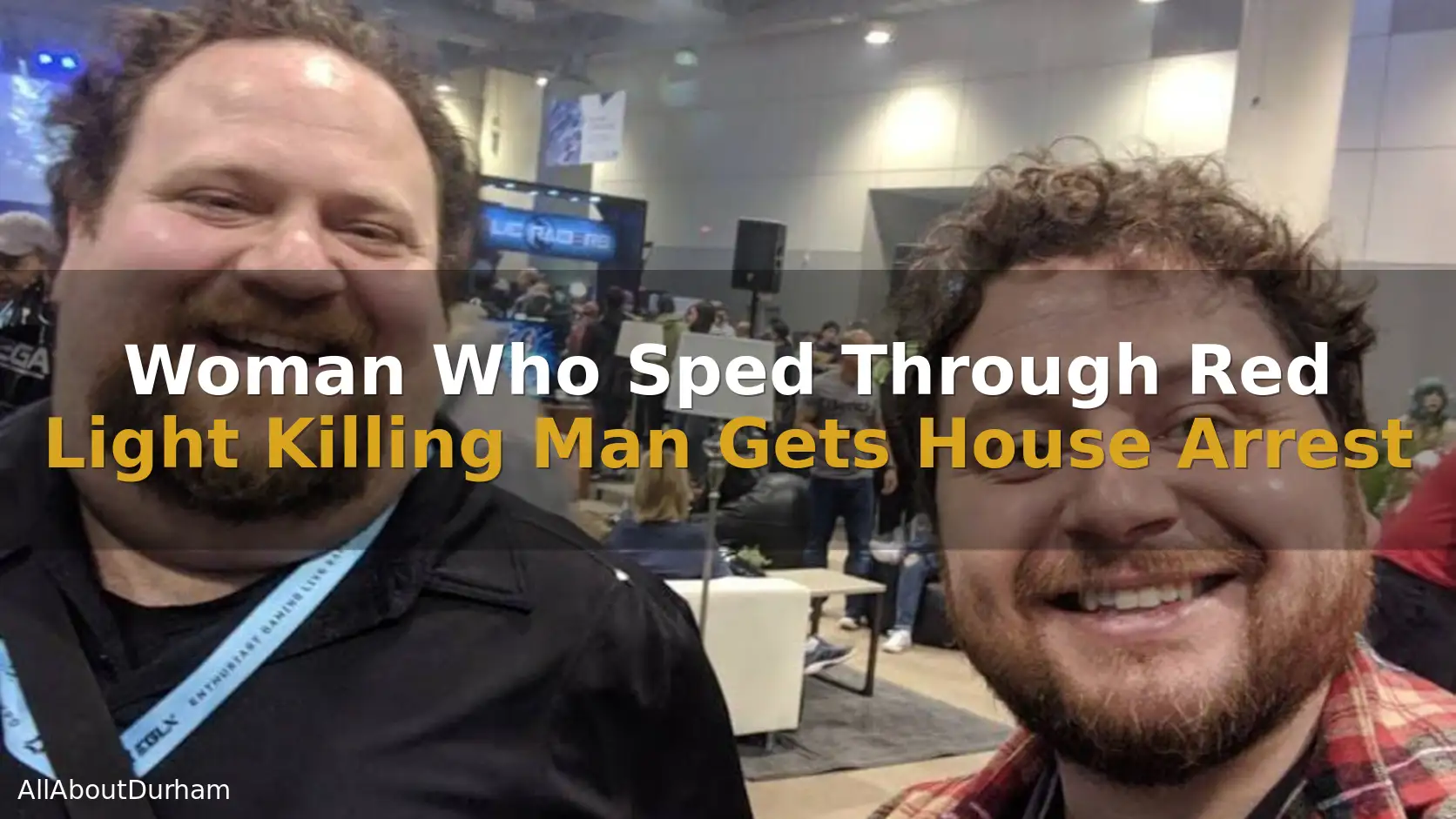
Ryan Sim, Goodine’s best friend who lives in Uxbridge in Durham Region, expressed deep frustration with the sentencing decision. The standup comedian said the two years of house arrest makes him feel like his friend’s life was not worth anything and questioned what message the sentence sends to other drivers.
I am upset. Two years house arrest makes me feel like his life was not really worth anything, Sim said from his Uxbridge home. I do not know what the lesson is from this. I do know it is not going to help people drive any better.
Justice Joseph Kenkel decided against the Crown’s recommendation of four years in prison, instead giving significant weight to Connelly-Kereliuk’s bipolar disorder diagnosis from 2020. The judge found a direct causal connection between her mental health condition and the offences, noting that even Connelly-Kereliuk does not understand why she drove that way on the morning of the fatal collision.
Despite prior instances of aggressive driving on her record, the judge determined that rehabilitation was an important goal given that Connelly-Kereliuk is a first-time offender. The judge added that nothing he could say or any sentence he could impose would repair the loss suffered by Goodine’s family and loved ones.
Sim described Goodine as the best person he had ever met — a big jolly man who was always smiling and who everyone wanted to be around. If you could just think of what friendly and jolly is, that is what Grant is, Sim said. There is a massive hole in the hearts of all the people who loved him.
In addition to two years of house arrest, Kenkel imposed a 10-year driving ban to take effect after the conditional sentence ends, a DNA order, and a weapons prohibition for 10 years. The case has sparked discussion in the Durham Region community about sentencing outcomes for dangerous driving convictions.