







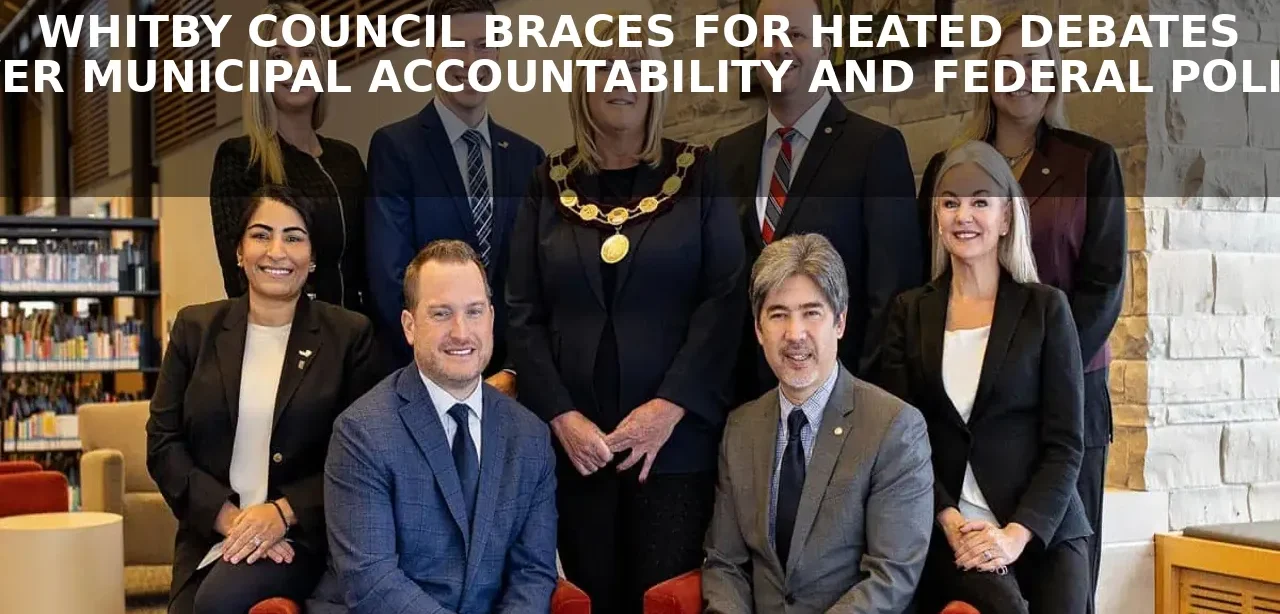
The Town of Whitby is set for another round of intense political discourse this Monday, April 13, 2026, as several “left-over” motions from a stormy March session return to the floor. The agenda for the Committee of the Whole meeting is packed with items that have split the council and drawn significant public attention, ranging from strengthening the powers to remove unethical politicians to critiques of federal immigration and justice policies. With the municipal election just months away, these debates are highlighting a deep ideological divide within the Durham Region’s second-largest municipality.
Mayor Roy Seeks Stronger Ethics Enforcement
At the heart of the municipal accountability debate is a motion from Mayor Elizabeth Roy. The Mayor is calling on the Ontario government to significantly strengthen the framework for holding elected officials responsible for serious ethical breaches. Her motion advocates for a provincial investigative body—entirely independent of local Integrity Commissioners—that would have the authority to address abuses of power, including coercion and intimidation.


Crucially, Roy is pushing for the power to impose much harsher penalties, including the permanent disqualification of an individual from holding municipal office. This move aligns with a related motion from Councillor Rhonda Mulcahey, who argues that the current “unanimous vote” requirement to declare a council seat vacant is too high a threshold and undermines public confidence.

Bill 9 and the Municipal Accountability Act
The debate comes as the province considers Bill 9, the Municipal Accountability Act. If passed, this legislation would allow the Integrity Commissioner of Ontario to recommend a seat be declared vacant if a councillor commits a “serious contravention” of the code of conduct that harms individuals or destroys public trust. Whitby’s council is currently debating whether the local vote to finalize such a removal should be reduced to a two-thirds majority rather than the current near-impossible standard of unanimity.
The “Political Theatre” of Non-Municipal Motions
While some councillors focus on internal governance, others are pushing the boundaries of municipal jurisdiction. Regional Councillor Chris Leahy has several motions on the agenda that have been characterized by critics as “headline-grabbing” theatre. These include:
-
Temporary Foreign Workers: A request for staff to review the program’s impact on the local economy (after a previous attempt to ban participating companies was ruled a violation of the Human Rights Code).
-
High-Risk Offenders: A demand that the federal government notify municipalities when high-risk offenders are released on unescorted passes.
-
Development Charges: A request for a report on how the ‘Canada–Ontario Partnership to Build’—which slashes development charges by 50%—will impact Whitby’s long-term financial sustainability.
In response to these far-reaching motions, Ward 2 Councillor Victoria Bozinovski has successfully pushed to tighten the criteria for motions that have “no relevance to municipal government,” aiming to keep council focused on local infrastructure and services.
Upcoming Election Context
As the 7:00 p.m. meeting gets underway, the shadow of the upcoming fall election looms large. With nominations opening in just over two weeks, tonight’s fireworks are seen by many as the unofficial start of the campaign trail. For residents of the Durham Region, the outcome of these debates will determine not only how their local government is policed but also how much time is spent debating national issues versus local taxes and housing affordability.