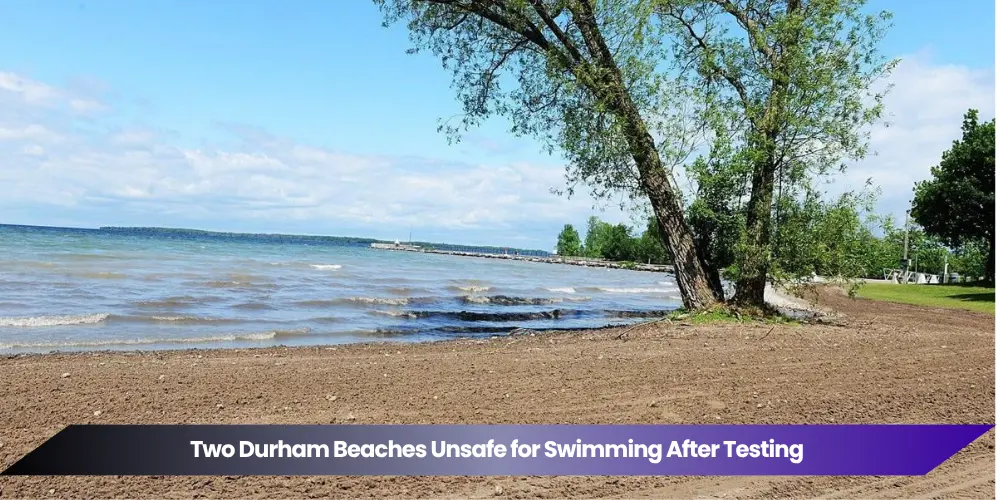
Two Durham beaches are unsafe for swimming following the latest water-quality update released by Durham Region Health Department on Thursday, July 30, 2026.
Residents are being advised to stay out of the water at Lakeview Beach East in Oshawa and Kinsmen Beach in Scugog.


The remaining 13 public beaches monitored by Durham Region were listed as safe for swimming based on the latest available test results.


Durham Beaches Unsafe for Swimming
The two beaches currently listed as unsafe are:
- Lakeview Beach East in Oshawa, located near Simcoe Street South and Lakeview Park Avenue.
- Kinsmen Beach in Scugog, located near Water Street and Mary Street in Port Perry.
Kinsmen Beach was tested on July 29 and did not meet the applicable recreational-water standard.
The most recent result listed for Lakeview Beach East was collected on July 23. Beach visitors should check the current Durham Region portal before travelling because testing information and advisory statuses can change.
Thirteen Durham Beaches Pass Testing
The latest report lists the following beaches as safe for swimming:
- Beaverton Beach North in Brock
- Beaverton Beach South in Brock
- Thorah Centennial Park Beach in Brock
- Bowmanville Beach East in Clarington
- Bowmanville Beach West in Clarington
- Newcastle Central Beach in Clarington
- Frenchman’s Bay East Beach in Pickering
- Frenchman’s Bay West Beach in Pickering
- Paradise Beach in Ajax
- Iroquois Park Beach in Whitby
- Whitby Beach in Whitby
- Lakeview Beach West in Oshawa
- Caesarea Beach in Scugog
Durham Region tests its monitored public beaches weekly from the beginning of June through the end of August. Water samples are analyzed for elevated levels of E. coli and other indicators that may make swimming unsafe.
Why Beaches May Be Declared Unsafe
A beach may be posted as unsafe when bacterial levels exceed Ontario’s recreational-water guidelines.
Elevated E. coli levels can indicate contamination from stormwater runoff, animal waste or other environmental sources. Exposure to contaminated water may cause stomach illness, vomiting, diarrhea or infections affecting the skin, eyes, ears, nose and throat.
Beach conditions can change between scheduled tests. Collecting and analyzing water samples can also take a day or longer, meaning posted results may not always reflect conditions at the exact time of a visit.
Residents should avoid swimming during heavy rain, when water appears cloudy or rough, and for at least 48 hours after significant rainfall because runoff can increase bacterial contamination.
Visitors should also remain alert for blue-green algae. People and pets should avoid water that appears green, cloudy, soupy or covered by surface scum.
Beach users are encouraged to check the latest Check&Go! Durham results and observe all posted warning signs before entering the water.