










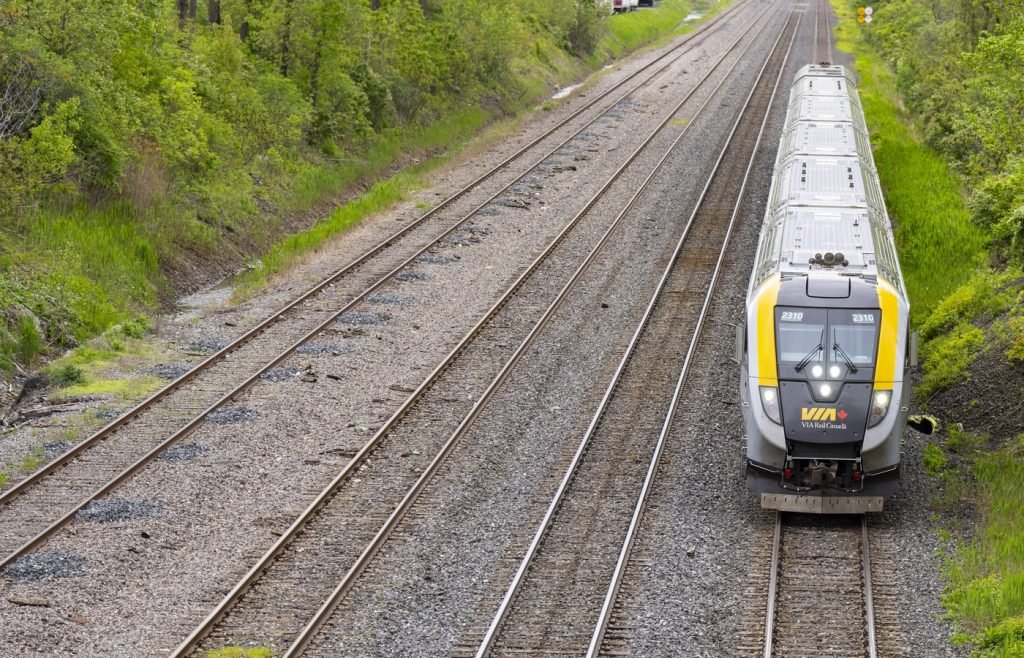



A proposed high-speed rail line between Toronto and Quebec City could see as many as 72 passenger trains per day travelling through Canada’s busiest corridor, according to internal planning documents obtained by The Canadian Press.
The estimates come from draft technical briefings prepared in 2023 by the Crown corporation now known as Alto, which is overseeing development of the project. The documents suggest the roughly 1,000-kilometre high-speed network could dramatically increase rail service while cutting travel times, with trips between Toronto and Montreal reduced to about three hours.
An Alto spokesperson confirmed that the estimate of 72 daily trains remains reasonable, though the figures are considered planning assumptions rather than final service decisions. Current planning envisions 20 to 30 trains per day in each direction between Toronto and Montreal, compared with roughly eight trains per direction currently operated by VIA Rail. Some services would be express trains, bypassing certain stations.
At present, VIA Rail says an average of 39 trains per day operate across the various segments of the Quebec City–Toronto corridor.
The federal government formally announced the high-speed rail project in February, calling it the largest infrastructure project in Canadian history. Trains would operate on dedicated, electrified tracks at speeds of up to 300 km/h, marking a shift away from the previously proposed high-frequency, lower-speed rail plan.
In September, Prime Minister Mark Carney said the government’s new major projects office would accelerate engineering and regulatory work on the railway. Transport Minister Steven MacKinnon later confirmed that the first construction segment will link Montreal and Ottawa, with work expected to begin in 2029.
Alto estimates the full network could cost between $60 billion and $90 billion, though the federal government has not yet approved funding for the entire line.
Earlier studies suggest the high-speed option could attract significantly more riders than either the current VIA Rail service or the previously proposed high-frequency system. One briefing projects 26.5 million annual trips by 2059 on a high-speed network, compared with 17.7 million for a high-frequency option and 6.4 million under existing services.
Transportation experts say the project’s success will depend on future travel patterns and competition from other modes, while advocates argue there is substantial untapped demand for fast, reliable rail travel between Ontario and Quebec.
The Canadian Press report was first published on December 19, 2025.
Photo Credits : INSAUGA