








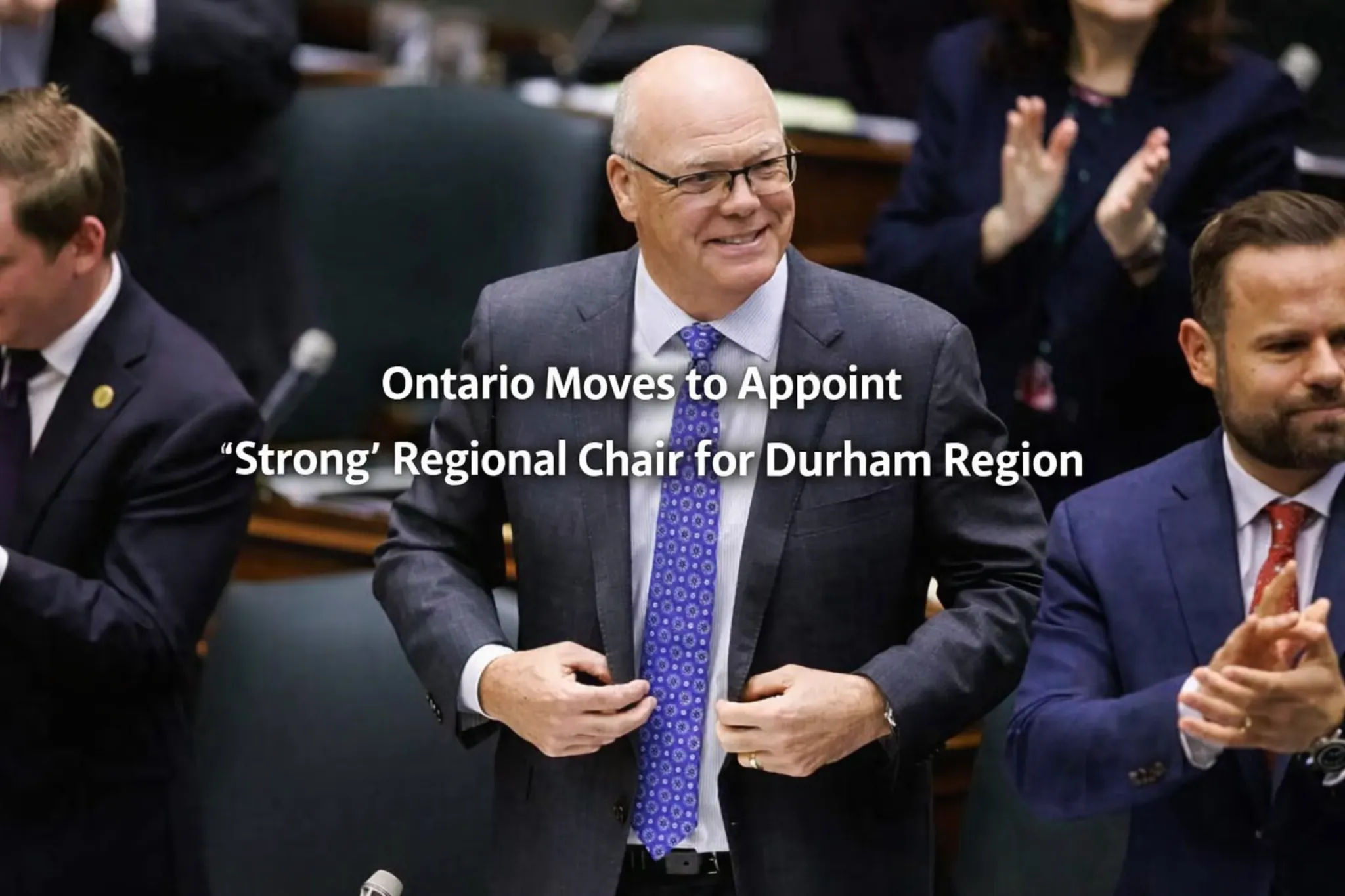
The Ontario government has introduced new legislation that will fundamentally shift how local governance operates within the Durham Region. On Thursday, Municipal Affairs and Housing Minister Rob Flack tabled a bill that proposes to directly appoint regional council chairs in eight specific regions and counties, including Durham. This move will grant these appointed officials “strong chair powers,” a regional equivalent to the controversial “strong mayor” powers already granted to numerous municipalities across the province.
Centralizing Municipal Authority
The provincial government argues that the move is designed to streamline decision-making and ensure fiscal responsibility. According to Minister Flack, the appointment of a chair is intended to align municipal priorities more closely with provincial objectives. Under the new legislation, the appointed chair for the Durham Region will function similarly to a “chair of the board,” while the rest of the council will continue to consist of elected municipal officials.


The “strong chair powers” accompanying these appointments are significant. The appointed chair will have the authority to:

-
Appoint or fire the Chief Administrative Officer (CAO) and various division heads.
-
Direct municipal staff.
-
Veto specific bylaws passed by the council.
-
Propose the annual municipal budget.
Concerns Over Local Democracy
While the government maintains that “democracy is alive and well,” the bill has faced sharp criticism from opposition leaders. Critics view the move as a consolidation of power by Premier Doug Ford’s administration, comparing it to the recent provincial takeover of several school boards.
Interim Liberal leader John Fraser characterized the legislation as part of a recurring pattern of power centralization. Similarly, NDP critic Jeff Burch argued that the bill allows the Premier to insert himself into local issues, effectively removing power from local decision-makers and the residents they represent.
Broader Regional Impacts
The legislation follows a period of tension regarding municipal structures in other parts of Ontario, such as Niagara, where debates over amalgamation have been prominent. While Durham’s council size remains stable under this specific proposal—unlike Niagara and Simcoe County, which will see their councils significantly reduced—the shift from an indirectly elected or council-appointed chair to a provincially appointed one marks a major change for Whitby, Oshawa, and surrounding municipalities.
By appointing the regional chair in Durham, the province ensures that the leadership of one of Ontario’s fastest-growing regions remains in sync with Queen’s Park. As the bill moves through the legislature, residents across the Durham Region will be watching closely to see how this shift in power dynamics affects local services, taxation, and long-term regional planning.