









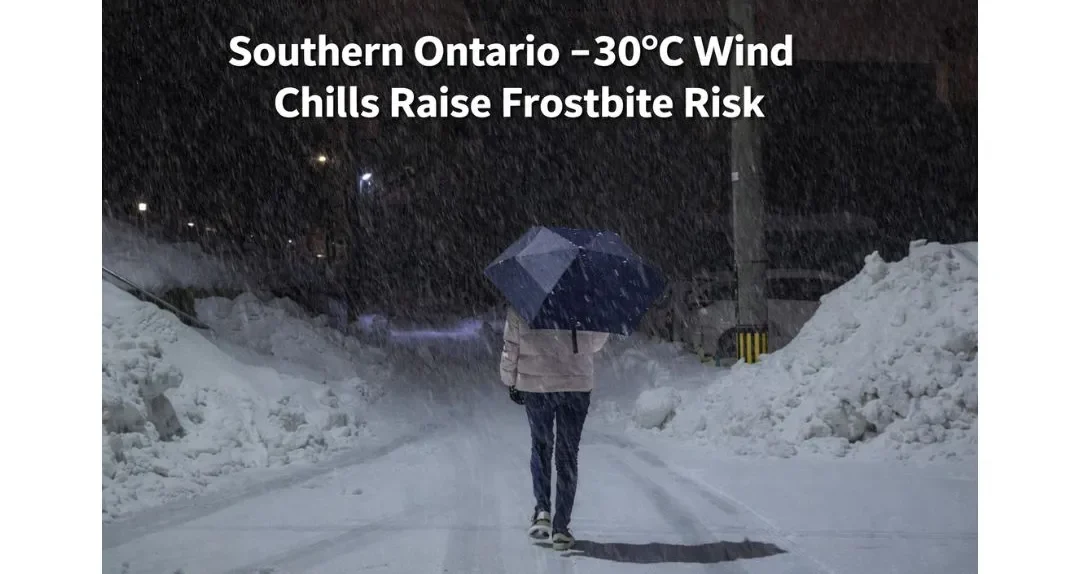
Southern Ontario -30 C wind chills are expected to bring dangerous conditions across the region as a blast of Arctic air settles in. Environment Canada has issued warnings for multiple communities, including Durham Region, Mississauga, Brampton, Halton Region and Hamilton.
The extreme cold is forecast to develop Sunday night and persist into Monday morning. Wind chill values between -25 C and -30 C will significantly increase the risk of frostbite for anyone spending extended periods outdoors.


According to Environment Canada, extreme cold affects everyone, but certain groups are at greater risk. Young children, older adults, individuals with chronic health conditions, people working outdoors and those without adequate shelter face the highest danger during Southern Ontario -30 C wind chills.

Officials warn that frostbite can develop within minutes on exposed skin, especially when wind is present. The combination of frigid air and strong winds accelerates heat loss from the body, making proper winter precautions critical.
Residents across Durham Region and surrounding municipalities are strongly advised to dress in multiple layers, cover exposed skin, wear insulated gloves and hats, and seek shelter from the wind whenever possible. Limiting outdoor exposure during peak cold hours is strongly recommended.
Pet owners are also reminded that if conditions feel too cold for people, they are too cold for animals. Pets should not be left outdoors during periods of Southern Ontario -30 C wind chills.
In addition to Durham Region, numerous communities across Ontario remain under cold warnings. These include parts of Peterborough County, Kawartha Lakes, Barrie, Collingwood, Belleville, Cobourg, Kingston, Ottawa, Uxbridge, Northern Durham Region and many others.
The widespread nature of the warning reflects how deeply the Arctic air mass is impacting southern and central Ontario.
Wind chills are not actual air temperatures but rather how cold it feels on exposed skin when wind speed is factored in. At -30 C wind chill levels, exposed skin can freeze rapidly, increasing the risk of frostbite and hypothermia.
Environment Canada continues to monitor the situation closely and encourages residents to stay updated with the latest alerts and forecasts. Severe weather observations can be reported directly to ONstorm@ec.gc.ca.
While temperatures are expected to moderate later in the week, the immediate concern remains the dangerous Southern Ontario -30 C wind chills expected overnight and into early Monday.
Residents are urged to check on vulnerable neighbors, ensure proper heating systems are functioning, and avoid unnecessary travel during peak cold conditions.