








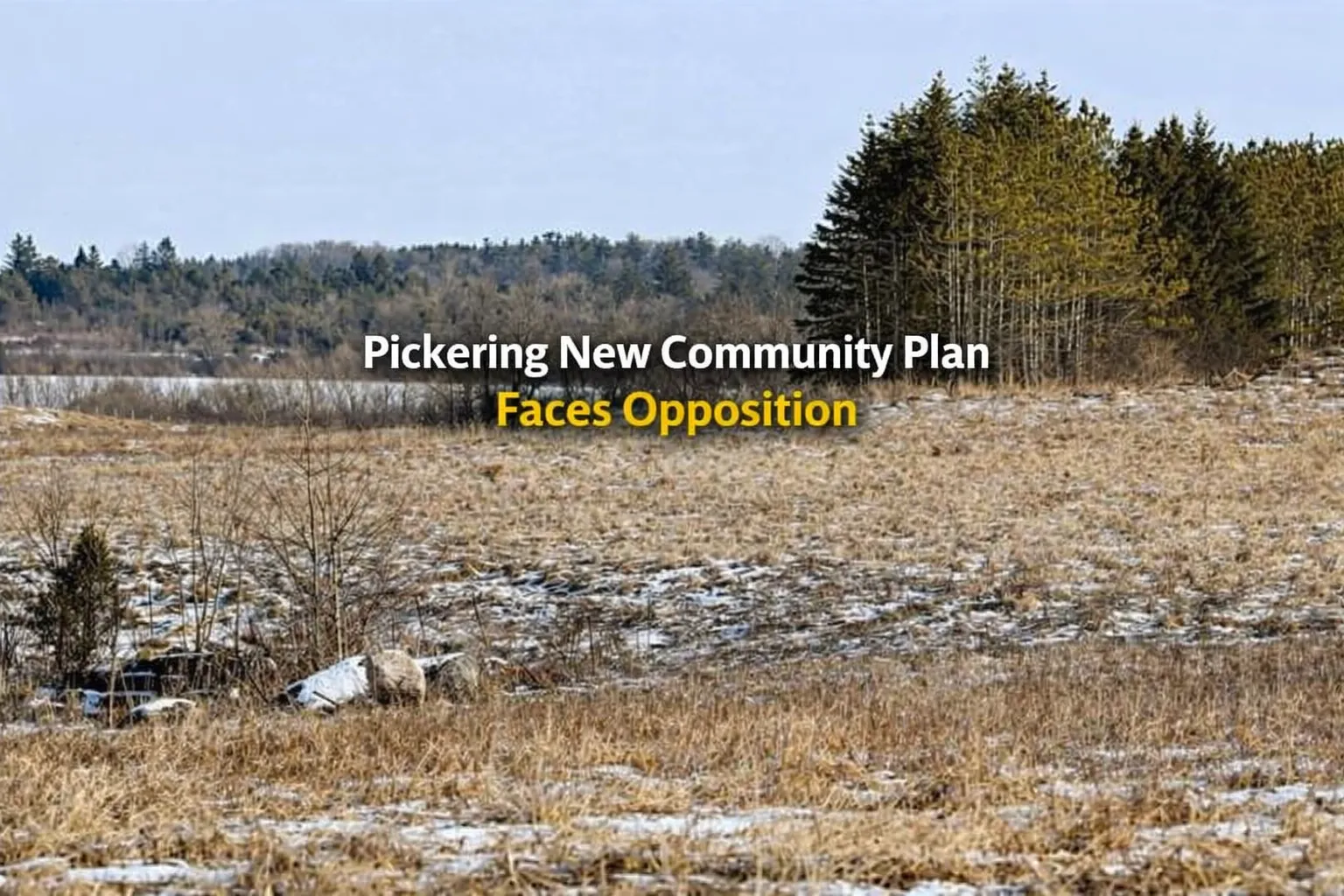
A major urban expansion proposal in Durham Region is sparking debate as a Pickering new community plan opposition grows ahead of a key council decision scheduled for March 30, 2026. The proposed development in northeast Pickering is expected to bring approximately 72,000 residents and 9,700 jobs, but critics warn it could come with serious financial and environmental consequences.
The plan focuses on a large area generally bounded by Eighth Concession Road, Lake Ridge Road, Highway 7, and Westney Road. City officials argue that the expansion is necessary to address ongoing growth pressures and provide long-term housing and employment opportunities. However, community groups and environmental advocates are raising concerns about the impact of such rapid development.


Opposition to the Pickering new community plan opposition is being led in part by Stop Sprawl Durham, which is urging residents to contact Mayor Kevin Ashe and city council before the upcoming decision. The group argues that the approval process is being rushed and lacks critical studies needed to assess the full impact of the development.

Critics highlight several key concerns, including financial risks, flooding, and environmental damage. According to opponents, the city could face increased debt and higher property taxes if the development proceeds without a proper financial impact assessment. Some estimates suggest the city is already dealing with a $498-million capital deficit related to existing projects like the Seaton development.
Environmental concerns are also central to the Pickering new community plan opposition. The proposed development area includes Class 1 agricultural land and the headwaters of Carruthers Creek, which plays a crucial role in managing flooding. Experts warn that paving over this natural “sponge” could significantly increase flood risks in surrounding communities.
Additionally, the area is home to one of Canada’s remaining populations of the Redside Dace, an endangered fish species. Environmental groups argue that increased development could destroy critical habitats, threatening the survival of the species. This has prompted calls for stronger environmental protections and more comprehensive studies before any approval is granted.
Another concern raised by critics is the lack of meaningful consultation with the Mississaugas of Scugog Island First Nation. The First Nation has requested a full environmental assessment and expressed concerns that their input has not been adequately considered. While city officials say discussions have taken place, community leaders argue that consultation must go beyond process and include real consideration of Indigenous perspectives.
The Pickering new community plan opposition also points to procedural issues. Following a March 2 planning meeting where several residents spoke against the proposal, the decision was deferred. However, Mayor Ashe later used strong-mayor powers to call a special council meeting for March 30, raising concerns about transparency and decision-making.
Supporters of the project, including city officials, maintain that growth is inevitable and necessary. They argue that the development aligns with provincial planning policies and will help address housing shortages in the region. Some councillors have stated that while they may not fully support the plan, they are working to ensure it is developed responsibly.
As the council prepares to make a decision, the debate continues to intensify. Residents, environmental groups, and policymakers are all weighing in on what could become one of the most significant developments in Durham Region’s history.
The outcome of the March 30 meeting will play a crucial role in shaping the future of Pickering and how the region manages growth in the years to come.