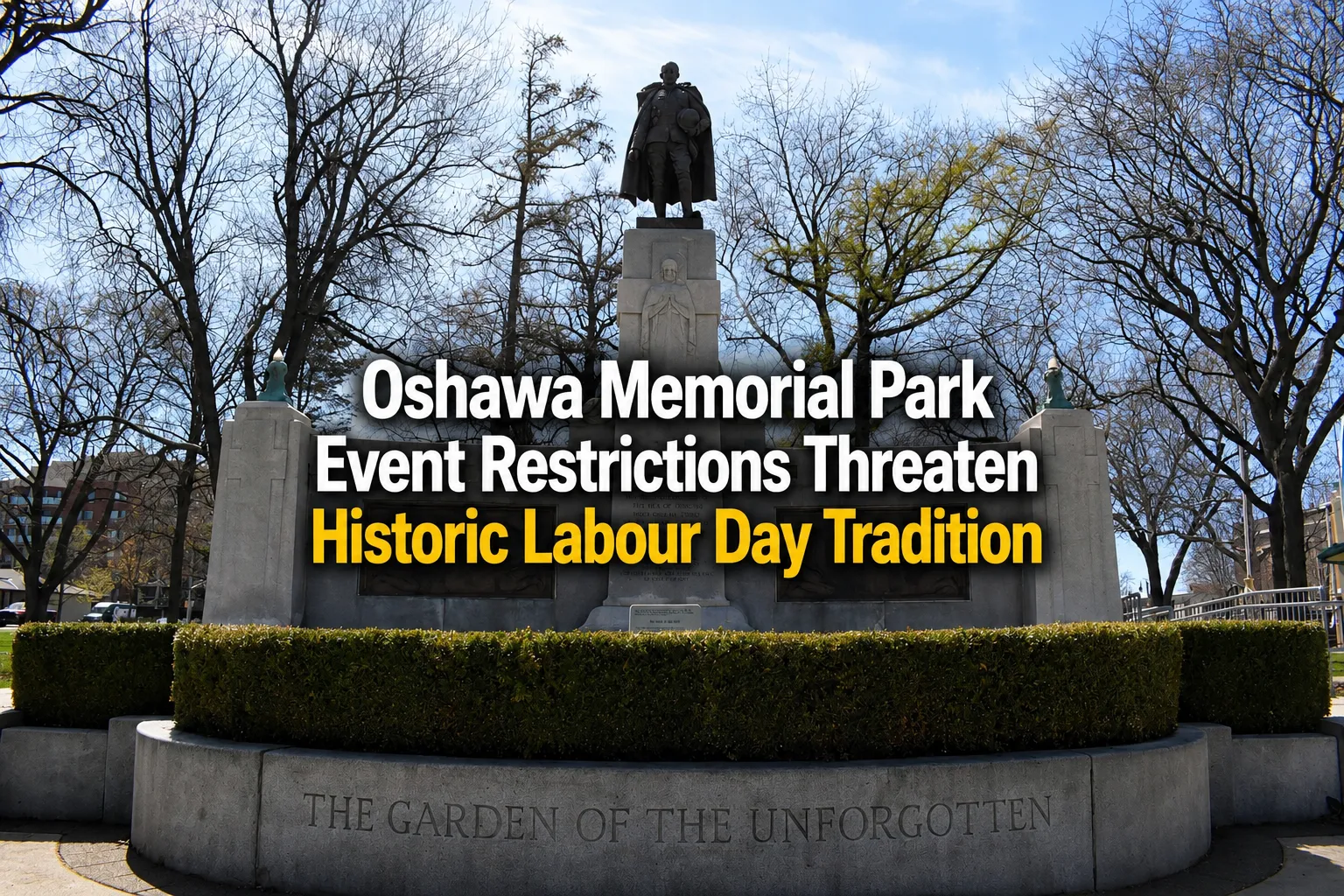
A century-old tradition in the heart of Durham Region is facing an uncertain future as the City of Oshawa implements strict new criteria for its public spaces. For over 100 years, Memorial Park has served as the spiritual and physical home for workers’ rights celebrations, but the Oshawa Memorial Park Event Restrictions now threaten to displace the annual Labour Day gathering. The Durham Region Labour Council (DRLC) has expressed deep concern, suggesting that if a resolution is not reached, the historic event may be forced to leave the city altogether, ending a legacy that dates back to the formative years of Canada’s labour movement.
The park is inextricably linked to the cultural heritage of the working class. It was the primary staging ground for the historic 1937 auto workers’ strike, a pivotal moment when thousands of General Motors employees fought for the eight-hour workday. Despite this deep historical connection, the city recently informed the DRLC that it would no longer issue permits for large-scale events in the park unless they are specifically memorial ceremonies focused on the cenotaph or performing arts celebrations at the bandshell. City staff cited concerns over washroom capacity and a lack of downtown parking as the primary drivers behind the Oshawa Memorial Park Event Restrictions.


However, the Labour Council has challenged these justifications. Jeff Tomlinson, the DRLC secretary-treasurer, pointed out that downtown street parking is free on holidays and that existing facilities have historically met the event’s needs. The city’s proposed alternative—the newly developed Ed Broadbent Waterfront Park—presents its own set of barriers. Under the city’s new waterfront parking policy, non-residents must pay $20 to park at the waterfront on holidays. Tomlinson argues that for an event designed to be free and accessible to the working class, this represents an unreasonable financial hurdle that undermines the spirit of the celebration.


The implementation of the Oshawa Memorial Park Event Restrictions has also revealed a complex web of municipal policy. Currently, the authority to issue park permits is delegated entirely to city staff rather than elected officials. This means that a major shift in how a historic park is used can occur without a public vote from City Council. Ward 4 Councillor Derek Giberson attempted to intervene with a motion to pause these changes, but his efforts were defeated in a tie vote. While some councillors argue that “history moves on” and that the 145 other parks in Oshawa offer modern alternatives, Giberson maintains that removing a major draw from the downtown core contradicts the city’s stated goal of revitalizing its central district.
The debate has sparked a wider conversation about how municipal bylaws can inadvertently erase local heritage. Giberson is currently spearheading a petition to amend the parks and facilities bylaw, hoping to restore the ability for council to step in when staff-led reviews clash with community traditions. He argues that criteria that reduce opportunities for people to gather in the downtown core are counterproductive to Oshawa’s growth.
As the September holiday approaches, the standoff over the Oshawa Memorial Park Event Restrictions remains unresolved. For the members of the Durham Region Labour Council, the issue is about more than just a permit; it is about respecting the geography of the labor movement’s past. Whether the city will offer a grandfathered exception for the 2026 celebrations or stand firm on its new park criteria remains to be seen. For now, the future of Labour Day in its traditional home hangs in the balance, awaiting a final decision that could redefine Oshawa’s downtown cultural landscape.