








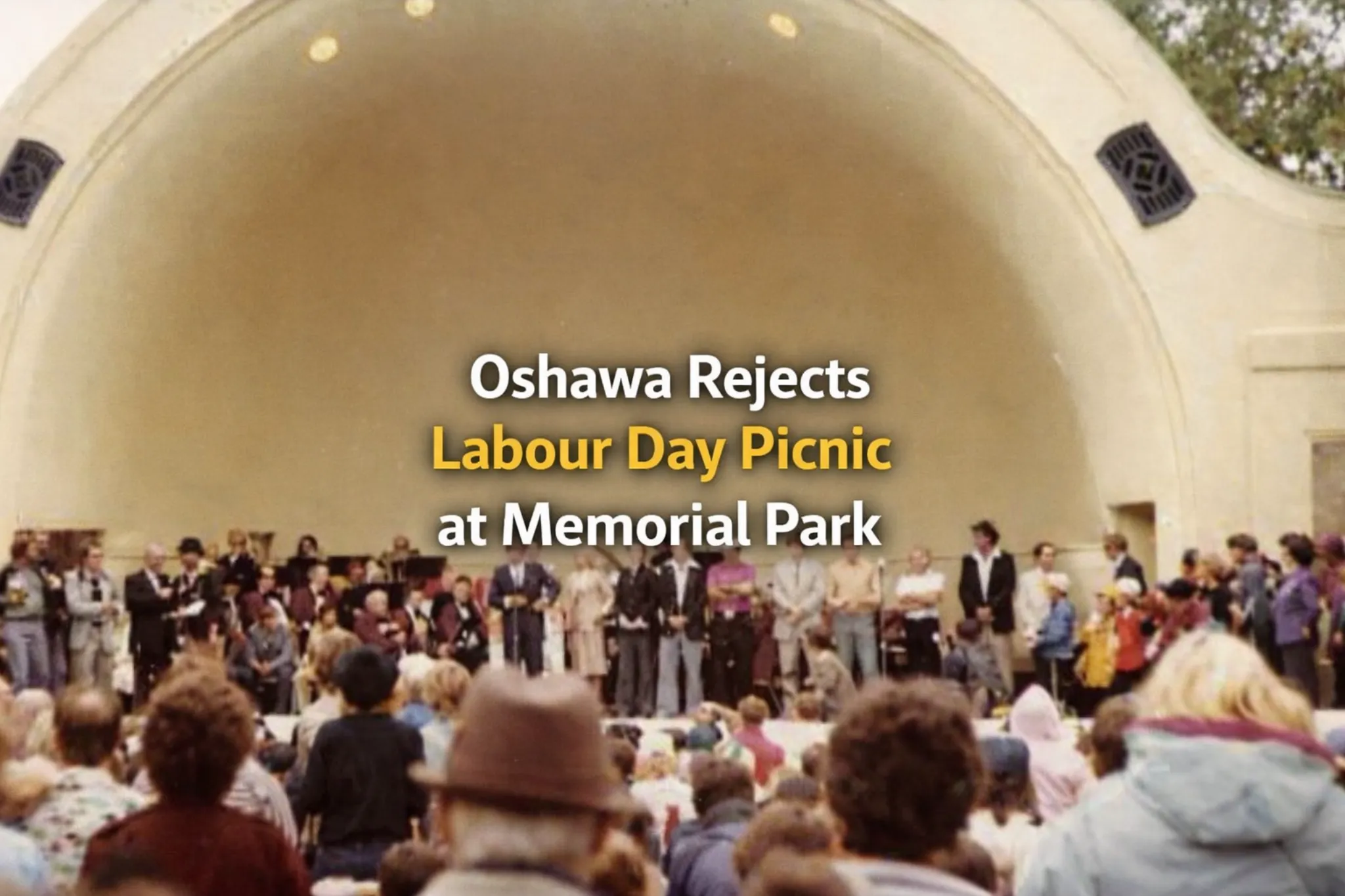
A debate over public space use in Oshawa has intensified after city council rejected a motion to reinstate the Labour Day picnic at Memorial Park. Oshawa Councillor Derek Giberson had presented a motion to keep the park as an open community event space, but it failed to garner enough support in Monday’s vote. The decision means the annual picnic, hosted by the Durham Region Labour Council, will not take place at its traditional location.
The Memorial Park in downtown Oshawa is a beloved community gathering spot, but recent changes to event policies have raised concerns about its accessibility. In a release, Giberson voiced his disappointment, saying that the city’s new restrictions for Memorial Park events would block many community activities. He claimed that several event organizers, including the Durham Region Labour Council, were informed of changes through emails that altered the criteria for hosting events.


The Labour Day picnic has been a staple at Memorial Park for generations, celebrating labour history in the city and providing a space for speeches, celebrations, and family activities. Giberson argued that the picnic was the exact kind of event that brought Oshawa’s downtown to life, noting the positive impact it has on local businesses. “People come for the celebration – and they stay. They grab a meal on King Street, visit the Canadian Automotive Museum, browse local shops. Every community gathering in that park is a boost to downtown Oshawa,” he said.

However, the new event restrictions implemented by the city were designed to ensure the park is used primarily for heritage and memorial events, such as ceremonies related to the War Memorial/Cenotaph, or for performing arts celebrations at the McLaughlin Bandshell. According to the new criteria, event organizers must demonstrate that their activities align with these specific purposes in order to be granted permits for Memorial Park.
These changes have sparked backlash from the community, with residents voicing their concerns on social media and through public comments. Many supporters of the Labour Day picnic and other community events expressed frustration over what they see as unnecessary bureaucracy that limits access to the park.
Pickering Regional Councillor Rick Kerr, who represents downtown Oshawa, speculated that the timing of the vote, close to the upcoming municipal election, may have played a role in the council’s decision. He noted that Memorial Park has historically been a location for NDP-affiliated political events, such as speeches, and that the city’s refusal to approve the picnic may be tied to the desire to avoid political activities in the park during an election year. He recommended that the picnic could instead be relocated to Ed Broadbent Park, a city park named after the former NDP leader.
However, this suggestion did not sit well with the Durham Labour Council, who argued that the issue was not about finding an alternative location but about access to Memorial Park itself. The council emphasized the park’s historical significance as a central public space for community events, including those celebrating labour and social justice.
In response to the council’s decision, Giberson urged residents to continue fighting for the park’s accessibility and to push for meaningful consultation on future policy changes. He noted, “The community response over the past week has been remarkable. Residents, workers, families, and local organizations all came together to say that Memorial Park belongs to Oshawa’s community members – and that message doesn’t disappear because of one procedural vote.”
While the Labour Day picnic will not take place at Memorial Park this year, Giberson and his supporters are committed to ensuring the space remains available for community events in the future. The ongoing debate highlights tensions between the city’s desire for structured event use and the community’s demand for accessible public spaces.