









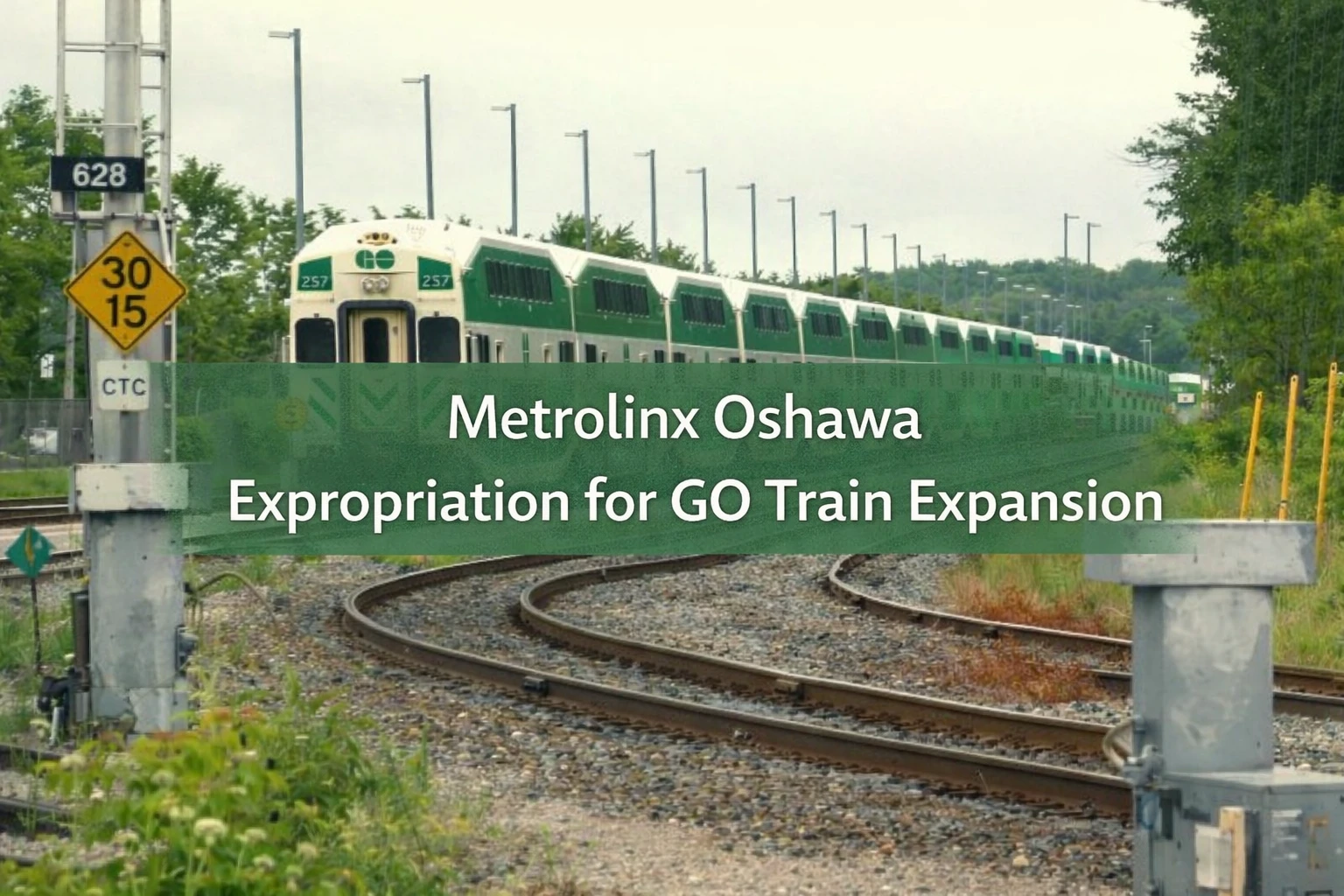
Metrolinx says it intends to work cooperatively with property owners in Oshawa as it begins the expropriation process required for the GO train expansion project extending service to Bowmanville.
The provincial transit agency has begun sending Notices of Application for Approval to Expropriate Land (NOAs) to approximately two dozen property owners in Oshawa’s east end. The notices are part of preparations for infrastructure upgrades that will support the extension of Lakeshore East GO rail service into eastern Durham Region.
According to Metrolinx officials, the majority of the affected properties will not be fully taken. Instead, the agency says it mainly needs small portions of land located beside existing railway tracks in order to widen the rail corridor.

The additional space is required to support the expansion of tracks that will accommodate increased GO train service between Oshawa and Bowmanville.
Lyndsay Miller, senior manager of media relations and issue management for Metrolinx, said the agency’s priority is to reach fair agreements with property owners wherever possible.
“We always make every effort to minimize the amount of land needed and only acquire portions of property that are absolutely necessary for the project,” Miller said. “Metrolinx will continue to work with affected property owners to reach amicable agreements where possible.”
The transit agency also emphasized that schools, businesses, and other community facilities near the project area will remain open during construction.
However, the expropriation notices have raised concerns among some residents and local officials.
Oshawa Ward 5 Councillor Brian Nicholson expressed frustration with how the situation has been communicated. Before the letters were sent to homeowners, Metrolinx shared information with city councillors and requested that the details remain confidential until public notices were issued.
Nicholson said he felt it was important to inform residents about the situation.
“They have asked me to keep their plans secret but they seem to forget that I work for the residents and not for them,” Nicholson said. “I feel it is my responsibility to make their actions known to the public.”
According to Metrolinx, 17 of the affected properties are located in a small neighbourhood near Dean Avenue, between Ritson Road and Wilson Avenue.
Some homeowners in the area have voiced concerns about the expropriation process, particularly regarding compensation and communication.
One resident suggested the situation warrants further investigation, while another advised neighbours to consult an expropriation lawyer to ensure they receive fair compensation.
The expansion project has already generated controversy in Oshawa in recent months. Earlier this year, Metrolinx closed a section of Simcoe Street for up to two years while constructing a new bridge near the future Central Oshawa GO Station.
The closure caused significant traffic disruptions and drew criticism from some residents and local leaders.
Metrolinx says the rail corridor upgrades are essential to support the Lakeshore East GO rail corridor extension, which will bring nearly 20 kilometres of two-way, all-day train service to communities in eastern Durham Region.
The project is expected to improve regional transportation connections, reduce travel times, and provide better access to public transit.
While the expropriation process is now underway, Metrolinx says it will continue negotiating directly with affected property owners to reach mutually acceptable agreements.
The agency also noted that under Ontario’s Expropriations Act, property owners are entitled to seek independent legal and appraisal advice, with reasonable costs reimbursed as part of the process.