








An advocacy environmental group in Durham Region is calling on the Ontario government to intervene in what it describes as a fast-tracked development proposal in northeast Pickering, warning that the project could threaten farmland, increase flood risks and place additional financial pressure on local residents.
The group Stop Sprawl Durham is urging residents across Pickering and the wider Durham Region to contact municipal leaders ahead of a special Pickering council meeting scheduled for March 30. The organization says the city should halt the accelerated approval process and return to the original planning framework known as the Pickering Forward process.


According to Stop Sprawl Durham co-lead Helen Brenner, council has a responsibility to ensure development decisions protect the long-term interests of the community.

“We are calling on residents of Pickering and Durham Region to contact Mayor Kevin Ashe and city council to demand they stop this expedited approval process,” Brenner said. “Council has a duty to protect food security, flood safety and financial stability before approving development that could have lasting impacts.”
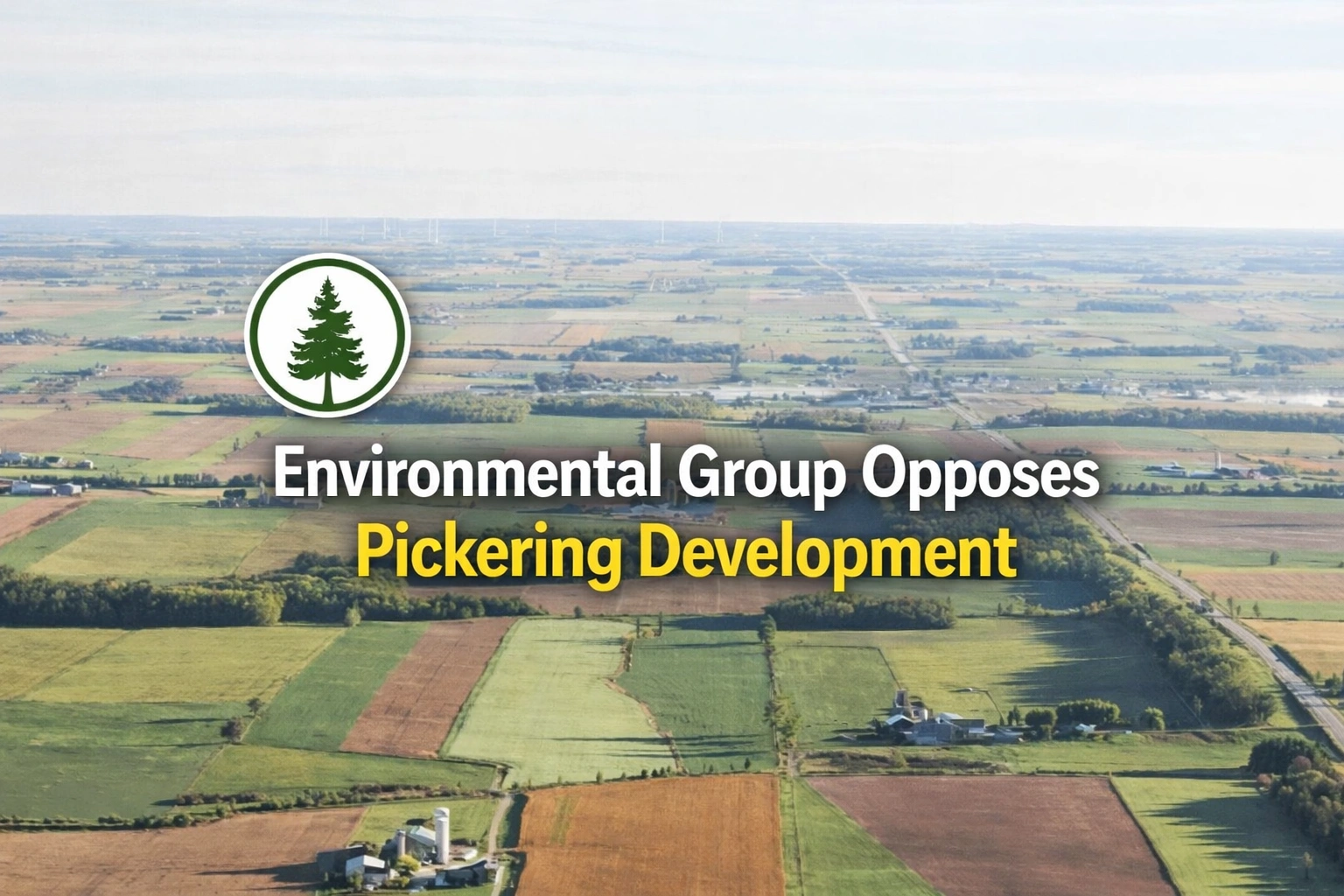
The proposed development involves approximately 4,356 acres of land in northeast Pickering, an area that remains largely rural and includes agricultural land and environmentally sensitive areas.
Stop Sprawl Durham argues the city is attempting to bypass established planning safeguards in order to speed up approval of the project, which is being promoted by the Northeast Pickering Landowners’ Group, a developer-backed organization.
The group says the development conflicts with Ontario’s 2024 provincial planning statement as well as Durham Region’s Official Plan, which include guidelines intended to manage growth while protecting environmental and agricultural resources.
Stop Sprawl Durham co-lead Abdullah Mir said the organization believes the city is overlooking important risks by pushing the project forward too quickly.
He warned that paving over Class 1 agricultural soil located near the headwaters of Carruthers Creek could lead to environmental damage and increase flooding risks for nearby communities.
Mir also argued that expanding development into northeast Pickering could create financial challenges for the municipality.
“This will be a financial disaster,” he said. “The infrastructure required to support a sprawling development of this scale could lead to higher property taxes for residents in Pickering and across Durham Region.”
Stop Sprawl Durham claims the proposal raises three major concerns: increasing municipal debt, questionable demand for new land development and the potential for increased flood risk.
According to the group, the city already faces a $498 million capital deficit related to the existing Seaton development project. Adding another large expansion without a comprehensive fiscal impact assessment could place further strain on municipal finances.
The group also argues that the development could significantly affect water flow in the Carruthers Creek watershed, potentially increasing peak flood flows by more than 100 per cent and creating greater risks for downstream communities such as Ajax.
In addition to environmental concerns raised by advocacy groups, the Mississaugas of Scugog Island First Nation have also expressed opposition to the development without further consultation.
In a letter sent to Durham Region earlier this year, Chief Kelly LaRocca and council members said the First Nation has repeatedly raised concerns about the project since 2021 but believes meaningful consultation has not taken place.
The First Nation has requested that the Ontario government conduct a comprehensive environmental assessment to evaluate the potential impacts of development in northeast Pickering.
Despite these requests, the assessment has not yet been initiated.
Stop Sprawl Durham is now calling on the Ontario Minister of Municipal Affairs and Housing to step in, arguing that the province has a legal responsibility to ensure municipal decisions align with provincial planning policies.
As debate continues over the northeast Pickering development proposal, residents, environmental advocates and local leaders are expected to continue discussions about how growth should be managed in Durham Region.