









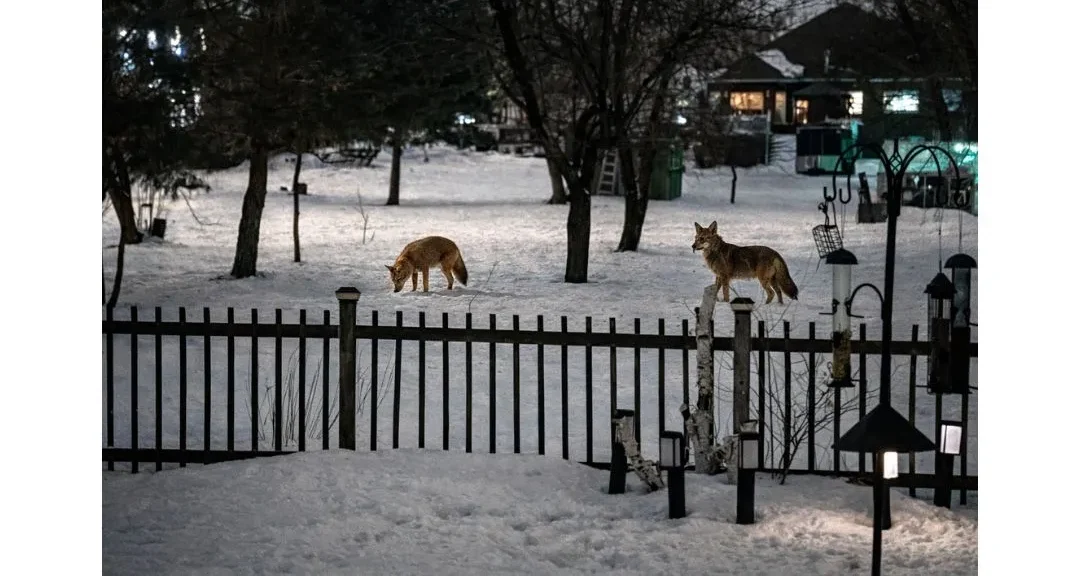
Winter nights in Courtice, Ontario, often seem quiet and still—until nature surprises you. Recently, I experienced something unforgettable: a Courtice Coyotes Pack moving through my backyard near Townline and Lawson Roads. The sight of them reminded me just how close wildlife is to suburban life.
At first, it was just a quick flash of movement across the snow—subtle, confident, and almost routine. Coyotes don’t treat fences like we do. They move through neighborhoods as if the land belongs to them, which in a way, it does. These animals navigate our yards like part of their natural habitat, using the corridors and spaces available to them.


A Neighbor Captured a Photo of Two Coyotes Heading Toward the Creek
My neighbor behind me managed to take a photo of two coyotes from the pack as they moved toward the creek. In the photo, the coyotes looked calm, alert, and perfectly adapted to the harsh winter environment. They blended into the snowy landscape with ease, as though they had been here far longer than the houses surrounding them.

If you live near creeks or green spaces in Durham Region, you’re probably not surprised. The creek behind our neighborhood is a natural corridor for wildlife, providing a safe passageway for animals like coyotes. These corridors offer shelter, fewer human disturbances, and access to food, making them ideal travel routes.
Two Coyotes Suddenly Started Fighting
The most startling part of this encounter came when two coyotes from the pack suddenly began fighting. This wasn’t just a brief scuffle—it was intense and aggressive, with the coyotes circling each other, snapping and biting. The sudden violence was shocking, and it made me freeze in place, watching from a safe distance.
Then came the howling. It wasn’t a distant, comforting sound like the kind we associate with movies. The howling was close—sharp and eerie, cutting through the silence of the winter night. It was unsettling and wild, reminding me just how unpredictable nature can be, even in suburban areas.
Why Coyotes Might Fight in a Pack
Coyotes are social animals, but like any group, conflicts can arise. A fight can occur due to various reasons, such as:
-
Dominance disputes within the pack
-
Territorial tension, especially near boundaries
-
Competition for food, particularly during the winter months
-
Seasonal behaviors, such as mating season, when tensions can rise
While I’m not sure what exactly triggered the fight, the intensity of the moment made it clear these coyotes weren’t simply passing through quietly anymore. They were engaged in something far more primal.
Creek Corridors Serve as Highways for the Courtice Coyotes Pack
Creeks and wooded corridors are a natural highway for wildlife, including the Courtice Coyotes Pack. These paths provide shelter, access to food, and minimal disturbance from humans. They allow coyotes to move more freely and safely across the landscape, making sightings feel unpredictable. One night, there’s nothing, and the next, you might see an entire pack of coyotes.
What to Do if You Spot a Courtice Coyotes Pack
If you see a Courtice Coyotes Pack in your yard, stay calm and follow these safety tips:
-
If you have pets:
-
Keep cats indoors, especially at night
-
Walk dogs on a leash and avoid letting them roam freely outside
-
Never leave pet food outdoors
-
-
Around your home:
-
Secure trash and compost
-
Clean up fallen fruit and other attractants
-
Install motion-activated lighting to discourage coyotes from returning
-
-
If you encounter a coyote up close:
-
Don’t run
-
Stand tall and make loud noises
-
Wave your arms and back away slowly to a safe place
-
Keep pets close and controlled
-
Final Thoughts on the Courtice Coyotes Pack
The most unexpected part of the experience was how quickly the mood shifted—from a peaceful sighting of the coyotes passing through the yard to an intense, unpredictable fight. It was a reminder that wildlife, even in Courtice, is just beyond our fences. If you live near Townline and Lawson Roads, stay aware—because if five coyotes passed through once, they might do it again.