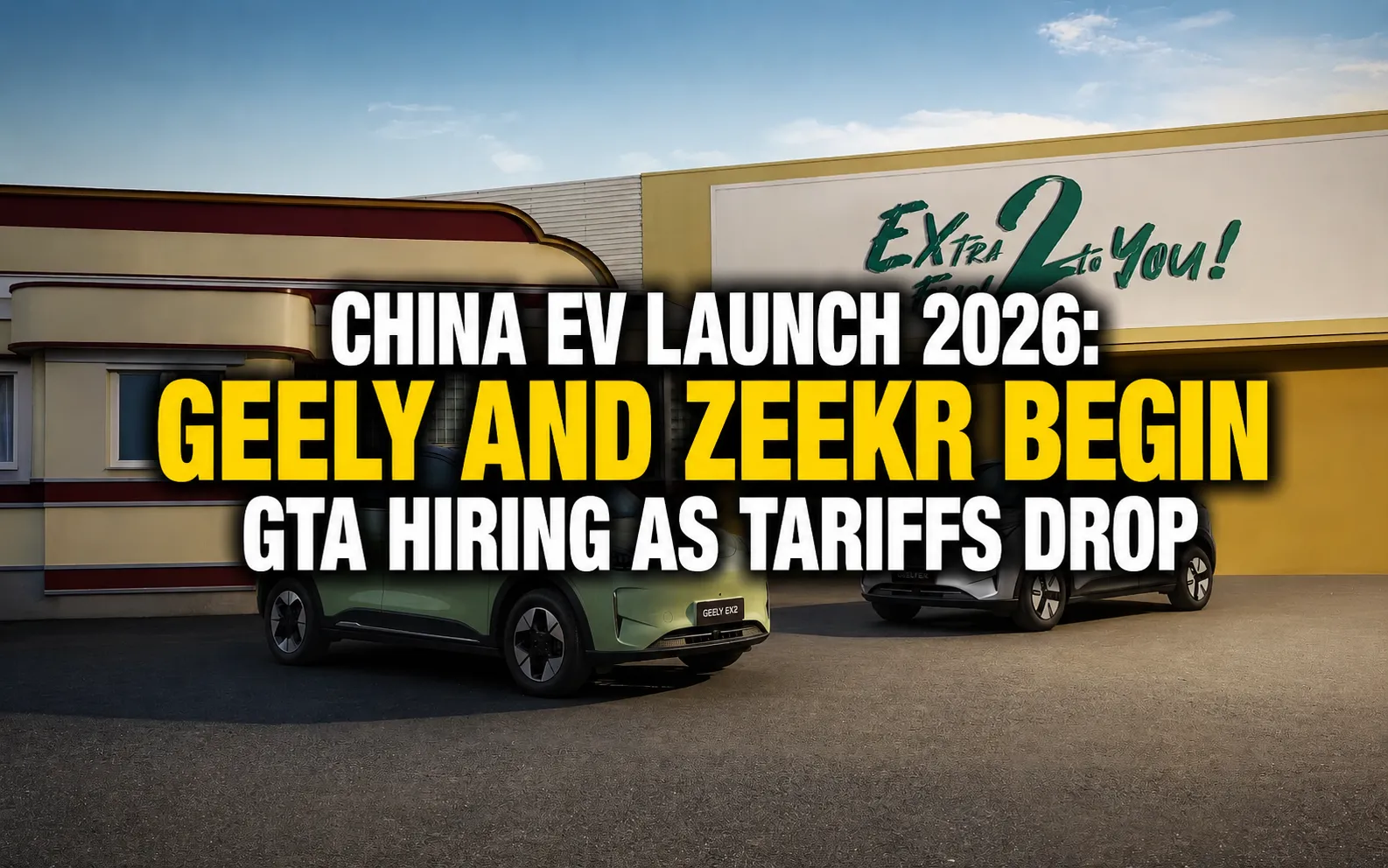
The Canadian automotive landscape is on the verge of a historic shift as Chinese manufacturing giants prepare to officially enter the domestic market. According to the China EV Launch 2026 report, Geely Holding—through its premium brand Zeekr—has officially begun a massive hiring blitz in the Greater Toronto Area. This move follows a landmark policy shift by Prime Minister Mark Carney earlier this year, which lowered tariffs on Chinese-made electric vehicles to a manageable 6.1 per cent for the first 49,000 units imported annually. This regulatory change has effectively opened the floodgates for brands like BYD, Chery, and Geely to challenge established North American automakers.
The China EV Launch 2026 hiring phase is currently focused on establishing a corporate backbone in Ontario. Zeekr International has posted several high-level management positions on LinkedIn, including Head of Sales, Head of Marketing, and Head of Network Development. While these brands are currently operating out of Toronto, the infrastructure for sales and after-sales service is expected to expand rapidly into the Durham Region. Geely already maintains a shadow presence in Canada through its ownership of Volvo, Polestar, and Lotus, but the 2026 launch will mark the first time their primary and premium brands will be sold under their own nameplates to Canadian consumers.


A major driver behind the China EV Launch 2026 is the promise of truly affordable electric mobility. Under the current agreement between Canada and China, half of all imported Chinese EVs must have an import price of less than $35,000. Industry experts at Autotrader anticipate that this will translate to consumer purchase prices under $35,000 by early next year. This is a stark contrast to the current Canadian EV market, where many models remain out of reach for the average family. However, it is important for Durham buyers to note that these Chinese-made vehicles will not qualify for the federal $5,000 Electric Vehicle Affordability Program rebate, which is reserved for vehicles assembled in free-trade partner countries.


The China EV Launch 2026 also marks the return of interest from BYD, the world’s largest EV maker. BYD previously operated an electric bus assembly plant in Newmarket, just north of the Durham border, which delivered vehicles to the TTC. While that plant is currently dormant, the company’s re-entry into the passenger vehicle market is expected to be aggressive. Similarly, Chery Automotive—the leading global exporter of Chinese cars—has already been spotted testing vehicles with manufacturer plates in Toronto. To avoid confusion with Chevrolet, Chery is expected to use several of its sub-brands for its Canadian debut later this year.
Early beneficiaries of the China EV Launch 2026 tariff reduction are already seeing massive price drops. Lotus, the first to utilize the new deal, slashed the price of its Eletre model from $313,500 to $119,900. Tesla has followed suit by introducing a Chinese-made Model 3 Premium RWD in Canada with a starting MSRP of just $39,490—nearly half the price of the previous AWD version. These drastic price corrections suggest that the arrival of Geely and Chery will likely trigger a price war among EV manufacturers, benefiting consumers in Pickering, Ajax, and Oshawa who have been waiting for more competitive pricing.
As the China EV Launch 2026 progresses, the focus will shift from corporate hiring to the development of physical dealership networks. For residents of the Durham Region, this means new showrooms and service centers will likely appear along the Highway 401 corridor by late 2026. While some may prefer the Canadian-made options like the Windsor-built Dodge Charger Daytona, the influx of high-tech, low-cost Chinese EVs is set to fundamentally redefine what “affordable” means for the next generation of Ontario drivers.