









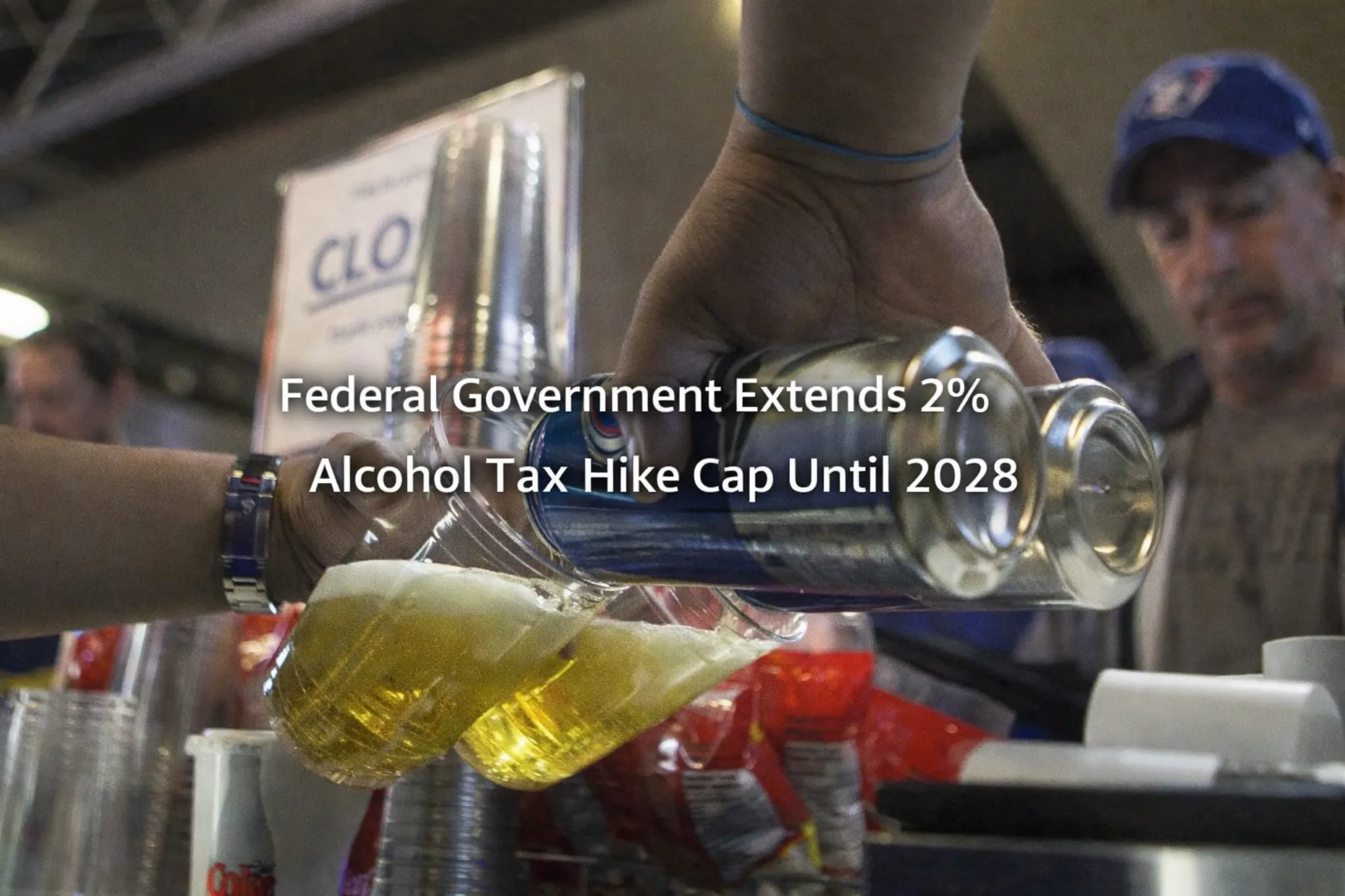
In a move aimed at providing financial stability to Canada’s beverage industry, the federal government has announced a two-year extension of the current cap on alcohol excise tax increases. Originally set to expire this year, the two per cent cap will now remain in place until 2028, offering much-needed relief to brewers, wineries, and distilleries facing rising production costs and global supply chain disruptions.
Relief for Craft Brewers and Large Producers
The excise tax, which is automatically adjusted every April 1 based on inflation, was initially uncapped following legislative changes in 2017. However, the Liberal government introduced a temporary two per cent limit in 2023 to protect the industry from skyrocketing inflation. Along with the extension of this cap, Ottawa is also renewing a tax relief agreement for craft brewers. This specific measure halves the excise tax on the first 15,000 hectolitres of beer produced domestically.


Industry leaders, such as Christine Comeau of the Canadian Craft Brewers Association, welcomed the news, stating that the extension provides “breathing room” for small businesses struggling with heavy operating pressures. The timing is particularly notable as Canada prepares for the FIFA World Cup this summer, which is expected to drive a significant increase in domestic alcohol consumption.

Opposition and Industry Pushback
Despite the extension, some industry advocates and political figures argue that the measures do not go far enough. Organizations like Beer Canada estimate that federal taxes on beer have jumped 18 per cent since the automatic escalator was introduced in 2017. Many are calling for the total repeal of the automatic tax policy, arguing that taxation changes should be debated in Parliament rather than being automated based on inflation indices.
The Canadian Taxpayers Federation also voiced dissatisfaction, with Director Franco Terrazzano labeling the automatic hikes as “undemocratic.” Critics argue that at a time when the cost of living is a primary concern for Canadians, the government should be looking at tax cuts rather than simply capping existing increases.
Predictability in a Volatile Market
Federal officials maintain that the extension is intended to offer predictability. For many local pubs, restaurants, and producers, the alcohol tax hike cap ensures that the cost of doing business remains manageable during a period of economic recovery. Without the cap, the scheduled April 1 increase would have added an estimated $14 million to the collective tax burden of the industry this year alone. While the debate over the permanence of these taxes continues, the current extension provides a temporary buffer for the hospitality and beverage sectors across the country.