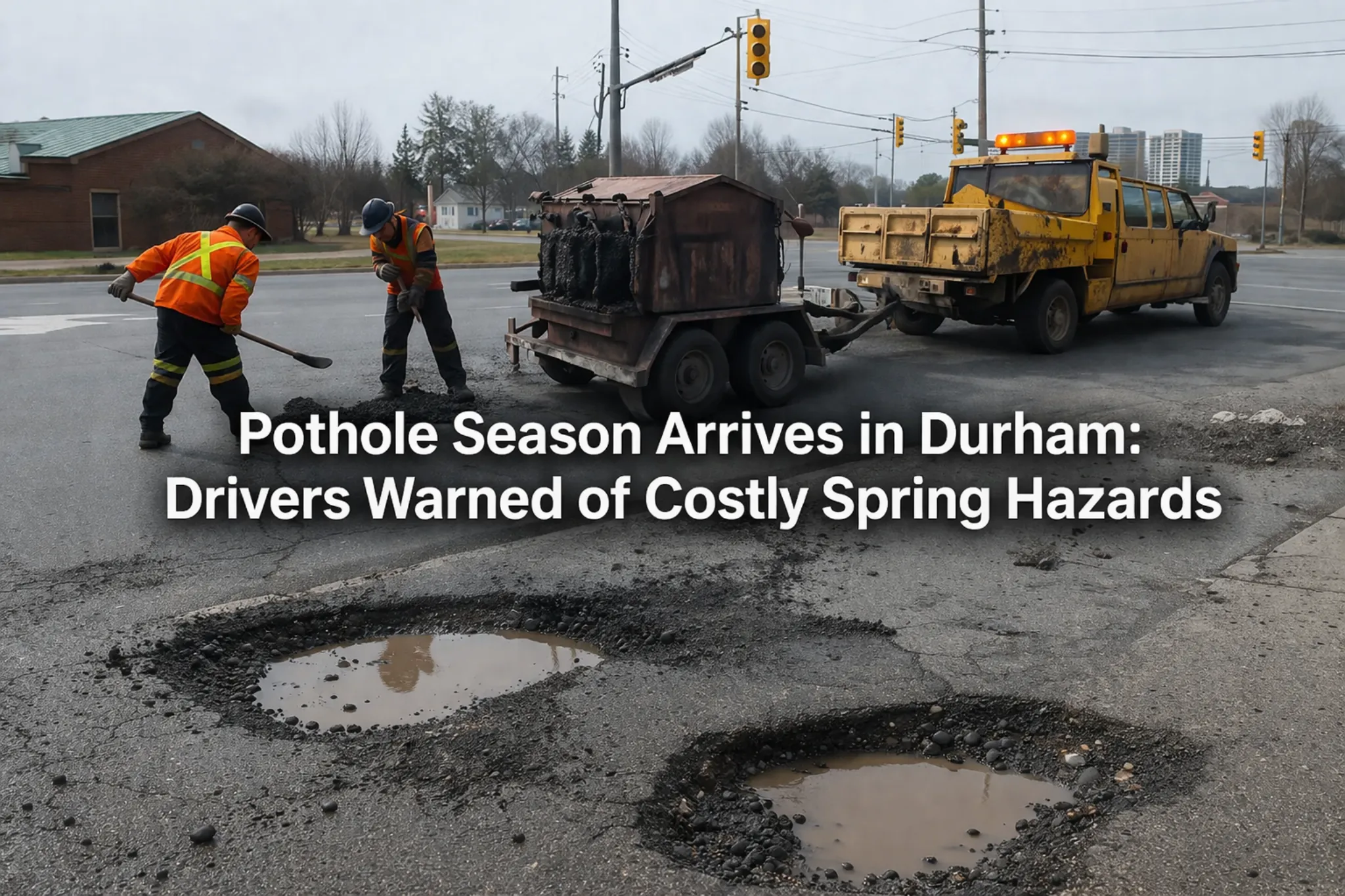
After a winter defined by dramatic temperature swings, residents across the Durham Region are now entering the peak of pothole season. As the frost leaves the ground and the spring rains begin to saturate the asphalt, local roads in Whitby and Oshawa are rapidly deteriorating. Automotive experts are reminding motorists that a few minutes of preventative maintenance this week could save them thousands of dollars in suspension and tire repairs as the “spring thaw” takes hold.
The Science of the Spring Thaw
In Ontario, the transition from winter to spring is particularly brutal on infrastructure. The combination of heavy late-season snowfall, pooling water from melting snowbanks, and repeated freeze-thaw cycles weakens the bond of the asphalt. As vehicles—especially heavy transit and transport trucks—drive over these weakened spots, the pavement collapses, creating deep cavities.

“Before the spring thaw truly takes hold, take two minutes to check your tire pressure,” says Mike Butcher, senior vice president of Kal Tire. Under-inflated tires are significantly more vulnerable to the impact of a deep pothole, as they lack the internal pressure required to absorb the shock, leading to immediate blowouts, bent rims, and costly alignment failures.


Guidelines for Removing Winter Tires in Durham
With temperatures beginning to fluctuate in Ajax and Pickering, many drivers are eager to swap out their winter tires. However, timing is critical to both safety and tire longevity. Experts recommend using the “seven-degree rule” as a guide:
-
Above 7°C: Winter tire rubber becomes too soft, leading to rapid tread wear and decreased handling. This is the ideal time to switch to all-season or summer tires.
-
Below 7°C: All-season tires lose their grip and become “hard,” significantly increasing stopping distances on cold or damp spring pavement.
In the Durham Region, where morning temperatures in April often dip near freezing, it is advised to wait until the average daily temperature consistently stays above the 7°C threshold before booking an appointment at a local service center.
Essential Tire Safety Checklist for April
To navigate pothole season safely, Durham motorists should follow these proactive steps:
-
Monitor Pressure: Check tire pressure while the tires are “cold” (before driving). Compare the reading to the placard found on the driver’s side door jamb, not the maximum pressure listed on the tire sidewall.
-
Inspect for Damage: After hitting a significant bump in Clarington or Oshawa, pull over safely to check for “bubbles” in the tire sidewall or cracks in the rim.
-
Watch the Warning Lights: If your TPMS (Tire Pressure Monitoring System) light illuminates, do not ignore it; a small pressure drop significantly increases your risk of a blowout upon impact.
-
Align Your Vehicle: If your car begins to “pull” to one side after a pothole strike, your alignment likely needs a professional adjustment to prevent uneven tire wear.
As the Region of Durham works to patch the most severe cavities, drivers are encouraged to report particularly dangerous potholes to their local municipal works department to prevent further accidents during this volatile transition into spring.