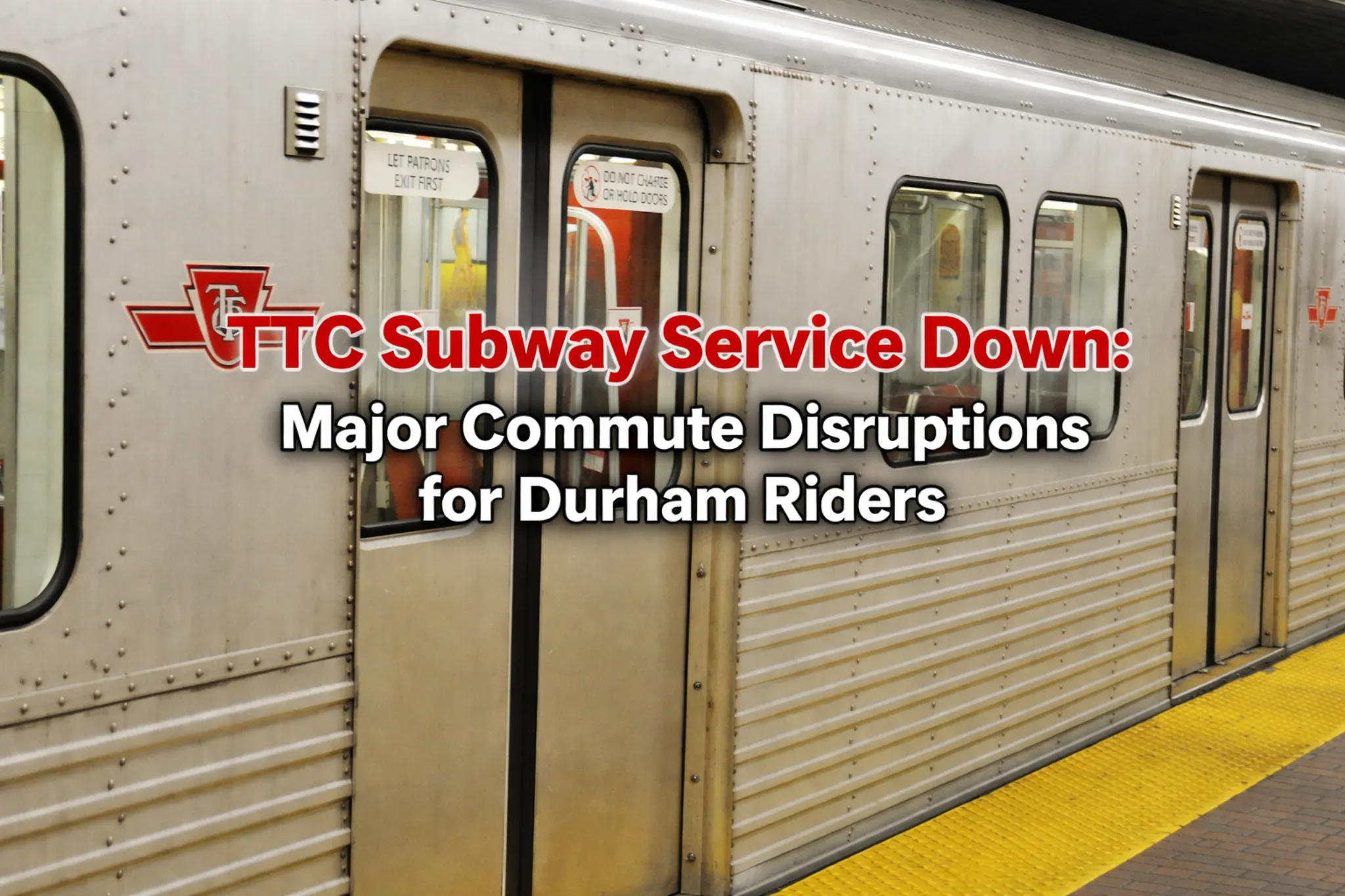
The Tuesday morning rush hour turned into a logistical nightmare for thousands of commuters as TTC subway service down alerts flashed across transit screens. A significant hydraulic fluid leak, caused by overnight track maintenance, forced the complete closure of a western segment of Line 2 (Bloor-Danforth). The incident left a massive gap in the transit grid, specifically affecting the high-traffic stretch between Jane and Islington stations, and ripple effects were felt as far east as the Durham Region.
The Cause: Overnight Maintenance Gone Wrong
TTC CEO Mandeep S. Lali issued a rare and direct public apology following the morning’s chaos. According to Lali, the TTC subway service down status was the result of a “hydraulic fluid spill” that occurred during scheduled overnight track work. The spill made it impossible to safely operate trains between Kipling and Keele stations in time for the 6:00 a.m. service start.
“Safety will always come first, but I recognize that this does not absolve us of the responsibility to provide the reliable service you expect,” Lali stated on social media. The CEO has already ordered a comprehensive review of equipment conditions and work practices to ensure a similar mechanical failure does not paralyze the morning commute again.
Impact on Durham and East-End Commuters
For residents of Pickering, Ajax, and Whitby, Line 2 serves as a vital artery. Many Durham commuters who arrive at Union Station or Danforth GO often rely on the Bloor-Danforth line to reach schools, hospitals, and offices in the city’s west end. With the TTC subway service down, these passengers faced overcrowded shuttle buses and a “domino effect” of delays that stretched their morning travel time by over an hour.
To manage the overflow, the TTC deployed more than 50 shuttle buses. However, with thousands of riders displaced from the subway onto the street level, traffic congestion near the Jane and Islington corridors became nearly stationary. Toronto Police and TTC Special Constables were stationed at major intersections to help manage the flow of frustrated passengers.
Restoring Reliability to the Rails
Crews remained on-site throughout the morning to neutralize the spill and conduct safety inspections. While shuttle buses provided a temporary solution, the sheer volume of a Tuesday morning rush hour proved difficult to manage without the high-capacity subway trains.
By the time service was eventually restored, the damage to the morning’s productivity had already been done. Lali emphasized that “corrective actions” would be implemented at pace. For the thousands of Durham residents who rely on a seamless connection between GO Transit and the TTC, the morning’s events serve as a stark reminder of the fragility of the Greater Toronto Area’s transit infrastructure. As of the early afternoon, trains have resumed normal operations, but residual delays are expected to linger as the system catches up.