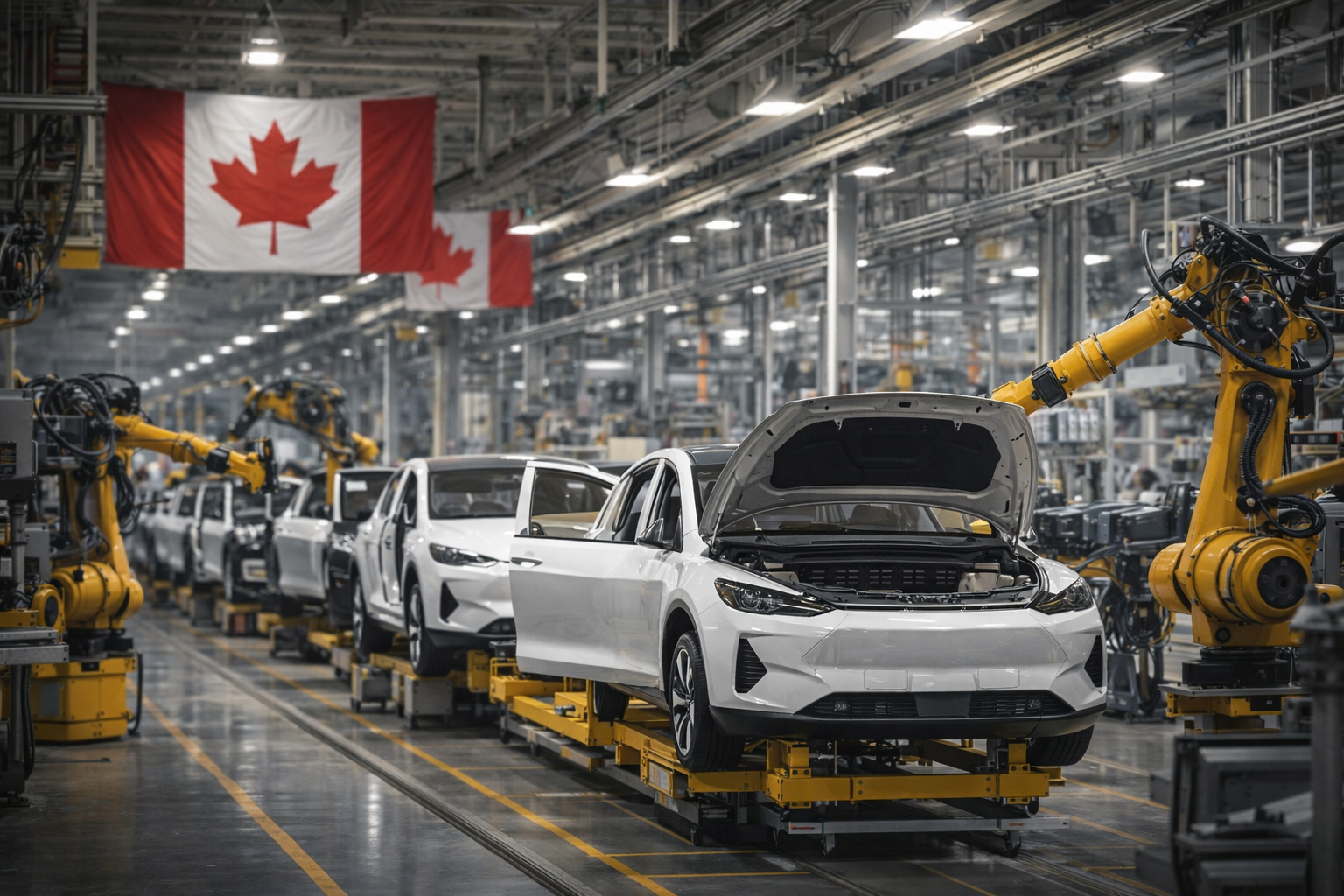
Ontario Premier Doug Ford and Canada’s largest private-sector union, Unifor, are raising serious concerns about a new federal trade agreement with China, warning it could negatively impact the Durham Region auto industry and manufacturing jobs across Ontario.
Prime Minister Mark Carney announced that Canada will reduce its 100-per-cent tariff on Chinese electric vehicles, allowing up to 49,000 EVs per year to enter the country at a significantly lower duty. In return, China will ease retaliatory tariffs on Canadian agricultural exports such as canola, pork, seafood, and peas.
Carney described the agreement as a strategic partnership that reflects modern global trade realities and creates new economic opportunities for Canada.
However, Ford criticized the deal as one-sided, arguing it opens the door to heavily subsidized Chinese automakers while offering no guaranteed investment or job protection for the Durham Region auto industry, which includes major assembly plants, parts suppliers, and logistics operations.
Unifor national president Lana Payne echoed those concerns, calling the agreement a serious risk to Canada’s already strained auto sector. She warned that the deal rewards unfair trade practices and could undermine efforts to resolve U.S. auto tariffs.
The federal government has stated that the reduced-tariff quota represents less than three per cent of Canada’s annual vehicle market and that it expects Chinese joint-venture investments to create jobs within three years. Critics, including Ontario NDP Leader Marit Stiles, say those projections lack enforceable commitments.
Industry experts note that while the short-term impact on Canadian production may be limited, the long-term risk lies in giving China a foothold that could expand rapidly—potentially affecting auto workers and suppliers in Durham Region communities.