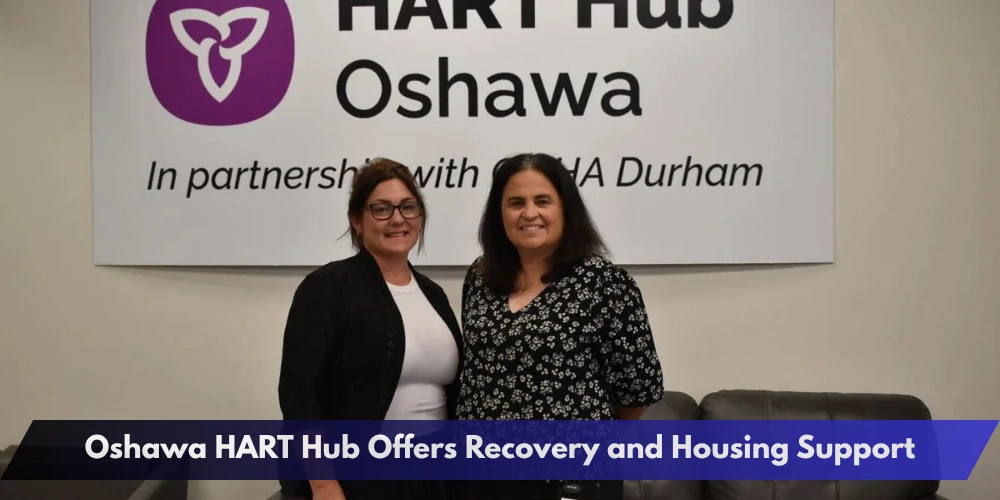
The Oshawa HART Hub is providing temporary housing, addiction recovery services and mental-health support to people experiencing or at risk of homelessness in downtown Oshawa.
The provincially funded Homelessness and Addiction Recovery Treatment Hub opened at a temporary location at 78 Richmond Street West in March 2026. It currently offers up to 10 beds with round-the-clock support while a larger permanent facility is being prepared.


Since opening, the service has supported dozens of clients facing overlapping challenges involving homelessness, substance use, mental illness, unemployment and limited access to health care.


Long-term approach to recovery
Many emergency shelters and short-term addiction programs require clients to leave after a limited stay. The Oshawa program takes a different approach by allowing eligible clients to remain while they work toward recovery and wait for permanent housing.
Staff describe the model as holistic because it addresses several needs at the same time rather than treating housing, addiction and mental health as separate problems.
Clients can receive help obtaining identification, applying for income support, attending medical appointments and connecting with employment or rehabilitation services.
The provincial HART Hub model is intended to combine primary care, mental-health and addiction treatment, supportive housing, employment assistance and other social services.
Referrals connect clients with care
Many clients are referred through the Back Door Mission’s Mission United program, which provides food, health services and other immediate assistance to people experiencing homelessness in Oshawa.
Referrals can also come from Lakeridge Health and Durham Regional Police.
Those admitted to the hub receive a private furnished bedroom and access to showers, clean clothing, meals, books, games, television and recreational activities.
Peer-support workers, medical professionals, social workers and case managers help clients develop recovery plans and reconnect with services that may have been difficult to access while living outside.
Clients begin rebuilding their lives
Staff report that several clients have achieved periods of sobriety, found employment or reconnected with family members.
One former client who had experienced homelessness for several years recently moved into permanent housing. Hub staff marked the occasion with a farewell celebration.
Another client, identified only as Lindsey, said she was using drugs and living on Oshawa’s streets before being referred to the hub by a doctor working with the Mission United program.
She said staff welcomed her without judgment and helped her begin recovery. At the time of the source report, she had remained substance-free for about one month and was working toward permanent housing.
Larger permanent facility planned
The temporary Oshawa HART Hub has 10 bedrooms, but a larger permanent location is expected to accommodate 45 beds.
CMHA Durham’s latest annual report says the permanent facility is anticipated to open in late fall 2026.
Plans for the larger site include additional living and program areas, an industrial kitchen, a gym and wellness amenities.
The expanded facility is expected to allow more people to receive continuous support while moving from homelessness toward recovery and stable housing.
Part of a wider provincial program
Ontario is funding 29 HART Hubs across the province, including locations in Oshawa and Whitby. The government says the program is designed for people facing housing instability alongside complex mental-health and substance-use needs.
The Oshawa HART Hub will continue building partnerships with local health providers, outreach teams and social-service agencies as demand for homelessness and addiction support remains high.
Staff say the goal is not simply to provide a temporary bed. It is to give clients enough stability, treatment and practical assistance to rebuild their lives and eventually move into permanent housing.