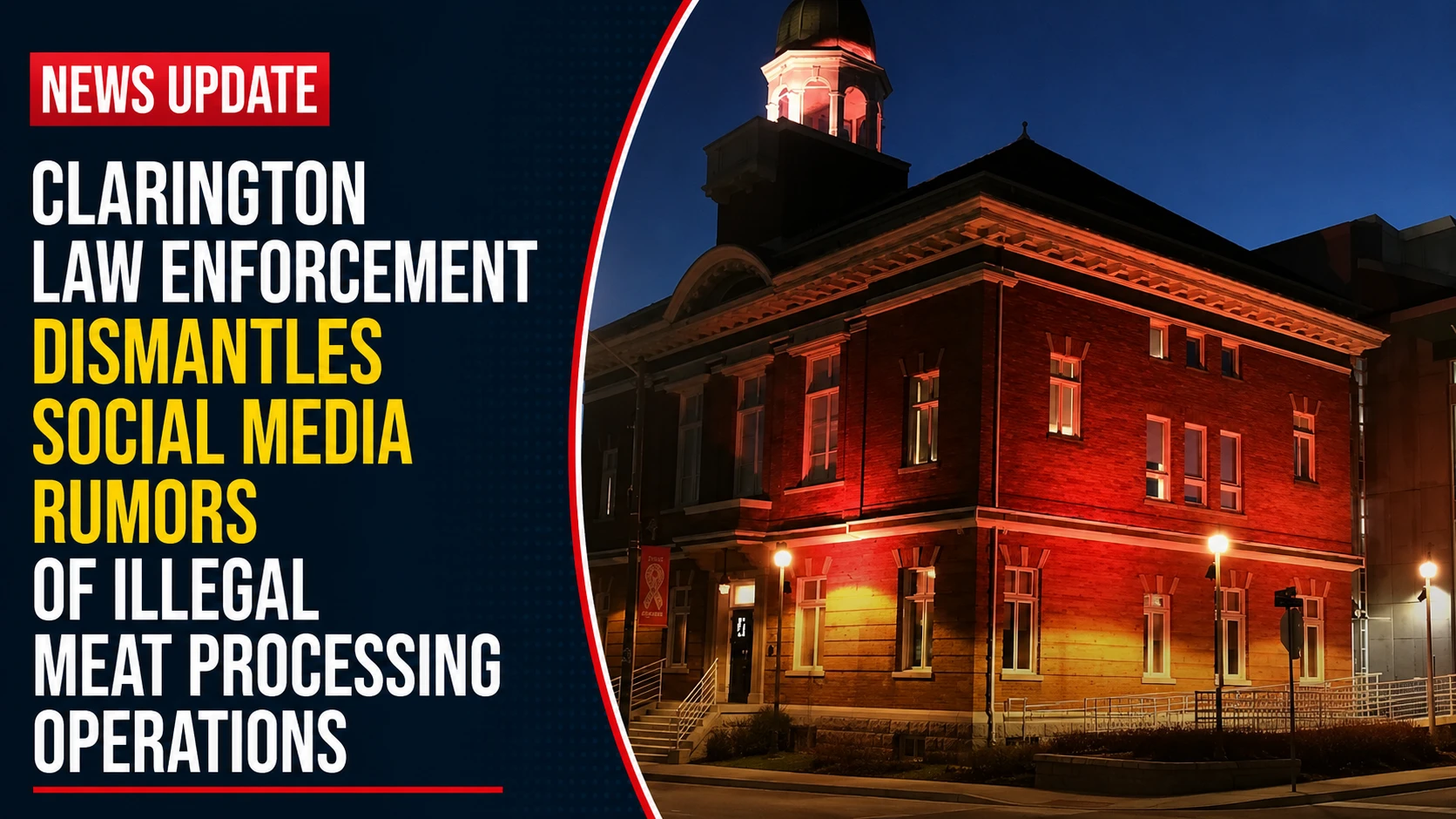
The municipal law enforcement divisions, building inspection branches, and public health enforcement compliance panels within the Municipality of Clarington have concluded a targeted zoning and agricultural inspection sweep. Tracked under regional protective services registries on Wednesday, July 1, 2026, corporate staff published the formal investigation summary No illegal slaughterhouses operating here: Clarington. Responding to a wave of high-velocity social media posts targeting multiple properties, provincial offences officers executed evidence-based inspections, finding zero proof of unpermitted abattoirs operating within the municipality.
The independent enforcement agency clarified that it will not launch prosecutions or search warrants based on online gossip or hearsay, ensuring all investigations strictly follow the rule of law.


The Single Property Probe and Building Code Discoveries
While digital channels claimed a widespread network of illegal livestock operations existed, field investigators uncovered completely unrelated municipal infractions.


-
The Investigative Trigger: Despite widespread social media chatter naming several agricultural lots, Municipal Law Enforcement received a formal, substantive complaint regarding only a single property.
-
The Physical Evidence Audit: Operational teams conducted a thorough on-site review of the named property. Inspectors found absolutely no evidence of automated meat processing, hidden slaughterhouses, or unpermitted livestock disposal.
-
The Unrelated Infractions: While the property was cleared of illegal meat harvesting, building division inspectors did flag minor, standalone Ontario Building Code violations that are entirely unrelated to food processing or commercial farming.
-
The Non-Interference Mandate: Local administrators reminded the community that municipal law enforcement officers operate independently as Provincial Offences Officers. Their field actions are strictly governed by evidence and human rights legislation, keeping their work completely free from municipal political interference.
Analyzing Clarington’s Complaint-Based By-Law Enforcement Process
The municipal enforcement framework relies entirely on formal public submissions backed by verifiable details, rather than anonymous group posts.
| Enforcement Agency Tier | Statutory Officer Status | Core Investigative Standard | Formal Intake Resolution Channel |
| Municipal Law Division | Provincial Offences Officers | Physical & verifiable evidence audits | Service Clarington Online Portal |
| Building Division Core | Structural Code Inspectors | Structural integrity & zoning matches | Independent property site visits |
| Municipal Council Node | Policy & By-law creators | Bans political interference in cases | Public council debate chambers |
| Community Public Sphere | Complaint-Based Initiators | Requires substantive detail filings | Direct telephone line: ext. 2105 |
This anti-disinformation push caps off a highly tense week for Clarington’s digital landscape. It follows a similar statement issued by Mayor Adrian Foster just 24 hours ago, which debunked viral Facebook rumors about imaginary arson fires at the historic, vacant Goodyear factory site. Officials are reminding residents that spreading unverified claims can hurt neighborhood reputations and waste valuable municipal resources.
The Clarington Municipal Law Enforcement Division handles the central by-law complaint registry.
Clarington property owners, local agricultural operators, and residents looking to review local livestock zoning regulations, track building code compliance filings, or submit a formal municipal complaint can access the public portal online at clarington.net or report issues directly through the Service Clarington app.