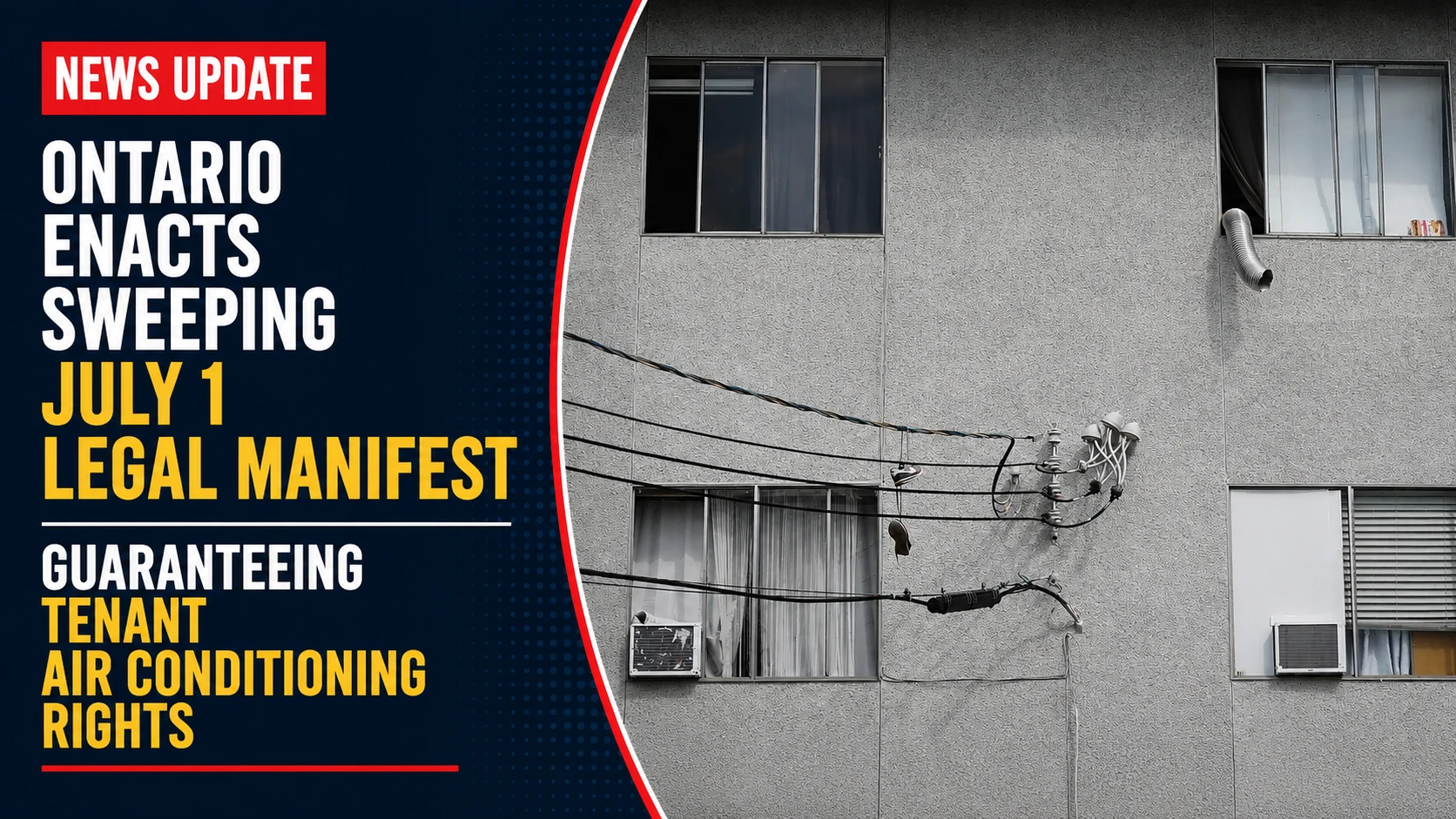
The provincial legislative networks, housing tribunals, and public regulatory systems across Ontario have executed a massive suite of mid-year statutory transformations. Tracked under provincial administrative registries on Wednesday, July 1, 2026, compliance officers finalized the activation codes for New tenant air conditioning rules come into effect in Ontario. Moving into active enforcement in the middle of a brutal early summer heatwave that has driven humidex values past 40°C, the legal rollout balances landmark new protections for renters against an array of broader systemic updates spanning healthcare screening ages, automotive insurance models, and expanded emergency police powers.
The omnibus package fundamentally shifts the baseline rights and daily transactions of millions of Ontario citizens.


The Landmark Tenant Protections and The Landlord Balance
The updated Residential Tenancies Act (RTA) framework formally outlaws blanket bans on cooling equipment while structuring strict financial recovery lines for property owners.


-
The Explicit Right to Cool: Starting July 1, tenants across Ontario hold the legal right to install and run window air conditioning units or portable AC units if their landlord does not provide cooling. Landlords can no longer block these installations, provided the hardware is set up safely, does not cause structural damage, and complies with municipal property bylaws.
-
The Utility Cost Adjustments: If a lease agreement states that the landlord pays for the unit’s hydro/electricity, the landlord is legally permitted to introduce a seasonal rent increase to cover the actual or estimated power consumption of the AC unit. However, if a tenant uninstalls the unit or stops using it seasonally, the rent must legally drop back to the baseline rate.
-
The Notification Mandate: To leverage this right, tenants must provide their landlord with formal written notice before installing a new unit, including its energy efficiency rating and estimated daily usage. Notably, these new rent-increase tools do not apply to AC units that were already installed before July 1, 2026.
-
The Eviction and Fine Overhauls: Parallel tenant rules are tightening, with maximum fines for RTA offenses (such as bad-faith evictions or harassment) doubling to $100,000 for individuals and $500,000 for corporations. However, tenant advocates warn that secondary procedural tweaks regarding formal rent arrears payment plans will make the eviction pathway faster for landlords if a tenant defaults.
Analyzing the Widespread July 1 Provincial Regulatory Shifts
Beyond the rental market, a diverse collection of ministries are introducing major operational changes to healthcare, transportation, and debt collection.
| Impacted Public Service Sector | Core Statutory Adjustment Enacted | Direct Consumer / Resident Impact | Target Regional Policy Goal |
| Residential Tenancies Grid | Explicit legal right to AC installation | Landlords cannot ban safe cooling units | Protect renters during extreme heat waves |
| Provincial Healthcare System | Screening age lowered from 50 to 45 | Publicly funded colorectal cancer testing | Early detection of high-risk oncology paths |
| Ontario Automotive Insurance | Optional opt-out for accident benefits | Drivers can lower premiums by dropping coverage | Immediate cost reduction vs long-term risk |
| Ministry of Transportation | Mandatory G2 test for unmapped transfers | New arrivals face strict 12-month G wait | Standardizing provincial road safety grids |
| Ministry of Finance Collections | Expanded use of garnishments & property liens | Direct seizure tools deployed for unpaid bail | Claw back multi-million outstanding court debts |
| Transit Security Operations | Enhanced arrest powers for special constables | Direct intervention for on-transit drug use | Restore community safety inside transit links |
In addition to these structural modifications, local pharmacies are seeing their medical powers expand, allowing pharmacists to assess and treat a wider variety of minor illnesses while expanding the list of publicly funded vaccines they can administer right at the counter. On the justice front, the province has officially closed a major loophole by passing strict legislation that permanently blocks registered sex offenders from legally changing their names.
Ontario residents, residential landlords, and motorists looking to download the official LTB payment agreement forms, check the expanded list of treatable minor illnesses, or read detailed guides on the new auto insurance choices can view the complete legislative packages online at ontario.ca/laws or tribunalspontario.ca/ltb.