










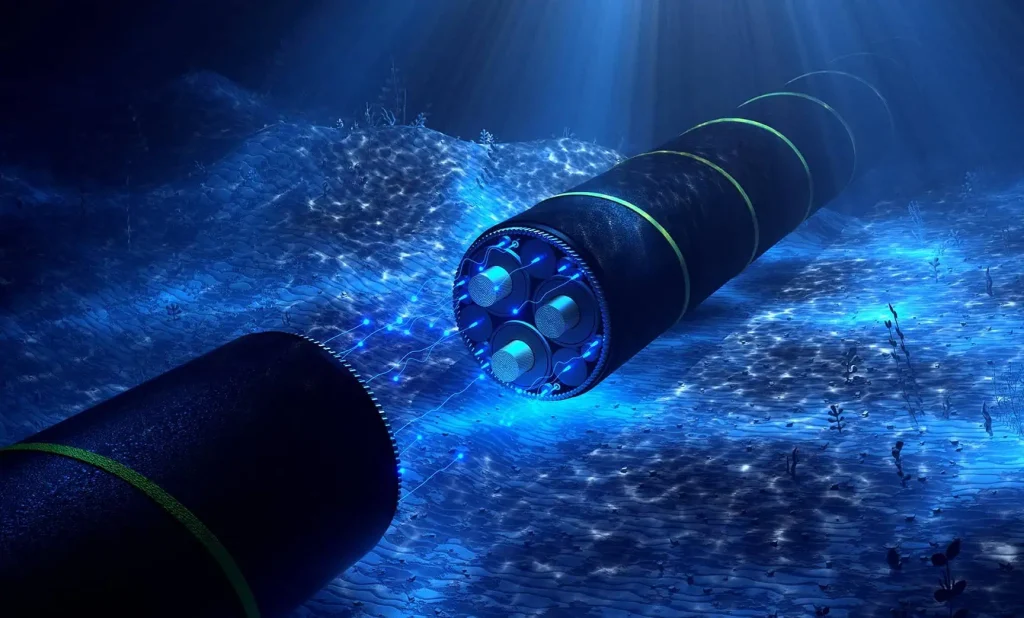
The Ontario government has approved a first-of-its-kind high-voltage underwater electricity transmission line that will carry power from near the Darlington Nuclear Generating Station in Clarington to downtown Toronto, as the province prepares for rapidly growing electricity demand.
First announced in May, the project received formal approval this week, with construction expected to begin later this year. The underwater transmission line will be capable of delivering up to 900 megawatts of clean, reliable electricity, supporting new housing, transit expansion, and economic growth in Toronto.


Ontario Energy Minister Steven Lecce said the project is essential to meeting future demand, which is expected to double over the next 25 years.

Without additional transmission capacity, Toronto would face limits on new housing and job-creating investments, Lecce said. The new line is expected to support the construction of up to 285,000 new homes, power new businesses, and create thousands of jobs. The province is also launching its first IESO-led competitive transmission procurement process to reduce costs and maximize value for ratepayers.
Toronto is currently supplied by two major transmission lines—one from the west at the Manby Transmission Station and one from the east at Leaside. Both routes are projected to approach capacity by the 2030s as demand in the downtown core continues to rise. Toronto’s peak electricity demand currently stands at 4,700 megawatts, accounting for roughly 20 per cent of Ontario’s total peak demand, and is expected to nearly double by 2050.
Toronto Mayor Olivia Chow welcomed the decision, calling it a major step toward building resilient and affordable clean energy infrastructure that supports long-term growth and job creation.
The underwater transmission line will also strengthen system reliability by reducing vulnerability to extreme weather events such as flooding and ice storms. Officials estimate the project could avoid $100–$300 million in future system reinforcement costs while meeting electricity needs beyond 2044.
The Independent Electricity System Operator (IESO) evaluated three options, including two overland routes from Pickering and one underwater route through Lake Ontario. After more than a year of technical analysis and public consultation, the underwater option was selected as the preferred solution due to its higher capacity and reduced land-use impacts.
The project is expected to take seven to ten years to design, build, and commission. Similar underwater transmission systems are already in use in Newfoundland and Labrador, Nova Scotia, and Prince Edward Island.
Business leaders say the project sends a strong signal that Ontario is planning ahead for electrification, economic competitiveness, and long-term energy security.
Photo Credits : https://www.insauga.com/ontario-approves-underwater-transmission-line-to-bring-power-from-darlington-nuclear-to-toronto/