









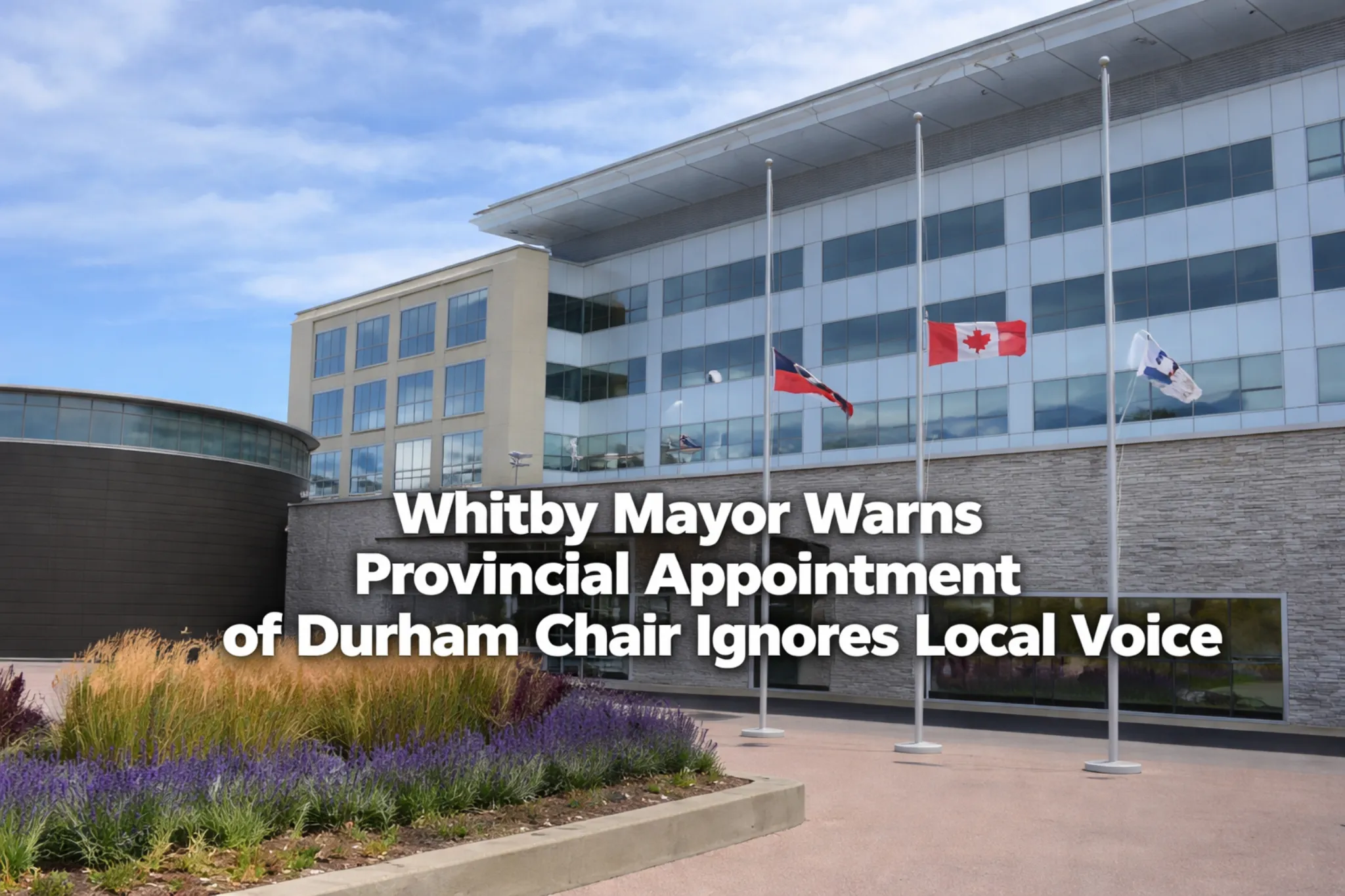
Whitby Mayor Elizabeth Roy is sounding the alarm over new provincial legislation that could strip Durham residents of their right to elect their durham-chair Regional. Following the announcement of the Better Regional Governance Act, Mayor Roy joined current Regional Chair John Henry in questioning the impact of the bill, which would allow the Ontario government to directly appoint regional leadership and potentially reduce the size of regional councils.
The Fight for Local Autonomy
Mayor Roy’s primary concern centers on the erosion of democratic participation. Under the current system, the Regional Chair is an elected position accountable to the voters of the eight municipalities within Durham. The proposed change would shift that accountability toward Queen’s Park.


“Removing the public’s ability to elect the regional chair raises important questions about democratic participation and local autonomy,” Mayor Roy stated. “At its core, this change moves decision-making further from the people it is meant to serve.”

A Region of Diverse Needs
Durham is unique for its mix of high-density urban centers, sprawling suburbs, and vast rural landscapes. Mayor Roy emphasized that any leader at the regional level must be intimately familiar with this “full spectrum” to be effective.
The Mayor highlighted several complex challenges currently facing Whitby and the broader region that require nuanced local leadership:
-
Housing Affordability: Navigating rapid growth and the urgent need for diverse housing stock.
-
Infrastructure Funding: Advocating for a sustainable funding model to support new developments.
-
Social Services: Responding to the escalating needs related to homelessness, mental health, and addictions.
Efficiency vs. Representation
The Ford government has framed the Better Regional Governance Act as a necessary tool to improve efficiency and accelerate the delivery of housing and infrastructure. While Mayor Roy acknowledged these are “important goals,” she argued that efficiency should not come at the expense of local representation.
As the legislation proceeds, Durham’s municipal leaders are calling for a collaborative approach that ensures the needs of the region remain the priority. The debate marks a significant moment in the relationship between the province and its regional municipalities, as local councils fight to maintain their voice in an era of rapid provincial oversight expansion.