










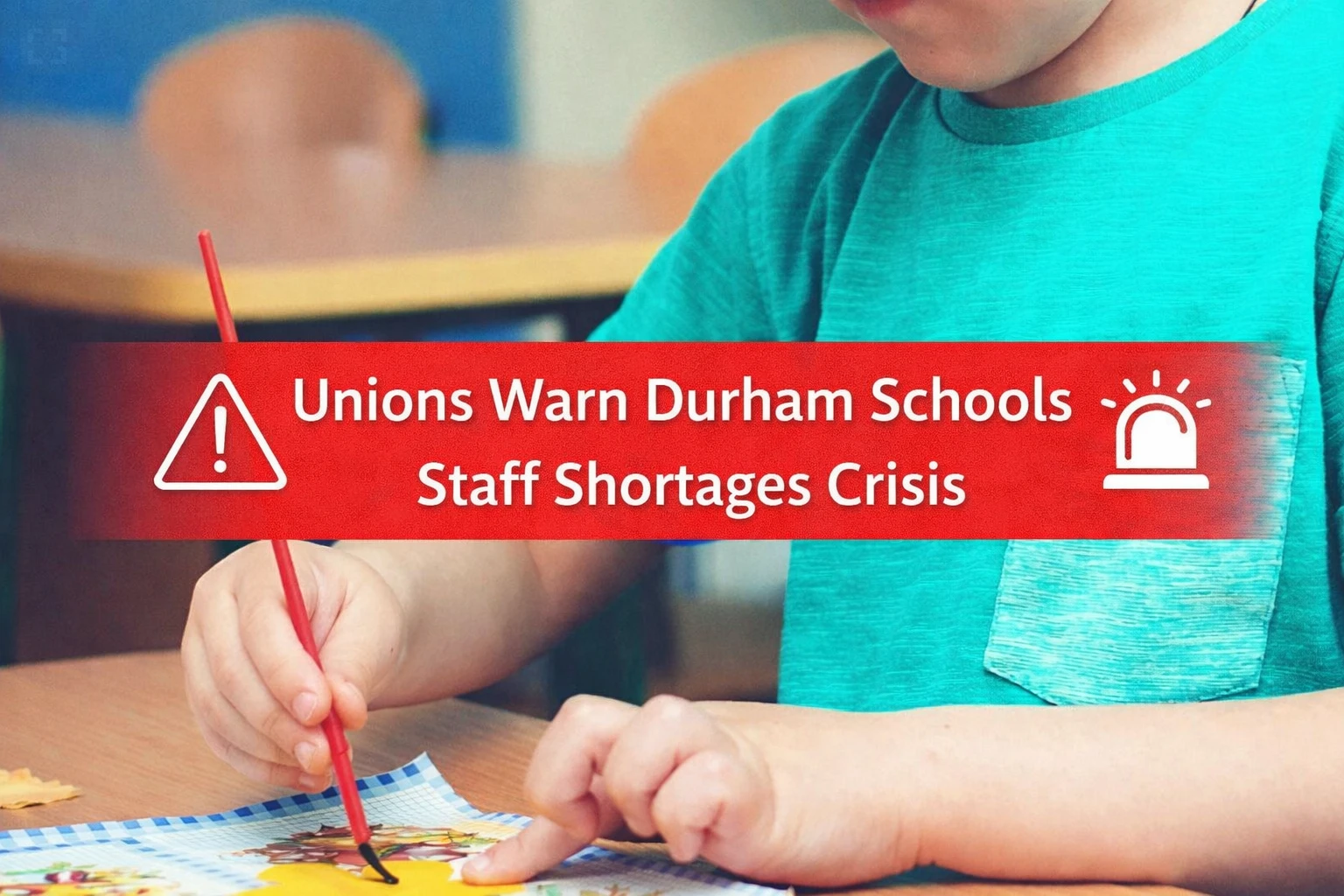
Education worker unions are urging the Ontario government to begin early collective bargaining negotiations in order to address chronic staff shortages affecting schools across Durham Region.
The Ontario School Board Council of Unions (OSBCU) and CUPE Local 218, which together represent more than 4,000 education workers in Durham Region, are calling on the Ford government to begin negotiations as soon as possible before the current agreements expire later this year.


Union leaders say schools across Durham are already facing serious staffing shortages and warn that delays in negotiations could make the situation worse for both workers and students.

Joe Tigani, president of the Ontario School Board Council of Unions, said early bargaining is necessary to stabilize the education system and prevent the situation from deteriorating further.
“There can be no business as usual while education workers and students bear the brunt of chronic underfunding,” Tigani said in a statement. “Early bargaining is critical to stabilizing our schools and addressing the staffing crisis before it becomes even more severe.”
The current collective agreements covering education workers across Ontario are set to expire in August, which means new agreements must be negotiated ahead of the next school year.
Union leaders say beginning negotiations early would allow school boards and the provincial government to address staffing shortages, funding issues, and working conditions before the 2026–2027 school year begins.
Carrie Boisvert, president of CUPE 218, said the situation in Durham schools has already reached a critical point.
“The longer we wait to get to the table, the more harm is done,” Boisvert said. “Schools in the Durham District and Durham Catholic school boards are already struggling with chronic staff shortages and students are not getting the supports they need to be successful.”
According to the union, shortages are affecting multiple areas of school operations, including custodial services, maintenance, and educational support staff.
Boisvert said the lack of custodial workers has created sanitation challenges in some schools.
“In Durham Region, shortages in custodial and maintenance staff mean schools are not being cleaned properly,” she explained. “Washrooms are often cleaned only once a day, students are refusing to use them and parents are calling with concerns.”
The union also raised concerns about the growing pressure on educational assistants, who often work with students requiring additional support.
Boisvert said many educational assistants are experiencing increased workplace injuries due to staffing shortages and the growing demands placed on them.
“Educational assistants are getting hurt on the job every day because students aren’t getting the supports they need,” she said.
Union representatives warn that if bargaining is delayed, school boards could face difficult decisions ahead of the new school year. With the expiration of the current agreement, protections that limit job cuts may no longer apply, raising concerns about potential layoffs or staffing reductions.
The unions say starting negotiations earlier would allow both sides to work toward solutions that protect student services while also addressing worker concerns.
Boisvert said CUPE 218 is prepared to begin negotiations immediately.
“We all have a responsibility to be proactive,” she said. “We all need to be putting students first.”
Union leaders hope that beginning discussions sooner rather than later will help prevent further disruption in schools and ensure that Durham students receive the support they need to succeed.