








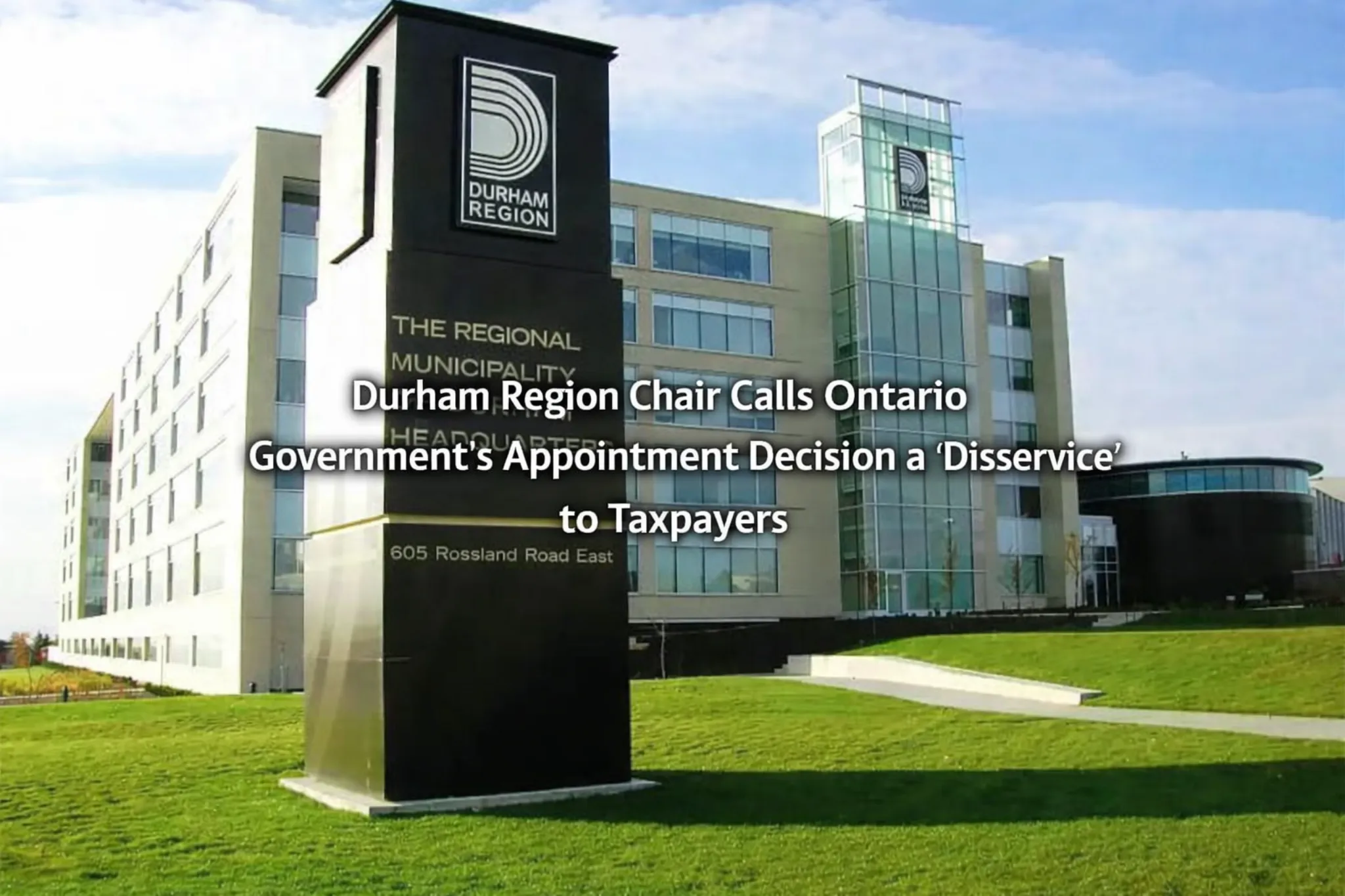
Durham Region – John Henry, the current Regional Chair of Durham Region, has expressed strong opposition to the Ontario government’s decision to move forward with appointing regional chairs instead of holding elections for the position. Henry, who has served as Durham’s elected regional chair since 2018, calls the change a “disservice” to the people of Durham Region and to the democratic process.
The fundamental change announced by the province would mark the end of Durham Region’s tradition of electing its regional chair by the public, a shift that has left Henry deeply disappointed. The change follows a proposal from the Ontario government to appoint chairs for multiple regions, including Durham, Halton, Niagara, Peel, Waterloo, York, Muskoka, and Simcoe County.


“I am disappointed by this decision,” said Henry. “I believe the changes being implemented by the province are a disservice to our vibrant communities and our residents who deserve a direct voice in choosing their leadership.” Henry, who was the first regional chair in Durham to be elected by voters (the post was formerly filled by an election among councillors), expressed his dismay at the decision that will end his tenure and affect the future of local governance in Durham Region.

End of Henry’s Tenure
Henry’s role as Regional Chair has been a cornerstone of his public service career. Prior to his election as chair, Henry served for eight years as mayor of Oshawa and has been involved in local politics since being elected to the Oshawa City Council in 2006. Reflecting on his time as chair, he described it as a “great honour.”
“Together we’ve had great success. Over the past eight years, the Region of Durham has effectively planned and delivered major regional services and co-ordinated growth and infrastructure across municipal boundaries in a way that reflects the needs of our diverse urban, suburban and rural communities,” Henry added. His tenure saw efforts to enhance services, infrastructure, and coordination among municipalities in Durham.
Provincial Push for Appointed Regional Chairs
This shift in governance comes after Premier Doug Ford‘s support for stronger regional governance through appointed chairs. The move mirrors changes in Niagara Region, where the former chair’s unsuccessful push for municipal amalgamation was one of the factors driving the decision to change the structure of regional leadership.
Municipal Affairs Minister Rob Flack tabled legislation that would allow the appointment of chairs with “strong chair” powers, similar to those awarded to strong mayors in Ontario municipalities since 2016. These powers would give appointed chairs the ability to veto certain bylaws, appoint or fire senior officials, and have significant influence on municipal budgets.
The bill proposes to reduce the size of municipal councils, including Niagara’s, from 32 to 13 members and introduces weighted voting at Niagara Regional Council. This would drastically alter the governance structure in several regions, including Durham.
Looking to the Future
While the legislation has yet to be passed, it is clear that the days of elected regional chairs are numbered in Ontario. Henry has already acknowledged the inevitability of this change and is looking ahead to his next chapter.
“While my role as the elected chair is coming to an end, my commitment to this community is not. I look forward to continuing to serve the people of Durham in a different capacity and contributing to the growth and success of our region in new ways,” Henry concluded.
The province’s decision has sparked debate about the future of local governance, with many residents and municipal leaders questioning the impacts on democratic representation and accountability. As the Ontario government moves forward with its plan, Durham Region will need to navigate the changes and adapt to a new era of appointed leadership.