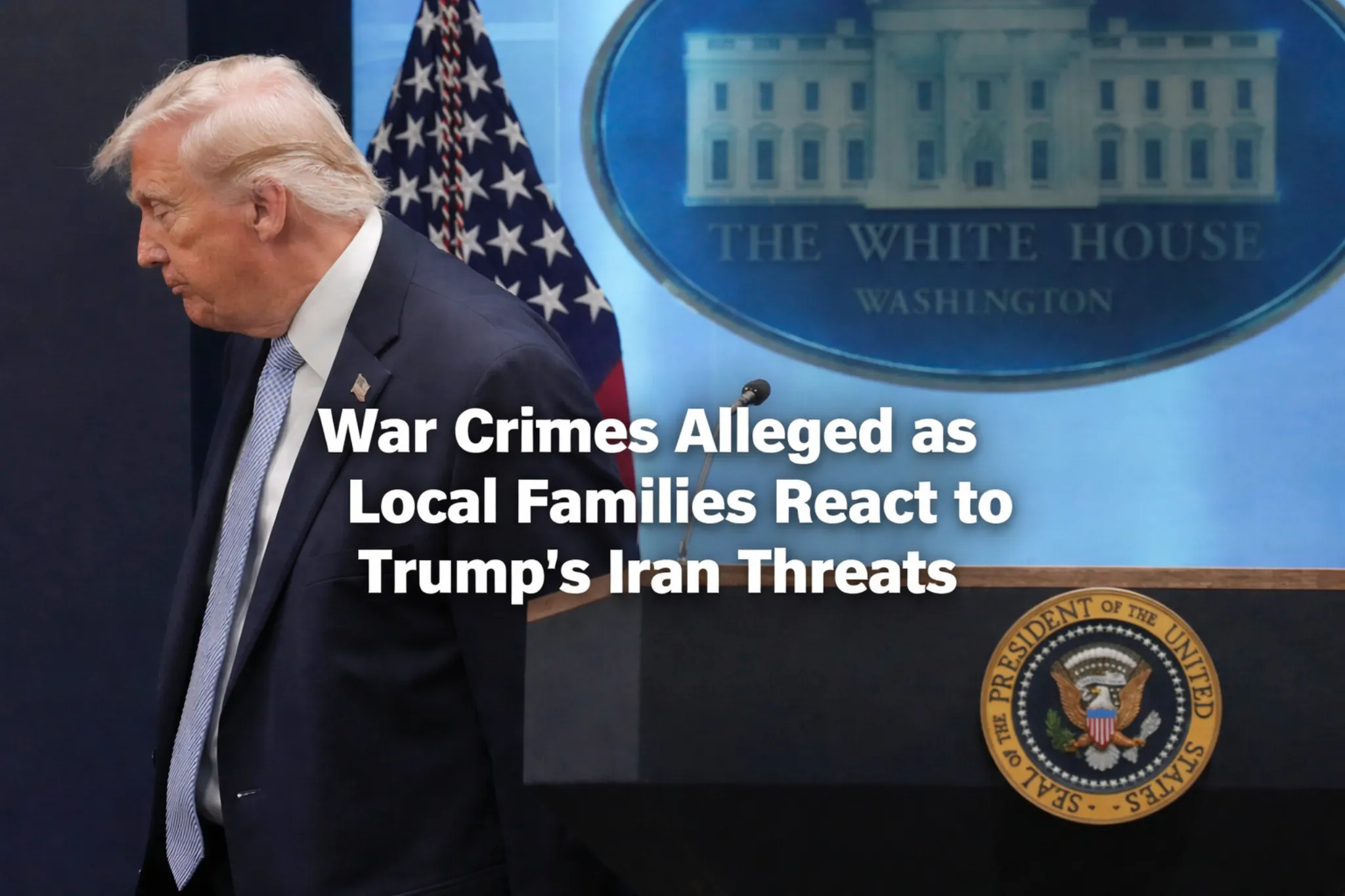
A wave of fear and indignation is sweeping through the Durham Region’s Persian community following a series of escalations in the Middle East. Iranian Canadians living in the GTA are speaking out, describing recent threats by U.S. President Donald Trump to target civilian infrastructure as potential war crimes. The tension reached a breaking point this morning after a social media post suggested a “whole civilization” could be at risk if a deal regarding the Strait of Hormuz is not reached by tonight’s 8 p.m. deadline.

Heartbreak and Fear in the GTA
For many local residents, the geopolitical posturing in Washington translates into immediate terror for loved ones overseas. Foad Farhani, a resident of the Greater Toronto Area, described the moment his wife called him in tears while he was commuting to work. With parents currently stuck in Iran, Farhani argues that the threat to bomb a nation “into the Stone Age” by targeting power plants, highways, and bridges constitutes a series of war crimes under international law.


The emotional toll is widespread. In York Region and the surrounding Durham municipalities, families report a state of constant anxiety. Aitak Sorahi, another resident affected by the crisis, noted that the aggressive social media rhetoric has become so overwhelming that she has begun avoiding online platforms entirely to preserve her mental health.
International Deadlines and Iranian Defiance
The latest surge in tensions stems from a Truth Social post where Trump warned that “a whole civilization will die tonight” if Iran does not accede to U.S. demands by the Tuesday evening deadline. This follows nearly two months of military operations that began in late February. Trump has dismissed suggestions that targeting essential civilian infrastructure would be categorized as war crimes, suggesting instead that a “complete and total regime change” is the only path forward.
In response, Iranian President Masoud Pezeshkian took to social media to claim that 14 million Iranians have volunteered to sacrifice their lives in the conflict. This rhetoric of mutual destruction has left the Iranian diaspora in Canada—many of whom do not support the current regime in Tehran—feeling caught in a deadly crossfire.
Community Concerns and Humanitarian Law
Local advocacy groups in Toronto and the Durham Region are echoing the sentiment that civilian lives and essential infrastructure should never be military targets. “By targeting the infrastructure, we give the regime a false moral legitimacy,” noted one local democracy advocate. The fear is that the destruction of power and water systems will not topple a government but will instead cause a humanitarian catastrophe for 90 million people.
As the 8 p.m. deadline approaches, the Iranian Canadian community remains on high alert. For those in Oshawa and Pickering, the distance from the conflict provides no shield from the heartbreak of watching their homeland face the prospect of total destruction. The global community is now watching to see if diplomacy can prevail before these alleged war crimes become a reality.