The search for missing Oshawa pilot David Douglas is continuing after the 73-year-old failed to return from a Friday morning flight in a home-built aircraft.
According to Durham Regional Police, Douglas departed from Oshawa Executive Airport at approximately 8:30 a.m. Friday. He was flying a blue-and-yellow home-built aircraft with “FOFZ” displayed on its tail and was expected to return to the Oshawa airport by approximately 9:30 a.m.


However, Douglas did not return as expected, prompting a large-scale search involving police and search-and-rescue resources.


The veteran pilot is described as approximately five feet seven inches tall with a slim build, black-and-grey hair and a moustache.
Search Focused Near Balsam Lake
Investigators say Douglas typically flies in an area south of Kawartha Lakes, near Lindsay, and north of Lake Scugog.
Information gathered during the investigation indicates the aircraft’s last known location may have been around Balsam Lake, north of Lindsay.
Search and rescue operations have consequently focused on the Kawartha Lakes region as emergency crews attempt to locate both Douglas and his aircraft.
The Joint Rescue Coordination Centre Trenton is leading the search operation with assistance from other agencies and private aircraft.
The centre, based at CFB Trenton, coordinates aeronautical and maritime search-and-rescue operations and is staffed by personnel from the Royal Canadian Air Force and Canadian Coast Guard.
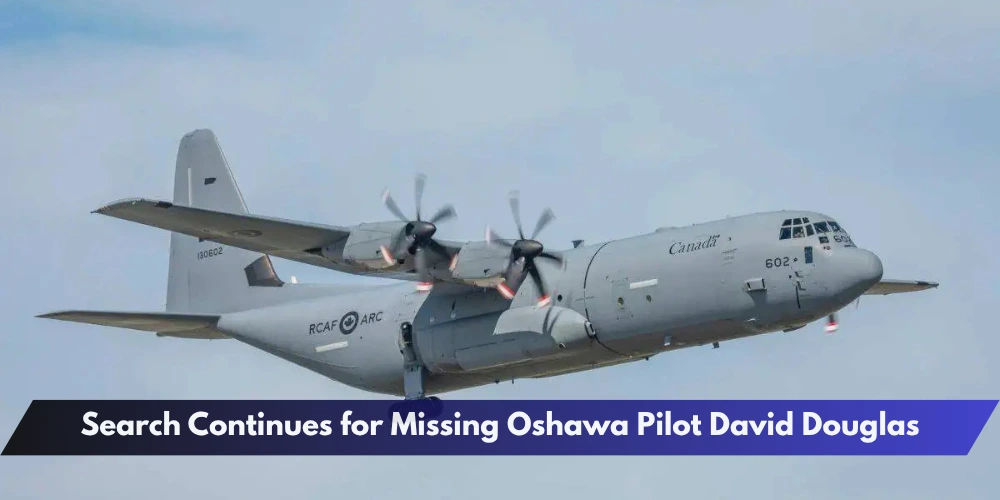
Aircraft being used in the search include a Super Hercules search-and-rescue aircraft along with other aviation resources.
Aircraft Difficult to Track
One challenge facing search teams is the inability to digitally follow the aircraft’s movements.
The missing Oshawa pilot is believed to have been operating an aircraft that was not equipped with, or was not using, an active transponder signal.
A functioning transponder can provide important information that assists with identifying and tracking an aircraft. Without an active signal, search teams have had to rely on other information to determine where Douglas may have travelled.
Crews are reportedly using eyewitness information and radar reconstruction as part of efforts to establish the aircraft’s possible flight path and narrow the search area.
The circumstances make visual searches particularly important as aircraft continue operating over areas where Douglas may have flown.
Oshawa Pilot Remains Missing
Douglas’ disappearance has prompted continued efforts involving multiple search resources as authorities attempt to determine what happened after he departed Oshawa Executive Airport.
His planned flight was expected to last approximately one hour, with his anticipated return scheduled for around 9:30 a.m. When he failed to arrive, concerns were raised about his whereabouts.
Authorities have not announced that Douglas or his aircraft have been located, and search-and-rescue operations remain focused on finding him.
The investigation extends beyond Oshawa because of the pilot’s usual flying area and the aircraft’s suspected last known location near Balsam Lake.
Police Asking Public for Information
Durham Regional Police are asking anyone who may have information that could assist search teams to come forward.
People who may have seen the blue-and-yellow aircraft, particularly around the Kawartha Lakes and Balsam Lake areas, could potentially provide information useful to investigators.
Anyone with information about the location of missing Oshawa pilot David Douglas is asked to contact their local police service or Durham Regional Police Service’s Central West Criminal Investigations Branch at 1-888-579-1520 ext. 1805.
Search efforts are continuing as rescue personnel work to locate Douglas and determine the circumstances surrounding his disappearance.